Get ready to rise and shine on Easter Sunday at Pender UMC’s Gathering Place for a spectacular Sunrise Breakfast!
Join us on April 20, 2025, from 7:00 to 8:30 AM for a delightful morning filled with the aromas and flavors of a heartwarming breakfast.
Our menu features a tempting array of bagels with cream cheese, savory breakfast casseroles, golden French toast, sizzling sausage, and fresh fruit, complemented by freshly brewed coffee and tea.
It’s the perfect way to start your Easter with fellowship and good cheer. Don’t miss out—make sure to sign up for this festive breakfast gathering!
Tomorrow, Tuesday, April 1, is the final day to let Pender know you’re attending the Holy Thursday Passover Seder hosted in partnership with KUMC Koinonia.
Chag Sameach! (Happy Holiday!) We warmly invite you to a meaningful and reflective Seder experience, where we will explore the powerful symbols of Passover and remember the Exodus of the Israelites from Egypt—a cornerstone story in both Jewish and Christian faith traditions.
This Seder is a time to gather in community, reflect on God’s deliverance, and draw connections between the ancient story of freedom and our faith today.
Please note: This will be a symbolic Seder, not a full dinner. We’ve timed it after the dinner hour, so come ready for a spiritual feast rather than a physical one!
We look forward to sharing this sacred evening with you.
On Holy Thursday, Christians often observe a “Christian Seder” or Passover meal, reenacting the Last Supper, which Jesus celebrated with his disciples, and drawing parallels to the Jewish Passover Seder.
Here’s a breakdown of the significance and practice:
Historical Context: Jesus and his disciples celebrated the Passover Seder, a Jewish ritual meal commemorating the Israelites’ liberation from slavery in Egypt, on the night before his crucifixion.
Christian Interpretation: Christians view this Last Supper as the institution of the Eucharist (or Holy Communion), where Jesus shared bread and wine, symbolizing his body and blood, and establishing a new covenant.
Reenactment of the Seder: A Christian Seder on Holy Thursday involves reenacting portions of the Passover Seder, such as the symbolic foods (like matzah, bitter herbs, and a roasted shank bone) and the retelling of the Exodus story.
Symbolism: The symbolic foods and actions in the Seder are interpreted through a Christian lens, highlighting the sacrifice of Jesus and the establishment of the New Covenant.
Examples of Symbolic Foods:
Matzah: Represents the haste of the Israelites’ departure from Egypt, symbolizing the speed of Christ’s sacrifice.
Bitter Herbs: Remind of the bitterness of slavery, mirroring the suffering of Christ.
Roasted Shank Bone: Represents the sacrifice of the Paschal lamb, symbolizing Jesus as the ultimate sacrifice.
Purpose: Participating in a Christian Seder on Holy Thursday allows Christians to deepen their understanding of the Last Supper and the significance of Jesus’ sacrifice, while also connecting with the Jewish roots of their faith.
Worship
A service that brings to life the night in which Jesus began the practice we call the sacrament of the Lord’s Supper or Holy Communion. On that first Holy Thursday, there was tension in the air as religious authorities had been conspiring against Jesus. There will be a little tension in our service too as you’ll be invited to become a part of the events of that night. But relax, you can simply watch if you wish.
Jesus met with the disciples in an “Upper Room” to reveal to the mysteries of the Lord’s Supper. In the Garden of Gethsemane, he asked them to stay awake as he agonized over the direction to which he had been called. He spoke the truth before the religious elite and Roman rulers alike. Join us for Holy Communion, great music and singing, and a service that ends with a twist.
A recommitment to obeying that command is a part of why we gather. We remember Jesus, and we remember his words, and we once again pledge to learn to live by the command. In other words, on this night, we gather and offer ourselves to be gathered up in Jesus by choosing to live by the call to love.
“Tenebrae” is the Latin word meaning “darkness.” The service of Tenebrae as practiced in most Protestant Churches is an adaptation of medieval Roman Catholic practices for each of the days of Holy Week dating back to the ninth century. For Protestants, this single service is typically held at night on Holy Thursday or Good Friday. Pender will hold it’s Tenebrae service on Maundy/Holy Thursday this year.
For United Methodists and some other Protestants, the story of the suffering and death of Jesus from John’s gospel is divided into 16 readings. After each segment of the story is read, a candle is extinguished. After the fifteenth reading, which confirms that Jesus had died on the cross, the last of the 15 lit candles is extinguished or taken away, and a loud sound (called strepitus in Latin) is made to convey the sense of total loss of God’s presence and the effect of the death of Jesus on the universe. The final story of the burial is read in near darkness.
Worshipers leave in silence to ponder the impact of Christ’s death and await the celebration of the coming Resurrection.
In addition to being a time to remember the mercy and forgiveness of Jesus, the early church used Lent to prepare converts for baptism, and to offer opportunities for those who had been separated from the church to be reconciled.
Today Lent remains an ideal time to remember our baptism and to reconcile relationships with those we may have harmed. All of this signifies to us our sinfulness and the sacrifice of Jesus which makes our forgiveness possible.
Lent is a season of forty days, not counting Sundays, which begins on Ash Wednesday and ends on Holy Saturday. Lent comes from the Anglo Saxon word lencten, meaning “lengthen” and refers to the lengthening days of spring. The forty days represents the time Jesus spent in the wilderness, enduring the temptation of Satan and preparing to begin his ministry.
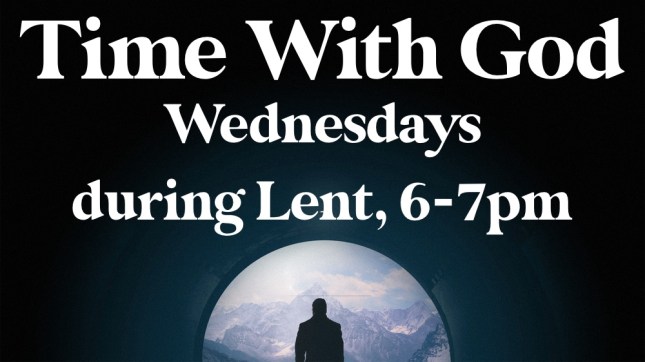
Lent is a time of repentance, fasting and preparation for the coming of Easter. It is a time of self-examination and reflection. In the early church, Lent began as a period of fasting and preparation for baptism by new converts and then became a time of penance by all Christians. Today, Christians focus on relationship with God, growing as disciples and extending ourselves, often choosing to give up something or to volunteer and give of ourselves for others.
Sundays in Lent are not counted in the forty days because each Sunday represents a “mini-Easter.” This is why you will see the designation “Sunday in Lent” rather than “Sunday of Lent” in the naming of these Sundays. On each Lord’s Day in Lent, while Lenten fasts continue, the reverent spirit of Lent is tempered with joyful anticipation of the Resurrection.




 News and Views