RSS

Tomorrow is Pentecost

pentecost1

From a historical perspective, Christianity didn’t start with Jesus’ birth, his death or even his storied ascension to heaven. It started with Pentecost — the day the “Holy Spirit” entered a room holding Jesus’ apostles and entered each of them, an event which — as my minister uncle tells me — “makes the church the church.”

Although Pentecost is chock full of religious significance, it is a holiday not widely celebrated. Sort of the opposite of Hanukkah, which is widely celebrated but not religiously important. My uncle says Pentecost is a bigger deal in liturgical churches, which follow a formal, standardized order of events (like Catholics). “Non-liturgical” refers to churches whose services are unscripted (like Baptists).

Back Story: At his Last Supper, Jesus legendarily instructed his 12 disciples to go out into the world to minister and heal the sick on their own. It was at that point that they became “apostles.” Fifty days after Jesus’ death, as the story goes, the Holy Spirit (part of the Holy Trinitity — God the Father, God the Son and God the Holy Spirit ) descended onto the apostles, making them speak in foreign tongues. This “Pentecostal” experience allowed the apostles direct communication with God, which signaled a major shift in the religious landscape and laid the foundation for what would become Christianity. You’ll notice that the disciples are always depicted in artwork as regular-looking men while the apostles are depicted with halos around their heads. (Several other apostles came later — namely the famous Paul who is credited with writing much of the New Testament.)

Although all the original 12 apostles are important, some get top billing. Here’s why:

  • Peter (also called Simon Peter) established the first church in Antioch and is regarded as the founding pope of the Catholic church. Instrumental in the spread of early Christianity, Peter was said to have walked on water, witnessed the “Transfiguration of Jesus” and denied Jesus (for which he repented and was forgiven.) The Gospel of Mark is ascribed to Peter, as Mark was Peter’s disciple and interpreter.
  • John also is said to have witnessed the Transfiguration of Jesus and went on to pen the Gospel of John, the Epistles of John and Book of Revelation. He died at age 94, having outlived the other apostles — all of whom, according to legend/history/whatever, were martyred. John is often described as “Jesus’ favorite” and depicted as the disciple sitting to Jesus’ right at the Last Supper.
  • Thomas (“Doubting Thomas”) is best known for questioning Jesus’ resurrection when first told of it. According to the Bible, Thomas saw Jesus himself several days later and proclaimed “My Lord and my God,” to which Jesus famously responded: “Blessed are they that have not seen, and yet have believed.” (John 20:28.)

via Pentecost is this Sunday. What the heck is Pentecost?.


Tags: , , , , , , , , , ,

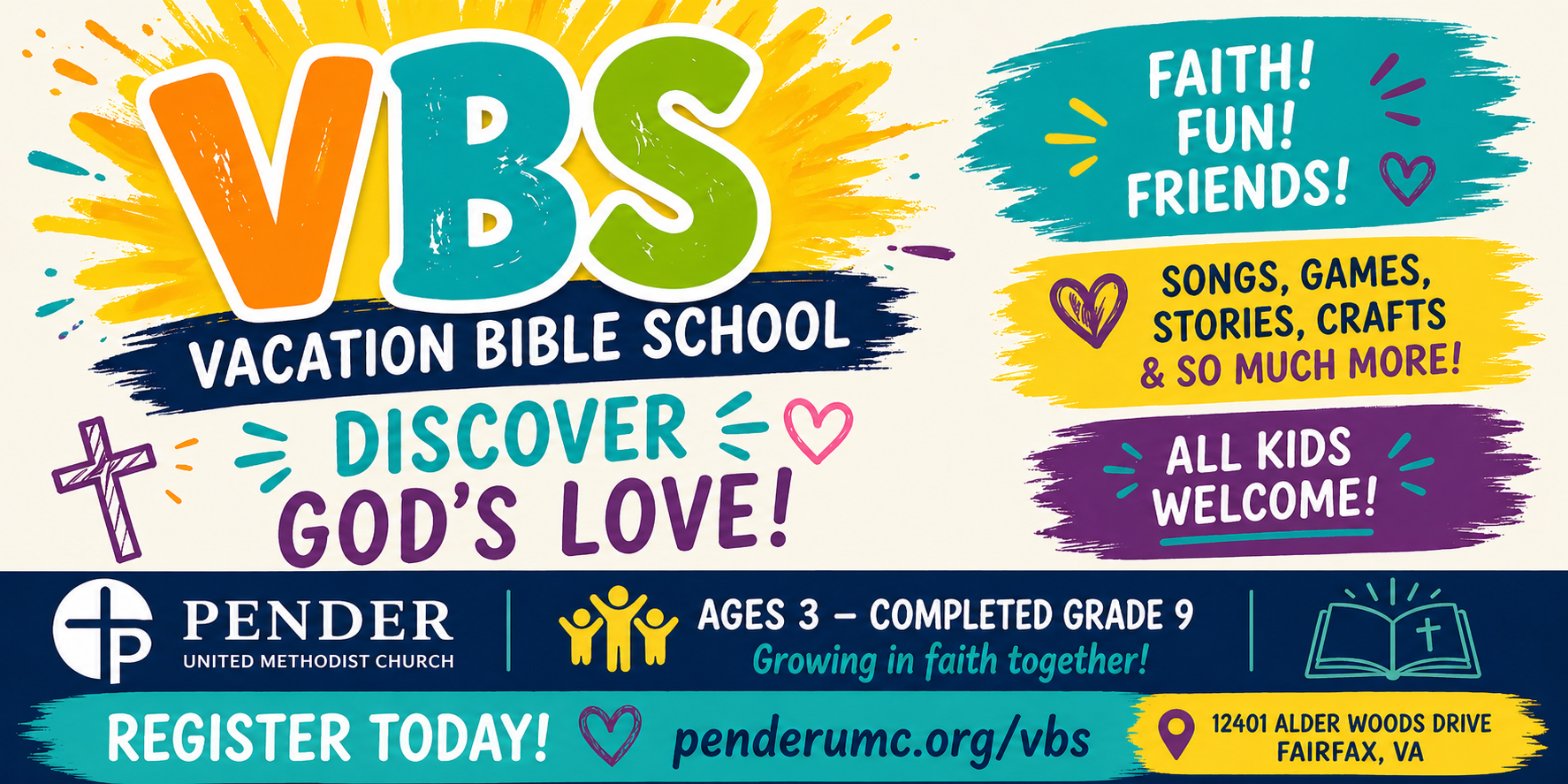
Register for VBS!

Snowball Mountain Challenge at Pender UMC

Get ready to turn your next summer VBS into an unforgettable adventure with Snowball Mountain Challenge VBS 2026!

Snowball Mountain Challenge invites kids to an exciting winter sports event where they become Challengers, gearing up for frosty games, snowy surprises, and hands-on lessons about resilience and faith. They will come to realize that with the strength God provides, they can share their gifts, be brave, give their all, pray, and hope.

Your kids will be guided by the energetic Activities Director and the lovable Ollie the Arctic Seal puppet, who is reporting on the events. Challengers aren’t just playing games. Using their Challenge Companion (the Bible), they learn to draw strength from their faith through powerful stories, while connecting the learnings to Bible Stories and Lift Lessons (Key Learnings). With a unique winter theme and solid theology at its core, Snowball Mountain Challenge VBS delivers joy and meaning in equal measure, teaching kids that “I can do all things through him who strengthens me” (Philippians 4:13, NRSV).

Bring your family together to experience Snowball Mountain Challenge. Your VBS program will be transformed into a mountaintop experience filled with laughter, life lessons, and lasting faith. As children face their challenges and discover their strength in God, you’ll hear them say, “Challenge accepted – with God I am strong.”

Ages

Potty-trained three year olds through ninth grade

Early Bird Registration is $25 per child until May 31. Registration includes lunch and a T-shirt.
Starting June 1 the cost will be $30.

Questions?

Contact
Jane McKee
VBS Director
(703) 278-8023

Register here.

Can you help?

Volunteer here.


Tags: , , , , , , , , ,

Ascension Day

For many, Ascension Day will go relatively unnoticed. Forty days after Easter is just another day with many of us in our ordinary routines. The event it celebrates, however, is an important episode in the life of Jesus that the church has regarded highly through the years.

Luke tells the story of Jesus’ ascension both at the end of his gospel (Luke 24:50-53) and the beginning of his writing about the early church (Acts 1:9-11).

Our creeds affirm the Ascension as a central doctrine of the Christian faith. The Apostles’ Creed reads, “he ascended into heaven, and sitteth at the right hand of God the Father Almighty.” The Nicene Creed similarly states, “he ascended into heaven and is seated at the right hand of the Father.”

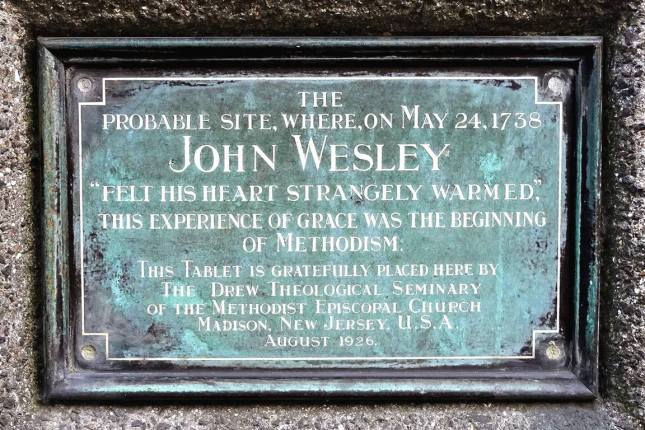
Centuries later, our United Methodist forebear, John Wesley, emphasized the day by including it as one of three non-Sunday holy day observances included in his Sunday Service of the Methodists in North America—a forerunner of our Book of Worship. The other two are Good Friday and Christmas.

Wesley also retained language about the Ascension as part of the Articles of Religion of the Methodist Church, which he edited from the Church of England. Echoing the creeds, Article III states, “he ascended into Heaven, and there sitteth until he return to judge all men at the last day.”

Charles Wesley, John’s brother and hymn writer of the early Methodist movement, published a pamphlet of seven Hymns for Ascension Day in 1746 and several more hymns on the Ascension that appear in other volumes of his work.

Today, many United Methodist congregations recognize Jesus’ ascension during regular worship services on Ascension Sunday, the Sunday immediately following Ascension Day.

“Hail the Day That Sees Him Rise”

Interestingly, we have no sermons on Ascension Day from John Wesley, and his Explanatory Notes on the New Testament offer no commentary on the account of the Ascension in Acts and little on the verses in Luke. Most of what we know about the Wesleys’ teaching on the Ascension comes from Charles’s hymns.

Our United Methodist Hymnal contains a Charles Wesley hymn titled “Hail the Day That Sees Him Rise” (312). The lyrics for this hymn, an adaptation of Charles’s “Hymn for Ascension-Day” published in Hymns and Sacred Poems (1739), offer insight into the importance of this day.

Charles begins acknowledging the Ascension as both the ending of Jesus’s physical presence on Earth and his return to his rightful place in heaven.

An important celebration

While much of the world may see Ascension Day as just another Thursday, United Methodists can celebrate. With John and Charles Wesley, we remember that Jesus ascended to heaven where he took his rightful throne as Lord of the whole earth. Though he is not bodily present, he continues to love us, and longs to receive us into the presence of God to dwell with him throughout eternity.


“Becoming a Godly Woman”

Focus on the Heart equips women to walk with God and each other in authentic relationships where they experience the freedom of living and loving wholeheartedly.

The course is “Becoming a Godly Woman” Course Materials $30 by check, Zelle or Venmo at first meeting.


May 1-June 12 at 10-11:45AM (7 weeks total)
Childcare available
Questions? Contact the church office at 703-278-8023
This course is sponsored by the Pender United Women in Faith.

Please let us know you’re coming!

 
Leave a comment

Posted by on April 10, 2026 in Posts of Interest


Lent Quiz: Why are Eggs Associated with Easter?

easter-eggs-colorful


Experts from the age of five to ten, as well as The Rev. MaryJane Pierce Norton from the General Board of Discipleship, talk about the traditions of the Easter egg — from hunting eggs, to coloring them, to the egg as a symbol of new life. The egg became associated with Easter somewhere near the 400s and was often a food that was given up at Lent.

According to Rev. Norton, “In some of the early church traditions, people brought their eggs to the church to be blessed before they ate them, as the first joyful food of Easter.”

Please also enjoy “Outtakes” and other cute stuff  we couldn’t fit into the video.


Tags: , ,