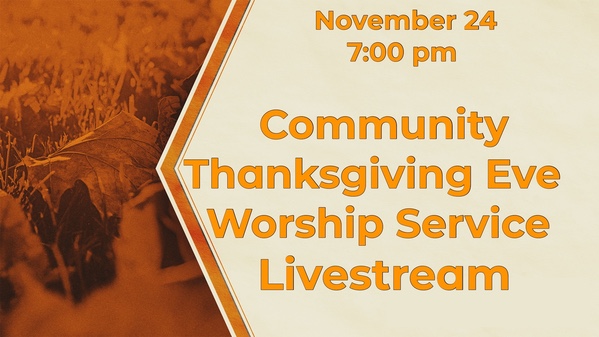
THE COMMUNITY THANKSGIVING SERVICE will be held on Wednesday, November 24, at 7pm. This is a “virtual only” worship experience that will be hosted by OX Hill Baptist Church. Rev. White and members of our music ministry will be participating.
THE COMMUNITY THANKSGIVING SERVICE will be held on Wednesday, November 24, at 7pm. This is a “virtual only” worship experience that will be hosted by OX Hill Baptist Church. Rev. White and members of our music ministry will be participating.
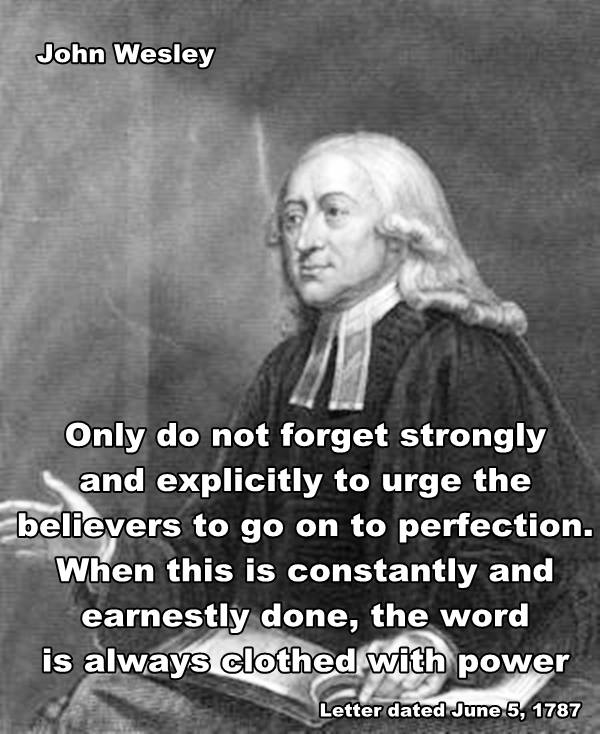
Wesley was born on June 17, 1703, while England was still using the Julian calendar. England adopted the Gregorian calendar in 1752 and thus Wesley’s birth date became June 28.
His birthday reflections give us a glimpse into how he viewed his life, health and ministry. On June 28, 1770, he wrote:
I can hardly believe that I am this entered into the sixty-eighth year of my age! How marvelous are the ways of God! How has he kept me, even from a child! From ten to thirteen or fourteen, I had little but bread to eat, and not great plenty of that. I believe this was so far from hurting me that it laid the foundation to lasting health. When I grew up, in consequence of reading Dr. Cheyne, I chose to eat sparingly and drink water. This was another great means of continuing my health, till I was about seven and twenty…; (He then speaks of various ailments.); Since that time, I have known neither pain nor sickness, and am now healthier than I was forty years ago! This hath God wrought!
He started to set a pattern for indicating his age and his good health. One year later, he wrote:
This day I entered the sixty-ninth year of my age. I am still a wonder to myself. My voice and strength are the same as at nine and twenty. This also hath God wrought.
In 1774, he wrote:
This being my birthday, the first day of my seventy-second year, I was considering. How is this, that I find just the same strength as I did thirty years ago? That my sight is considerably better now and my nerves firmer than there were then? That I have none of the infirmities of old age and have lost several I had in my youth? The grand cause is the good pleasure of God, who doth whatsoever pleaseth him. The chief means are: (1) My constantly rising at four, for about fifty years. (2) My generally preaching at five in the morning, one of the most healthy exercises in the world. (3) My never travelling less, by sea or land, than four thousand five hundred miles in a year.
In the intervening 10 years, he repeated these sentiments numerous times, and even in 1784, he wrote:
Today I entered on my eighty-second year and found myself just as strong to labour, and as fit for any exercise of body or mind, as I was forty years ago. I do not impute this to second causes, but to the sovereign Lord of all…; I am as strong at eighty-one, as I was at twenty-one, but abundantly more healthy, being a stranger to the head-ache, tooth-ache, and other bodily disorders which attended me in my youth. We can only say ‘The Lord reigneth’ While we live, let us live to him!
In 1788, after praising God “for a thousand spiritual blessings,” Wesley listed as questions what may be some of the “inferior means” for achieving such good health into old age.
To my constant exercise and change of air? To my never having lost a night’s sleep, sick or well at land or at sea, since I was born? To my having sleep at command, so that whenever I feel myself almost worn out, I call it and it comes, day or night? To my having constantly, for above sixty years, risen at four in the morning? To my constant preaching at five in the morning for above fifty years? To my having had so little pain in my life and so little sorrow or anxious care?
Finally, on June 28, 1790, less than a year before his death, he wrote:
This day I enter into my eighty-eighth year. For above eighty-six years, I found none of the infirmities of old age: my eyes did not wax dim, neither was my natural strength abated. But last August, I found almost a sudden change. My eyes were so dim that no glasses would help me. My strength likewise now quite forsook me and probably will not return in this world. But I feel no pain from head to foot, only it seems nature is exhausted and, humanly speaking, will sink more and more, till ‘The weary springs of life stand still at last.’
As this remarkable man aged, he reflected on God’s blessings and how his lifestyle contributed to his good health. This is but a brief glimpse into his humanity and can call on us to do likewise on our birthdays.
Editor’s Note: This story was first published on June 25, 2012.
*Williams is the top executive of the United Methodist Commission on Archives and History in Madison, N.J.
From http://www.umc.org/news-and-media/marking-john-wesleys-birthday-in-his-words
I can hardly believe that I am this entered into the sixty-eighth year of my age! How marvelous are the ways of God! How has he kept me, even from a child! From ten to thirteen or fourteen, I had little but bread to eat, and not great plenty of that. I believe this was so far from hurting me that it laid the foundation to lasting health. When I grew up, in consequence of reading Dr. Cheyne, I chose to eat sparingly and drink water. This was another great means of continuing my health, till I was about seven and twenty…; (He then speaks of various ailments.); Since that time, I have known neither pain nor sickness, and am now healthier than I was forty years ago! This hath God wrought!
He started to set a pattern for indicating his age and his good health. One year later, he wrote:
This day I entered the sixty-ninth year of my age. I am still a wonder to myself. My voice and strength are the same as at nine and twenty. This also hath God wrought.
In 1774, he wrote:
This being my birthday, the first day of my seventy-second year, I was considering. How is this, that I find just the same strength as I did thirty years ago? That my sight is considerably better now and my nerves firmer than there were then? That I have none of the infirmities of old age and have lost several I had in my youth? The grand cause is the good pleasure of God, who doth whatsoever pleaseth him. The chief means are: (1) My constantly rising at four, for about fifty years. (2) My generally preaching at five in the morning, one of the most healthy exercises in the world. (3) My never travelling less, by sea or land, than four thousand five hundred miles in a year.
In the intervening 10 years, he repeated these sentiments numerous times, and even in 1784, he wrote:
Today I entered on my eighty-second year and found myself just as strong to labour, and as fit for any exercise of body or mind, as I was forty years ago. I do not impute this to second causes, but to the sovereign Lord of all…; I am as strong at eighty-one, as I was at twenty-one, but abundantly more healthy, being a stranger to the head-ache, tooth-ache, and other bodily disorders which attended me in my youth. We can only say ‘The Lord reigneth’ While we live, let us live to him!
In 1788, after praising God “for a thousand spiritual blessings,” Wesley listed as questions what may be some of the “inferior means” for achieving such good health into old age.
To my constant exercise and change of air? To my never having lost a night’s sleep, sick or well at land or at sea, since I was born? To my having sleep at command, so that whenever I feel myself almost worn out, I call it and it comes, day or night? To my having constantly, for above sixty years, risen at four in the morning? To my constant preaching at five in the morning for above fifty years? To my having had so little pain in my life and so little sorrow or anxious care?
Finally, on June 28, 1790, less than a year before his death, he wrote:
This day I enter into my eighty-eighth year. For above eighty-six years, I found none of the infirmities of old age: my eyes did not wax dim, neither was my natural strength abated. But last August, I found almost a sudden change. My eyes were so dim that no glasses would help me. My strength likewise now quite forsook me and probably will not return in this world. But I feel no pain from head to foot, only it seems nature is exhausted and, humanly speaking, will sink more and more, till ‘The weary springs of life stand still at last.’
As this remarkable man aged, he reflected on God’s blessings and how his lifestyle contributed to his good health. This is but a brief glimpse into his humanity and can call on us to do likewise on our birthdays.
Editor’s Note: This story was first published on June 25, 2012.
*Williams is the top executive of the United Methodist Commission on Archives and History in Madison, N.J.
From http://www.umc.org/news-and-media/marking-john-wesleys-birthday-in-his-words

She speaks with wisdom, and faithful instruction is on her tongue. ~ Proverbs 31:26

Earth Day is April 22; churches typically observe Earth Day Sunday during the month of April. It is an opportunity to reflect on the goodness of God’s creation and the human responsibility to steward it through worship, education and action.
The Rev. Pat Watkins is an expert in educating others about how theology relates to caring for creation as an important Christian mission. Watkins was a missionary with the General Board of Global Ministries assigned to the care of God’s creation.
“Many of us are stuck at a grade school level of theological competence and Bible understanding,” Watkins explained. “If we looked deeper into the Bible, we’d be surprised. Relationship with God and relationship with the Earth are very prevalent in the Bible, but we focus primarily on our relationship with God and not the Earth.”
“It’s more than recycling and Styrofoam” he continued. “It’s about relationships with God, each other, and God’s creation. It’s about how we live with each other. It is a covenant.”
Watkins said, “The United Methodist Church is an amazing and powerful group of Christians because of our Scriptures. We just don’t use that power enough. We need to be the voice of creation care.”
Watkins shared some Biblical references that call us to care for God’s creation.
Genesis 2:7 – The Lord God formed the human from the topsoil of the fertile land and blew life’s breath into his nostrils.”
Adam was created out of dust of the Earth. How could there be any more of a relationship with the Earth than to be created out of it? It’s as if God scooped up a couple handfuls of earth and formed humanity. When God formed Adam he was not a living being until God breathed life into his nostrils and we became living human beings. The fact that we exist as living, breathing human beings suggests that we have a relationship with the Earth because we were created out of it and we have a relationship with God because we breathe the very breath of the one who created all that is.
Genesis 3:23 – “The Lord God sent him out of the garden of Eden to farm the fertile land from which he was taken.”
Even the fact that God put Adam and Eve in a garden is an important point. Due to their disobedience, they were kicked out of the garden and the land was cursed making it more difficult for them to coax the earth to provide for them.
Genesis 4:12 – “When you farm the fertile land, it will no longer grow anything for you, and you will become a roving nomad on the earth.”
The story of Cain and Able is also a story of disobedience. When Cain, a farmer, killed his brother, God punished him by removing him from the soil. He became a wanderer across the earth with no connection to any land. When he lost his relationship with the land, he could no longer see the face of God. Relationship with the land and relationship with God were, for Cain, inseparable.
Disobedience of God and violence towards one another results in negative consequences for the earth.
Genesis 9:13 – “I have placed my bow in the clouds; it will be the symbol of the covenant between me and the earth.”
Few people know that Noah’s father, Lamech, thought that his son might one day be the “righteous” one to remove the curse on the land (Genesis 5:28-29). When Noah’s Ark came to rest and the animals were released, a rainbow appeared. It was a sign not only of God’s covenant with Noah, but also with the animals and the earth itself. Noah’s story is a story of reconciliation of humanity and the earth. God saw what he had done and promised he would never again curse the land.
John 1:3 – “Everything came into being through the Word, and without the Word nothing came into being.”
At the beginning of John’s Gospel there is an understanding by the writer that Jesus was present at Creation and that everything that ever came into being came into being through Christ.
John 3:16 – “God so loved the world that God gave his only Son, so that everyone who believes in him won’t perish but will have eternal life.”
Many think that the whole Christ event was just about personal salvation, but actually, it was about God’s love for everything God has made. The word world is better translated as cosmos.
The Apostle Paul
Romans 8:19 – “The whole creation waits breathless with anticipation for the revelation of God’s sons and daughters.”
Colossians 1:20 – “He reconciled all things to himself through him — whether things on earth or in the heavens. He brought peace through the blood of his cross.”
Paul has the understanding that Jesus was the redeemer not just of humanity, but of everything God created.
Learn more about The United Methodist Church and its teachings about the natural world, and creation care.
This piece was written by Susan Passi-Klaus, a freelance writer based in Nashville, Tennessee. Media contact: Joe Iovino.


 News and Views