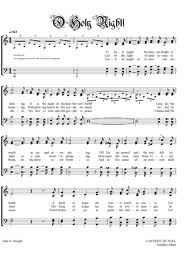
At Pender’s Holiday Concert 2022, Adolphe Adam’s “Oh Holy Night” was performed by Corinne Delaney, Soprano and Liz Eunji Moon on piano.
“O Holy Night” (“Cantique de Noël”) is a well-known Christmas carol composed by Adolphe Adam in 1847 to the French poem “Minuit, chrétiens” (Midnight, Christians) by Placide Cappeau (1808–1877).
Cappeau, a wine merchant and poet, had been asked by a parish priest to write a Christmas poem. Unitarian minister John Sullivan Dwight, editor of Dwight’s Journal of Music, created a singing edition based on Cappeau’s French text in 1855.
In both the French original and in the two familiar English versions of the carol, the text reflects on the birth of Jesus and of mankind’s redemption.
O Holy Night sung by Luciano Pavarotti and Placido Domingo
“We Three Kings”, also known as “We Three Kings of Orient Are” or “The Quest of the Magi”, is a Christmas carol written by the Reverend John Henry Hopkins, Jr., who wrote both the lyrics and the music.
We three kings of Orient are
Bearing gifts we traverse afar
Field and fountain, moor and mountain
Following yonder star
O Star of wonder, star of night
Star with royal beauty bright
Westward leading, still proceeding
Guide us to thy Perfect Light
Born a King on Bethlehem’s plain
Gold I bring to crown Him again
King forever, ceasing never
Over us all to reign
O Star of wonder, star of night
Star with royal beauty bright
Westward leading, still proceeding
Guide us to Thy perfect light
Frankincense to offer have I
Incense owns a Deity nigh
Prayer and praising, all men raising
Worship Him, God most high
O Star of wonder, star of night
Star with royal beauty bright
Westward leading, still proceeding
Guide us to Thy perfect light
Myrrh is mine, its bitter perfume
Breathes of life of gathering gloom
Sorrowing, sighing, bleeding, dying
Sealed in the stone-cold tomb
O Star of wonder, star of night
Star with royal beauty bright
Westward leading, still proceeding
Guide us to Thy perfect light
Glorious now behold Him arise
King and God and Sacrifice
Alleluia, Alleluia
Earth to heav’n replies
O Star of wonder, star of night
Star with royal beauty bright
Westward leading, still proceeding
Guide us to Thy perfect light
From Mannheim Steamroller, Chip Davis gives this song an “Arabian Nights” feel. A classic song that tells the story of the Gentiles who were quicker to recognize the significance of Christ’s birth than were His own people. Enjoy, and Merry Christmas!
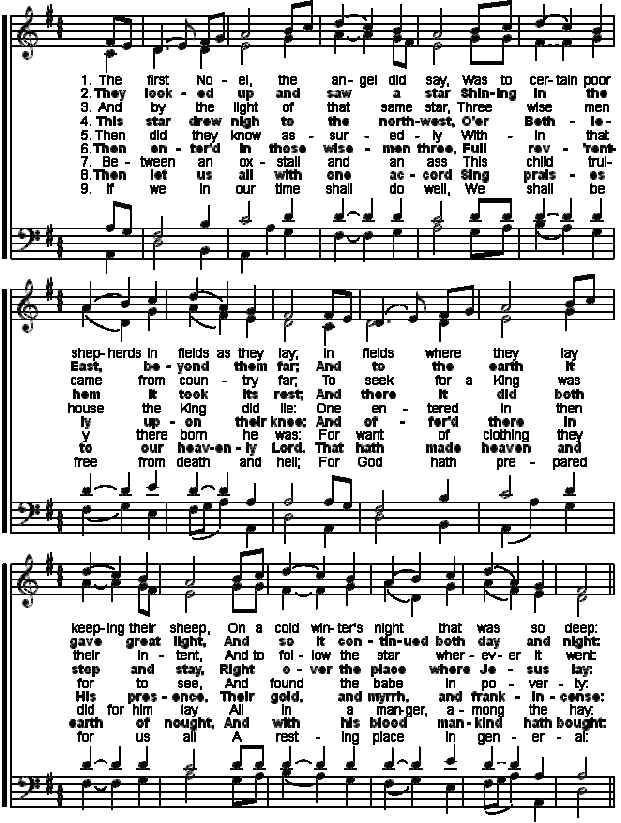
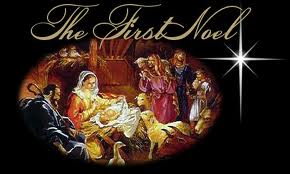
The First Nowell (also written The First Noël) is a traditional classical English carol, most likely from the 18th century, although possibly earlier.
The word Noel comes from the French word Noël meaning “Christmas”, from the Latin word natalis “birthday”.
The melody is unusual among English folk melodies in that it consists of one musical phrase repeated twice, followed by a refrain which is a variation on that phrase. All three phrases end on the third of the scale.
The first Noel the angel did say
Was to certain poor shepherds in fields as they lay;
In fields where they lay tending their sheep,
On a cold winter’s night that was so deep.
Refrain
Noel, Noel, Noel, Noel, Born is the King of Israel.
They lookèd up and saw a star
Shining in the east, beyond them far;
And to the earth it gave great light,
And so it continued both day and night.
Refrain
And by the light of that same star
Three Wise Men came from country far;
To seek for a King was their intent,
And to follow the star wherever it went.
Refrain
This star drew nigh to the northwest,
Over Bethlehem it took its rest;
And there it did both stop and stay,
Right over the place where Jesus lay.
Refrain
Then did they know assuredly
Within that house the King did lie;
One entered it them for to see,
And found the Babe in poverty.
Refrain
Then entered in those Wise Men three,
Full reverently upon the knee,
And offered there, in His presence,
Their gold and myrrh and frankincense.
Refrain
Between an ox stall and an ass,
This Child truly there He was;
For want of clothing they did Him lay
All in a manger, among the hay.
Refrain
Then let us all with one accord
Sing praises to our heavenly Lord;
That hath made Heaven and earth of naught,
And with His blood mankind hath bought.
Refrain
If we in our time shall do well,
We shall be free from death and hell;
For God hath prepared for us all
A resting place in general.
Refrain
The University of Utah Singers performed “The First Noel” arr. by Dan Forrest live in concert, December 11th & 12th, 2009 in Libby Gardner concert hall under the direction of Dr. Brady Allred.
“We Three Kings”, also known as “We Three Kings of Orient Are” or “The Quest of the Magi”, is a Christmas carol written by the Reverend John Henry Hopkins, Jr., who wrote both the lyrics and the music.
We three kings of Orient are
Bearing gifts we traverse afar
Field and fountain, moor and mountain
Following yonder star
O Star of wonder, star of night
Star with royal beauty bright
Westward leading, still proceeding
Guide us to thy Perfect Light
Born a King on Bethlehem’s plain
Gold I bring to crown Him again
King forever, ceasing never
Over us all to reign
O Star of wonder, star of night
Star with royal beauty bright
Westward leading, still proceeding
Guide us to Thy perfect light
Frankincense to offer have I
Incense owns a Deity nigh
Prayer and praising, all men raising
Worship Him, God most high
O Star of wonder, star of night
Star with royal beauty bright
Westward leading, still proceeding
Guide us to Thy perfect light
Myrrh is mine, its bitter perfume
Breathes of life of gathering gloom
Sorrowing, sighing, bleeding, dying
Sealed in the stone-cold tomb
O Star of wonder, star of night
Star with royal beauty bright
Westward leading, still proceeding
Guide us to Thy perfect light
Glorious now behold Him arise
King and God and Sacrifice
Alleluia, Alleluia
Earth to heav’n replies
O Star of wonder, star of night
Star with royal beauty bright
Westward leading, still proceeding
Guide us to Thy perfect light
From Mannheim Steamroller, Chip Davis gives this song an “Arabian Nights” feel. A classic song that tells the story of the Gentiles who were quicker to recognize the significance of Christ’s birth than were His own people. Enjoy, and Merry Christmas!
“The First Nowell,” also known as “The First Noël,” is a carol steeped in the rich tapestry of English musical tradition, a gem that has been passed down through the ages, possibly originating as far back as the 18th century, or even earlier. This carol is not just a song; it’s a historical artifact, echoing the voices and sentiments of generations past.
The title “Nowell” is derived from the French word “Noël,” meaning “Christmas,” which in turn traces its roots back to the Latin “natalis,” signifying “birthday.” This linguistic journey across cultures and times adds a layer of depth to the carol, connecting it to the universal celebration of Christmas and the joy of birth and renewal.
What sets “The First Nowell” apart in the realm of English folk music is its unique melodic structure. It is built on a captivatingly simple yet profound musical pattern: one melodic phrase, so pure and resonant, repeated twice, followed by a reflective refrain. This refrain is not just a repetition but a subtle variation, a creative twist on the original theme. Remarkably, all three phrases culminate on the third of the scale, a musical choice that lends the carol a sense of completion and emotional fulfillment.
This carol is not just a melody but a journey through musical creativity, where simplicity and repetition weave a spell of enchantment. It’s a testament to the timeless beauty of folk music, where less is often more, and where the power of a melody can resonate through centuries, bringing the spirit of Christmas alive in the hearts of all who hear it. “The First Nowell” is not just sung; it is felt and experienced, a classic embodiment of the Christmas spirit.
The first Noel the angel did say
Was to certain poor shepherds in fields as they lay;
In fields where they lay tending their sheep,
On a cold winter’s night that was so deep.
Refrain
Noel, Noel, Noel, Noel, Born is the King of Israel.
They lookèd up and saw a star
Shining in the east, beyond them far;
And to the earth it gave great light,
And so it continued both day and night.
Refrain
And by the light of that same star
Three Wise Men came from country far;
To seek for a King was their intent,
And to follow the star wherever it went.
Refrain
This star drew nigh to the northwest,
Over Bethlehem it took its rest;
And there it did both stop and stay,
Right over the place where Jesus lay.
Refrain
Then did they know assuredly
Within that house the King did lie;
One entered it them for to see,
And found the Babe in poverty.
Refrain
Then entered in those Wise Men three,
Full reverently upon the knee,
And offered there, in His presence,
Their gold and myrrh and frankincense.
Refrain
Between an ox stall and an ass,
This Child truly there He was;
For want of clothing they did Him lay
All in a manger, among the hay.
Refrain
Then let us all with one accord
Sing praises to our heavenly Lord;
That hath made Heaven and earth of naught,
And with His blood mankind hath bought.
Refrain
If we in our time shall do well,
We shall be free from death and hell;
For God hath prepared for us all
A resting place in general.
Refrain
On the first Sunday of Advent, December 3, 2023, Pender’s Carillon Ringerspresented “The First Noel” as the Prelude. This rendition of the beloved Christmas carol offers a magical and ethereal experience, prioritizing musical expression over technical complexity. The result is an elegant, moving, and beautifully crafted piece.
Our arrangement arranged was by arr. Sandra Eithun and introduced a simple yet captivating rhythmic motif withchimes, which resonate throughout the piece, breathing new life into this timeless standard.
“The First Noel” is a cherished holiday carol, hailing from 19th-century Boston, Massachusetts. Traditionally played in churches and festive gatherings during the Christmas season, the song narrates the story of ringing bells to herald the birth of Jesus Christ. Known for inducing feelings of joy, excitement, and embodying the Christmas spirit, “The First Noel” is set in the key of D major and is typically performed at a fast tempo.
The University of Utah Singers perform “The First Noel” arr. by Dan Forrest live in concert, December 11th & 12th, 2009 in Libby Gardner concert hall under the direction of Dr. Brady Allred.






 News and Views