From RevKev, Pender’s Former Associate Pastor – “As it was, so it is, Christmas about Jesus. We are all distracted by the glitz and festivities, but let us hear the sound of Angels and the call to worship our Newborn King. Just in time for Christmas, a gift from God to you: A baby in a manger who would love us through and through.
Just In Time For Christmas, the latest album release by JC Reigns. 100% of the sales from this CD go to Western Fairfax Christian Ministries to support their mission of providing life-essential support to those needing assistance.
Visit www.jcreigns.org for more information and for a link to purchase digital copies.”
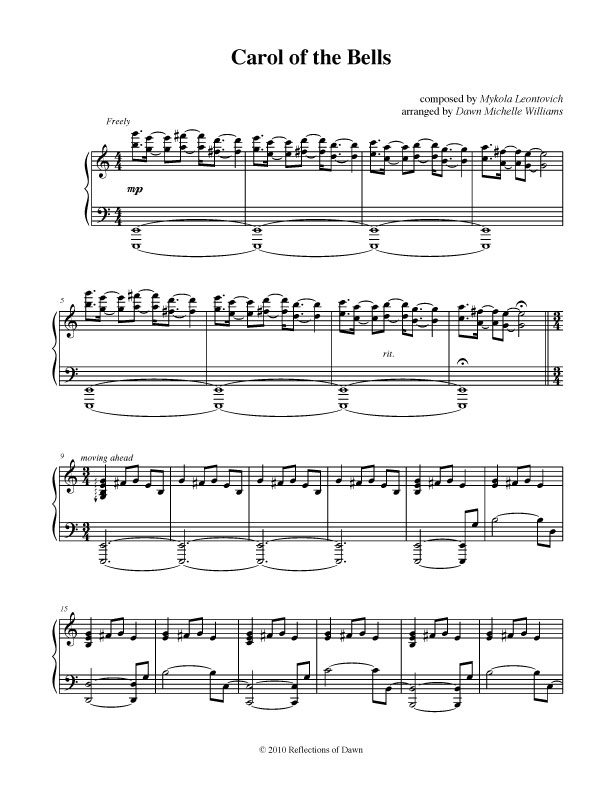
Carol of the Bells was composed by Mykola Dmytrovych Leontovych (1877-1921) in 1916. Originally titled Shchedryk, this Ukrainian folk song is sometimes called Ukrainian Bell Carol.
It was first performed in the Ukraine on the night of January 13, 1916, on the Julian calendar this is considered New Year’s Eve. In the United States the song was first performed on October 5, 1921 at Carnegie Hall.
This video is from the Christmas special of the Mormon Tabernacle Choir, presented at the BYU channel. Very beautiful sound of bells, the orchestra and choir, enjoy the video!
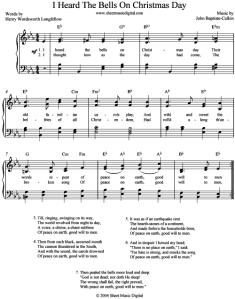
“I Heard the Bells on Christmas Day” is a Christmas carol based on the 1863 poem “Christmas Bells” by American poet Henry Wadsworth Longfellow. The song tells of the narrator’s despair, upon hearing Christmas bells, that “hate is strong and mocks the song of peace on earth, good will to men”. The carol concludes with the bells carrying renewed hope for peace among mankind.
This version is done by Casting Crowns. I chose it because the Pender choir sang this on Christmas Eve with past-Associate Pastor Dan Elmore singing the solo…and I fell in love with this version.
As seen on 2008 TBN Christmas special. “I Heard The Bells On Christmas Day” is available on Casting Crowns’ Christmas album, Peace On Earth.
More traditionally, the Mormon Tabernacle Choir’s version:
I heard the bells on Christmas Day
Their old, familiar carols play,
and wild and sweet
The words repeat
Of peace on earth, good-will to men!
And thought how, as the day had come,
The belfries of all Christendom
Had rolled along
The unbroken song
Of peace on earth, good-will to men!
Till ringing, singing on its way,
The world revolved from night to day,
A voice, a chime,
A chant sublime
Of peace on earth, good-will to men!
Then from each black, accursed mouth
The cannon thundered in the South,
And with the sound
The carols drowned
Of peace on earth, good-will to men!
It was as if an earthquake rent
The hearth-stones of a continent,
And made forlorn
The households born
Of peace on earth, good-will to men!
And in despair I bowed my head;
“There is no peace on earth,” I said;
“For hate is strong,
And mocks the song
Of peace on earth, good-will to men!”
Then pealed the bells more loud and deep:
“God is not dead, nor doth He sleep;
The Wrong shall fail,
The Right prevail,
With peace on earth, good-will to men.”
Angels we have heard on high
Sweetly singing o’er the plains
And the mountains in reply
Echoing their joyous strains
CHORUS:
Gloria, in excelsis Deo!
Gloria, in excelsis Deo!
Shepherds, why this jubilee?
Why your joyous strains prolong?
What the gladsome tidings be
Which inspire your heavenly song? ChorusCome to Bethlehem and see
Him Whose birth the angels sing;
Come, adore on bended knee,
Christ the Lord, the newborn King. ChorusSee Him in a manger laid
Jesus Lord of heaven and earth;
Mary, Joseph, lend your aid,
With us sing our Savior’s birth. Chorus
This is a traditional French carol (Les Anges dans nos Campagnes) that was translated into English by Bishop James Chadwick.
This carol commemorates the story of the birth of Jesus Christ found in the Gospel of Luke, in which shepherds outside Bethlehem encounter a multitude of angels singing and praising the newborn child.
The Piano Guys, Peter Hollens, David Archuleta, and The Mormon Tabernacle Choir get together to sing “Angels We Have Heard On High”
Isaac Watts wrote the words to “Joy to the World” in 1719, based on Psalm 98 in the Bible. The hymn originally glorified Christ’s triumphant return at the end of the age, rather than a song celebrating His first coming. Only the second half of Watts’ lyrics are still used today.
The music was adapted and arranged to Watts’ lyrics by Lowell Mason in 1839 from an older melody which was then believed to have originated from Handel. The name “Antioch” is generally used for the hymn tune.
As of the late 20th century, “Joy to the World” was the most-published Christmas hymn in North America.



 News and Views