RSS

Tag Archives: purple

All about Liturgical Colors

  • Purple, representing both royalty and penitence, is traditionally used during Advent and Lent.
  • Blue symbolizes hope and may also be used during Advent.
  • White and gold are used at Christmas and Easter to symbolize joy and festivities.
  • Red symbolizes the color of fire to represent the Holy Spirit on the Day of Pentecost and times when the work of the Holy Spirit is emphasized. During Holy Week it represents the blood of Christ. Red is also used for ordinations, church anniversaries and civil observances such as Memorial Day and Thanksgiving.
  • Green represents growth and is used during Ordinary Time (the season after Epiphany and the season after Pentecost.)

Let’s start with a word about liturgical colors. You can see listed here that the official color of the long season of Ordinary Time is green. This makes sense for lots of reasons: Ordinary Time is about growing in our faith, about accepting the gifts that we’ve been given, and producing the fruit not just as individual Christians but as the body of Christ. Green is the color of growth and of fruitfulness. There are other reasons why the season claims the color green. Perhaps you and your team can come up with some more and use them to inform the congregation who may never have given thought to why the green paraments are used throughout this season.

We started here, however, because there are those who get bored with a single color in this long season that runs from Pentecost through Reign of Christ/Christ the King Sunday at the end of November. There are so many colors, so much beauty in worship art and God’s creation, why use only one color for this long season? Isn’t this the season after Pentecost? Why can’t we use red for at least a part of the season?

The season of Ordinary Time (or the Sundays after Pentecost—there is no “Pentecost Season”) calls for creativity and artistry. Even if you are using green as a foundational color, there is no reason why you can’t bring in a host of other colors over the season. Green represents life, and life is colorful. So, use more colors; use both/and; use a whole palette of colors to bring to life the worship in Ordinary Time. Think ahead for changing series or themes and find ways to enhance the liturgy with visual expressions of color, not just in paraments, but in banners, worship centers, projected or posted images, and colors. There are ways to move beyond the plain green altar or pulpit fall. Call on artists of all sorts to enhance the space.

Adapted from https://www.umcdiscipleship.org/worship-planning/living-the-spirit-life/second-sunday-after-pentecost-year-c-lectionary-planning-notes

Chuck Knows Church — Episode 1 – LITURGICAL COLORS. Ever walk into your Sunday morning worship service and realize the colors have changed around the sanctuary? That’s why Chuck is talking about Liturgical Colors on his FIRST SHOW!

 

Tags: , , , , , , , , , , , , , , , , , , , , , ,

All About the Advent Wreath, Week One

Sunday, November 27, 2022  is the First Sunday in Advent.   I’m skipping a couple of the Chuck Knows Church episodes because this one is so timely.  We’ll get back to the others after Christmas.

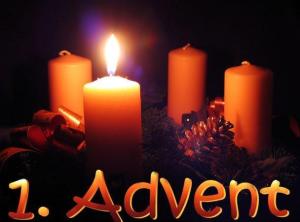
The first Candle is lit on the first Sunday of Advent. It is called the Prophecy Candle and reminds us that Jesus’ coming was prophesied hundreds of years before He was born. The candle’s purple color represents Christ’s royalty as the King of Kings.


The Advent wreath began as a German and Scandinavian home devotional practice used to mark the four weeks of Advent. Families would light a candle for each past week and the current week at their dinner or evening time of prayer. The configuration of candles, whether in a line or a circle, did not matter. Neither did the color of the candles (all colors are used in homes in Europe). What mattered was the marking of time and the increase of light each week in the face of increasing darkness as the winter solstice approached.

As Advent wreaths began to be used by congregations on Sundays in some places in Europe and America beginning in the late 19th century, several adaptations were made to make them work better in public worship spaces. Candles needed to be larger and more uniform than the “daily candles” handmade or purchased for home use. They also needed to be more uniform in color to fit with other décor in the sanctuary. That is why candles used in the Advent wreath are usually purple or blue, to coordinate with color of the paraments used during this season.

This shift in context from home to public use also made it important in the eyes of some for the candles to be given a meaning more that simply marking time and  increasing light. This led to special ceremonies being developed for lighting these special candles each week.

As this practice began to catch on by the mid-twentieth century, several church supply houses who sold Advent wreaths and candles for public worship also developed resources, banners, and bulletin covers assigning a theme to each week, and thus each candle, based on scriptures from the one-year lectionaries used at that time. Those themes were Hope, Love, Joy, and Peace, in that order.

Today, almost no one uses those one-year lectionaries, so those themes may not always fit the scriptures we hear in worship. The one exception is the Third Sunday of Advent, where the current lectionaries have continued to support the centuries old observance of “Gaudete” or “Joy Sunday.” That is why church supply houses often offer rose or pink colored candles for the wreath for use on this day.

So how may we talk about the meaning of the Advent wreath today?

We can reclaim the original home use of marking time with the hope of increasing light as we await the return of Christ, that day when “The city no longer has need of the sun or the moon to shine upon it, because the glory of God illumines it, and its lamp is the lamb.”

And we can develop meanings or themes for each week based on the focus of the scriptures themselves. After all, the candles and the wreath are an accessory, not an end in themselves. Their meaningfulness comes from how we use them to point toward Christ, the world’s true light, who was, and is, and is to come.

This content was produced by Ask The UMC, a ministry of United Methodist Communications.


Suggested Bible Reading: Luke 1:26-38

Chuck Knows Church — ADVENT WREATH. Four candles in a circle with a big one in the middle? Yep, take a moment and learn the basics about the advent wreath. And why is the pink candle…pink?

 
Leave a comment

Posted by on November 27, 2022 in Advent, Holidays, Posts of Interest, Videos


Tags: , , , , , , , , , , ,

Advent Wreath — Chuck Knows Church

Advent

Sunday, November 28,  is the First Sunday in Advent.   I’m skipping a couple of the Chuck Knows Church episodes because this one is so timely.  We’ll get back to the others after Christmas.

The first Candle is lit on the first Sunday of Advent. It is called the Prophecy Candle and reminds us that Jesus’ coming was prophesied hundreds of years before He was born. The candle’s purple color represents Christ’s royalty as the King of Kings.

Suggested Bible Reading: Luke 1:26-38

Chuck Knows Church — ADVENT WREATH. Four candles in a circle with a big one in the middle? Yep, take a moment and learn the basics about the advent wreath. And why is the pink candle…pink?


Tags: , , , , , , , , , , ,