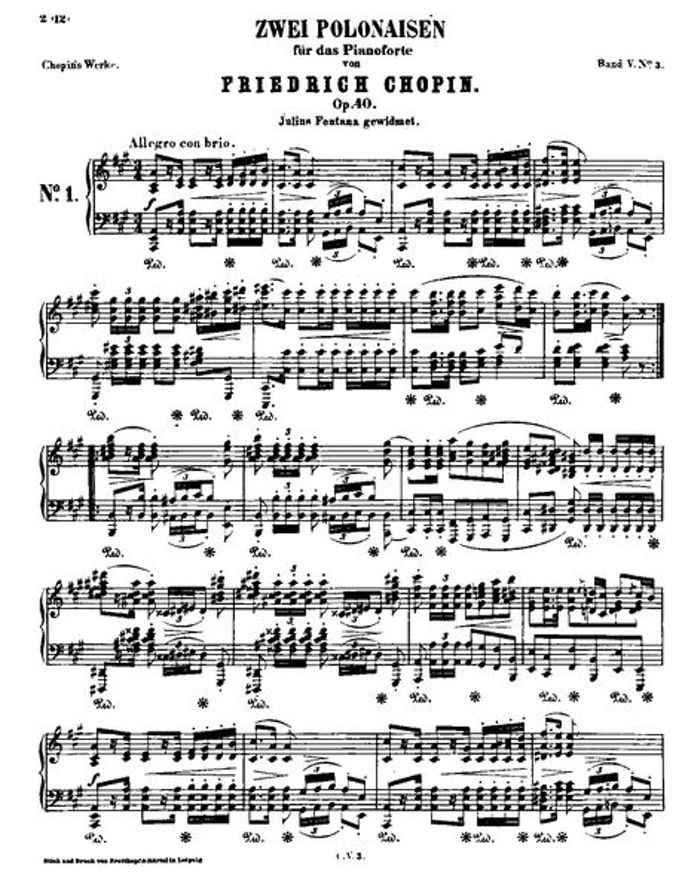
During the Postlude at Pender UMC’s Traditional Service on June 11, 2023, we were treated to “Military Polonaise Op. 40 No. 1 in A Major” by Frédéric Chopin played by Heidi Jacobs.
The Polonaise no. 1 in A major, often nicknamed Military, has been described as a symbol of ‘Polish Glory’: it is almost entirely played forte or louder, which makes for a bombastic performance.
“Sanctuary” was the offertory anthem at Pender’s 9:00 am Traditional Service on September 10, 2023 It was sung by Pender’s Sanctuary choir, directed by Jane McKee and accompanied on piano by Heidi Jacobs.
This popular praise chorus is paired with original words and music by Lloyd Larson. The prayerful message calls for each worshiper to come before God in devotion and thanksgiving.
The Scriptural Reference is Romans 12:1-2.
Sanctuary was written by Randy Scruggs and John W. Thompson. Randy Scruggs was born in 1953 and died 62 years later. He was named CMA Musician of the Year in 1999, 2003 and 2006. He was first recorded when he was four years old, his dad was a well known banjo player. He wrote hits for several individuals throughout his life.
John’s co-authorship of the song was close to the time when he wrote another song – El Shaddai (with Michael Card) – that has gone on to various accolades.
“When Jesus the Healer Passed through Galilee”
Peter D. Smith
The United Methodist Hymnal, No. 263
“When Jesus the Healer Passed Through Galilee” was the closing hymn at Pender’s 9:00 am Traditional Service on September 10, 2023 It was sung by Pender’s Sanctuary choir, congregation and accompanied on piano by Heidi Jacobs.
The Pender UMC Traditional Service Closing Hymn “When Jesus the Healer Passed Through Galilee” on Sunday June 19, 2022 was accompanied by Liz Sellers on piano, Brian Stevenson on guitar and sung by Brian and the Pender Congregation.
During the season of Epiphany, we recall those actions of Jesus, especially the miracles, that demonstrate that he was indeed the Christ, the Son of God. “When Jesus the healer” provides a compendium of many of Christ’s miraculous healing activities.
Peter David Smith was born in Weybridge, Surrey, England, in 1938. After working for a time in the aircraft industry, he became a Methodist minister. A hallmark of his ministry was his gift as a folksinger. Though trained as a classical pianist, the folk guitar became his instrument of choice. He edited several popular song collections including Faith, Folk, and Charity (1968), Faith, Folk and Nativity (1969), Faith, Folk, and Festivity (1969), and New Orbit (1972). These collections appeared during the height of the popularity of the folk music idiom.
The folk idiom in the service of the church provides an immediacy and accessibility to great biblical truths. While classical hymnody often engages through the depth of metaphors and symbolic use of language, the more colloquial language of the folk idiom captures us with its earthiness—what you see is what you get. The music of a successful folksong must be easily learned—captured immediately—or it works against the directness of the language.
Folk Songs often tell stories, or have a narrative quality. The guitar is the preferred instrument of the folksinger. Its portability and accessibility invite participation. An organ or even a piano might separate the singer and the people, both in physical and psychological space, but not the guitar.
In many ways, Christian folk singers of the 1960s and 1970s find their roots in the songs of Woody Guthrie (1912-1967), Pete Seeger (b. 1919) and Bob Dylan (b. 1941), to name a few. However, the prototype of the Christian folksong may be found in Sydney Carter (1915-2004) and his famous “Lord of the Dance” (1963). Carter shocked the faithful and endeared himself to the prophets in the church. While he is known primarily for “Lord of the Dance” in the United States, many more of his songs are commonly sung in England.
The overarching narrative of Jesus as healer guides this hymn. In a mere 22 syllables and a brief refrain, the author opens up an entire healing narrative in each stanza: stanza 1, Luke 4:31-41; stanza 2, Mark 2:3-12; stanza 3, Mark 5:22-24, 35-43; stanza 4, Mark 10:46-52; stanzas 5 and 6, Matthew 10:5-15. A soloist carries the weight of the narrative in the third person while the people respond from the perspective of those needing healing in the first person plural: “Heal us, heal us today!”
Mr. Smith composed this song during a course he was teaching on contemporary worship for the Iona Community in 1975. Later, he served on the editorial committee for the hymnal, Partners in Praise (1979), and this was one of ten contributions by the composer included in its contents.
One stanza was omitted due to sensitivity to discriminatory language and a slight alteration to one line in stanza five was made for the same reason. Other than that, the hymn comes to us as originally composed.
The composer skillfully draws the people into the narrative in the final stanza by pointing out that the need for Christ’s healing power is still with us today: “There’s still so much sickness and suffering today. . . . We gather together for healing and pray: Heal us, Lord Jesus!”
On Sunday, August 13, 2023 Charlie Taylor played Davidsbündlertänze No. 2 and No. 1 by Schumann during the Offertory.
Davidsbündlertänze (Dances of the League of David), Op. 6, is a group of eighteen pieces for piano composed in 1837 by Robert Schumann, who named them after his music society Davidsbündler.
The theme of the Davidsbündlertänze is based on a mazurka by Clara Wieck. The intimate character pieces are his most personal work. In 1838, Schumann told Clara that the Dances contained “many wedding thoughts” and that “the story is an entire Polterabend (German wedding eve party, during which old crockery is smashed to bring good luck)”.
The pieces are not true dances, but characteristic pieces, musical dialogues about contemporary music between Schumann’s characters Florestan and Eusebius. These respectively represent the impetuous and the lyrical, poetic sides of Schumann’s nature.
This classical piano piece was played during Pender UMC’s Traditional Service.
Charlie is 13 years old and was a student at our Pender Hill Preschool ten years ago.
“His Eye Is On The Sparrow” was the postlude at Pender’s 9:00 am Traditional Service on September 3, 2023. It was played on piano by Heidi Jacobs.
His Eye Is on the Sparrow
Civilla Martin The Faith We Sing, page No. 2146
“Why should I feel discouraged?
Why should the shadows come?
Why should my heart be lonely
and long for heaven and home?
When Jesus is my portion?
My constant friend is he;
His eye is on the sparrow,
and I know he watches me.”
Civilla Durfee Martin (1866-1948) was born in Nova Scotia and died in Atlanta, Ga. In “His eye is on the sparrow” (1905), she has provided one of the most influential and often-recorded gospel hymns of the 20th century.
Notable versions include recordings by Shirley Ceasar, Marvin Gaye, Kirk Franklin & the Family, Mahalia Jackson, Sister Rosetta Tharpe, Dottie West and Barbara Mandrell.
Jessica Simpson included this song in her album Irresistible (2001). The most stirring renditions of this song are associated for many with actress-singer Ethel Waters, who loved this it so much that it became the title of her autobiography (1950).
Martin was the daughter of James N. and Irene Harding Holden, and was a schoolteacher with modest musical training. Together with her husband, Walter (1862-1935), they often wrote gospel songs for revival meetings. “Be not dismayed” (UM Hymnal, No. 130) is an example of their collaboration.
Walter Stillman Martin was a Baptist minister who received his education at Harvard. He later became a member of the Disciples of Christ, teaching at Atlantic Christian College (now Barton College) in Wilson, N.C., before moving to Atlanta in 1919, a location that became the base for revivals that he held throughout the U.S.
The song was obviously inspired by Matthew 6:26: “Look at the birds of the air; they neither sow nor reap nor gather into barns, and yet your heavenly Father feeds them. Are you not of more value than they?”
Later in Matthew (10:29-31), the Gospel writer continues on this theme: “Are not two sparrows sold for a farthing? And one of them shall not fall on the ground without your Father. But the very hairs of your head are all numbered. Fear ye not therefore, ye are of more value than many sparrows.” Similar thoughts are cited in Luke 12:6-7. Stanza two quotes part of John 14:1 directly, “Let not your heart be troubled…”
Civilla Martin describes the context out of which the hymn was born: “Early in the spring of 1905, my husband and I were sojourning in Elmira, New York. We contracted a deep friendship for a couple by the name of Mr. and Mrs. Doolittle—true saints of God. Mrs. Doolittle had been bedridden for nigh twenty years. Her husband was an incurable cripple who had to propel himself to and from his business in a wheelchair. Despite their afflictions, they lived happy Christian lives, bringing inspiration and comfort to all who knew them. One day while we were visiting with the Doolittles, my husband commented on their bright hopefulness and asked them for the secret of it. Mrs. Doolittle’s response was simple: ‘His eye is on the sparrow, and I know He watches me.’ The beauty of this simple expression of boundless faith gripped the hearts and fired the imagination of Dr. Martin and me. The hymn ‘His Eye Is on the Sparrow’ was the outcome of that experience.”
The next day she mailed the poem to Charles Gabriel, a famous composer of gospel songs, who wrote a tune for it.
The themes of solace in spite of sorrow, and a profound sense of being under the watch-care of Jesus, who is a “constant friend,” offered the African-American community comfort during the Civil Rights movement. The refrain seals the theme by offering an apology for singing—“I sing because I’m happy, I sing because I’m free”—words that would speak to everyone, but especially African Americans.
There is no doubt that African American gospel artist Kirk Franklin was influenced by Martin’s song when he composed “Why we sing” (The Faith We Sing, No. 2144).


 News and Views