At Pender’s common ground contemporary worship on September 10, 2023 the Pender Praise Band sang 10,000 Reasons (Bless the Lord).
Led by AJ Rios on keyboards, the band consists of Megan Parker, Jane McKee (autoharp) and Arlet Williams.
“10,000 Reasons (Bless the Lord)” is a worship song co-written by Matt Redman and Jonas Myrin, first recorded by Redman for his 10,000 Reasons album, released in 2011 on Kingsway Music, and subsequently included on a number of compilations, covered by other artists and included as congregational worship music in English or in translation around the world.
In 2013, the song won two Grammy Awards for “Best Contemporary Christian Music Song” and “Best Gospel/Contemporary Christian Music Performance”.
After the song’s success and impact, Redman also published a book: 10,000 Reasons: Stories of Faith, Hope, and Thankfulness Inspired by the Worship Anthem.
“Joyful, Joyful, We Adore Thee”
Henry Van Dyke The UM Hymnal, No. 89
“Joyful, Joyful, We Adore Thee”, set to the famous “Ode to Joy” melody of the final movement of Ludwig van Beethoven’s final symphony, Symphony No. 9, was the opening hymn at Pender’s 9:00 am Traditional Service on September 10, 2023. It was sung by Pender’s Sanctuary choir, congregation and accompanied on piano by Heidi Jacobs.
“Ode to Joy” was the postlude at Pender’s 9:00 am Traditional Service on July 9, 2023, played by Heidi Jacobs on the piano.
On June 20, 2022, a Memorial Concert was held for long-time choir member, Diane Martini. The Pender Sanctuary Choir and The Choral Arts Society of Washington sang several of Diane’s favorites.
“The Hymn of Joy” (often called “Joyful, Joyful We Adore Thee” after the first line) is a poem written by Henry van Dyke in 1907 with the intention of musically setting it to the famous “Ode to Joy” melody of the final movement of Ludwig van Beethoven’s final symphony, Symphony No. 9.
Former Pender UMC Music Director, Ann Rollins, directed the combined choirs and congregation in singing Joyful, Joyful We Adore Thee with organ accompaniment.
Joyful, joyful, we adore thee,
God of glory, Lord of love;
Hearts unfold like flowers before thee,
Opening to the sun above.
Melt the clouds of sin and sadness,
Drive the dark of doubt away.
Giver of immortal gladness,
Fill us with the light of day.
This joyful ode is one of the best-known hymns in the English language. Henry Van Dyke (1852-1933) was inspired in 1907 by the beauty of the Berkshire mountains where he was serving as a guest preacher at Williams College, Williamstown, Mass.
It has been said that Van Dyke handed the poem to the president of the college, saying: “Here is a hymn for you. Your mountains were my inspiration. It must be sung to the music of Beethoven’s ‘Hymn to Joy.’” The hymn appeared in the 3rd edition of Van Dyke’s Book of Poems (1911).
While this story may be true, Methodist hymnologist Fred Gealy commented on this hymn from a different perspective (as cited by UM Hymnal editor Carlton Young):
“Van Dyke countered [the doom prior to World War I] by speaking a gay cheery all’s-right-with-the-world note which was in complete harmony with the widely held belief in an easy if not inevitable progress. . . . The daintiness of phrase and the lilt of rhythm suggest Elysium or Eden before the Fall.”
The adaptation of Ludwig van Beethoven’s (1770-1827) stirring melody from the final movement of his Ninth Symphony is the perfect companion to this exuberant text. Beethoven never wrote a hymn tune, per se, though a number of texts have been adapted to this melody. Van Dyke’s is by far the most closely associated hymn text with this tune.
The metaphor of light, the antithesis of darkness—a common theme in Romantic poetry—provides the overarching vehicle for expressing joy in stanza one. “Flowers . . . [open] to the sun above.” “Clouds of sin and sadness” disperse. “Dark and doubt” are driven away. The final line of stanza one petitions the “Giver of immortal gladness” to “fill us with the light of day.”
The second stanza paints a vivid picture of God manifest in the beauty of nature, also a common theme of the Romantic era. The third stanza extends to the human creation and the brotherhood of humanity. Since God is the Father of humanity, Christ is our brother.
The belief that ultimately humanity is progressing culminates in the final stanza, “Ever singing, march we onward,/ Victors in the midst of strife.”
Beethoven’s “joyful music” was adapted by British composer Edward Hodges (1796-1867). The United Methodist Hymnal restores Beethoven’s original syncopation that begins the final line of each stanza.
Dr. Young comments on this bold move with a combination of humor and irony: “Its restoration in our hymnal has spawned complaints from those for whom congregational song is devoid of surprises—and resurrection!”
Van Dyke was a Presbyterian minister. Most of his career (1899-1922) was spent as a professor of English literature at Princeton University.
He also served in civil posts, including his appointment to the Netherlands and Luxembourg by Woodrow Wilson, a personal friend, and was a lieutenant-commander in the U.S. Navy Chaplain Corps during World War I. Van Dyke wrote some 25 books and chaired the committee that in 1905 prepared the Book of Common Worship for the Presbyterian Church.
Given Van Dyke’s experience in Europe and service as a military chaplain, it is unlikely that this famous hymn, written during the bleak days before the World War I, was composed with a Pollyanna worldview of denial. Rather this poem, composed by a minister and English professor, reflects the Romantic poetic themes of its day while imbued with a Christian sense of ultimate hope.
Dr. Hawn is professor of sacred music at Perkins School of Theology.
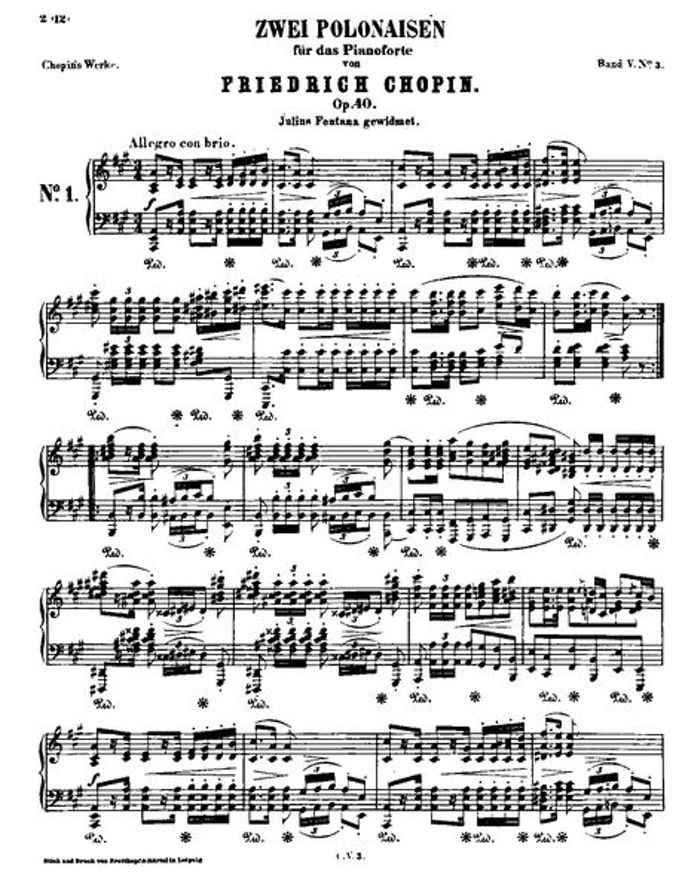
During the Postlude at Pender UMC’s Traditional Service on June 11, 2023, we were treated to “Military Polonaise Op. 40 No. 1 in A Major” by Frédéric Chopin played by Heidi Jacobs.
The Polonaise no. 1 in A major, often nicknamed Military, has been described as a symbol of ‘Polish Glory’: it is almost entirely played forte or louder, which makes for a bombastic performance.







 News and Views