RSS

Tag Archives: Advent

Making an Advent Wreath

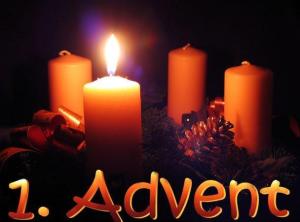
This Sunday, November 30 marks the First Sunday in Advent. Have you made an Advent wreath for your home or church?

The wreaths often consist of a circle of evergreens with four purple candles and a white one in the center, but it’s fun to  be creative with the use of natural materials.

More about Advent Wreaths from Chuck Knows Church


Tags: , , , , , , ,

Christmas Music, Part 21: “Above All Sing Spiritually”

Nativity set and sheet music for "Away in a Manger" are part of a photo illustration by Kathryn Price, United Methodist Communications.
Nativity set and sheet music for “Away in a Manger” are part of a photo illustration by Kathryn Price, United Methodist Communications.

As you turn the pages of The United Methodist Hymnal during December, often you will end up singing some of the most popular Christmas carols ever composed. Two favorites, “Hark, the Herald Angels Sing” and “Come, Thou Long-Expected Jesus,” were written by Charles Wesley, one of the founders of Methodism.

United Methodist Discipleship Ministries provides an extensive History of Hymns, but here is a short compilation of some of the songs we love the most in this holy season.

“Hark! The Herald Angels Sing”
Written by Charles Wesley within a year of his conversion, this song was first published under the title “Hymn for Christmas Day” in Hymns and Sacred Poems (1739). There is no gentle warmup for this song; it jumps right into the action when the angels appear to the shepherds and herald the birth of Jesus. Much of the text in the first stanza is an adaptation of Luke 2:14. Wesley does inject his own theological interpretation of this grand event with the statement “God and sinners reconciled.” Read more.

“Come, Thou Long-Expected Jesus”
First published in 1744, Charles Wesley also wrote this popular Advent hymn. The song uses imperative verbs like “come,” “rule” and “raise” to enhance our longing for the Savior. The hymn was included in the small collection of hymns Hymns for the Nativity of the Our Lord. Like others published by the Wesley brothers, these collections produced a way to spread Methodist theology, enhance the prayer life of those in the Society, and give them a body of songs to sing when they gathered. Read more.

“O Little Town of Bethlehem”
Phillips Brooks (1835-1893), an Episcopal priest and rector of the Church of the Holy Trinity in Philadelphia, wrote this popular carol. Brooks was inspired when he visited Bethlehem and Jerusalem in 1865. Three years later Brooks wrote the poem/lyrics and Lewis Redner, the organist of the church, added the music. Most renditions of this carol uses Redner’s tune, simply titled “St. Louis.” However, there are at least three other tunes used with Brooks’ lyrics, such as the version often performed during “Nine Lessons and Carols” at Kings College, Cambridge. Read more.

“Angels We Have Heard on High”
The French roots of this carol can be found in the 1700s in “Les Anges dans nos Campagnes,” which means “the angels in the countryside.” The French verses were coupled with a refrain taken from Luke 2:14 in the Latin version of the Bible: “Gloria, in excelsis Deo,” which means “Glory to God in the highest.” The carol was translated to English by Bishop James Chadwick and first published in his 1860 Holy Family Hymns. The traditional tune is attributed to Edward Shippen Barnes, an American organist who studied Yale University from 1910-11 and then briefly at Schola Cantorum in Paris. Read more.

“O Come, O Come Emmanuel”
The roots of this carol date back to the 800s and a series of Latin hymns sung during Advent Vespers. These Great Antiphons (meaning psalm or anthem) were rediscovered by English minister John Mason Neale and published in 1710. He wove together parts of the antiphons to create this song, first published in 1851. The first draft of his song began with “Draw nigh, draw nigh, Emmanuel,” but a later revision restored the tradition of these antiphons by starting the song with “O Come, O Come Emmanuel.” Read more.

“Silent Night”
The original German lyrics “Stille Nacht! Heilige Nacht!” were written in 1816 by Josef Mohr, a Catholic priest from Austria. Tradition holds that two years later, faced with a rusty, broken organ (some say damaged by mice) on Christmas Eve, Mohr gave the lyrics to Austrian headmaster Franz Gruber and asked him to compose the melody on guitar. At first Gruber declined because the guitar was popularly used for drinking songs, but finally agreed and created a Christmas song loved throughout the world. “Silent Night” is said to be one of the songs both English and German soldiers sang together in the great Christmas truce of 1914 during World War I. Read more.

“What Child is This?”
The words to this carol were adapted from a longer poem written by William Chatterton Dix in 1865. Born into a literary family, Dix’s father was a surgeon who also wrote a book about English poet Thomas Chatterton, after whom he named his son. William did not follow his father’s footsteps to medical school; instead he sold insurance and wrote poetry. The melody of this carol comes from the 16th century British melody “Greensleeves,” originally a ballad of a man pining for his lost love. The carol was published in 1871 in Christmas Carols, New and Old. Dix wrote many other hymns, most notably “Alleluia, Sing to Jesus” and “As With Gladness, Men of Old.” Read more.

“Away in a Manger”
Also known as “Luther’s Cradle Hymn,” a popular belief in the early 1900s held that Martin Luther composed this hymn in the 16th century. One published version of the song in 1887 stated that Luther composed it for his children, though it does not appear in his works or in German church history. It is more likely that the carol was written by German Lutherans in Pennsylvania. The first two verses were published in the 1885 Little Children’s Book without an attribution to an author. The author of the third verse (“Be near me, Lord Jesus”) is also unknown. Read more.

“We Three Kings”
John H. Hopkins, Jr. wrote this hymn about the Magi in 1857 for a Christmas pageant at New York City’s General Theological Seminary. Hopkins was a graduate from the Episcopalian seminary and the school’s first instructor of church music. The seminary, located in the wooded, undeveloped northern area of Manhattan, was founded in part through a land gift from Clement Clarke Moore. The son of New York’s Episcopal bishop, Moore’s income and fame were the result of a famous poem he wrote: “Twas the night before Christmas, when all through the house…” Read more.

As you reflect on their meaning and sing these beloved carols during Advent and Christmas, remember the words of John Wesley: “Above all sing spiritually. Have an eye to God in every word you sing… so shall your singing be such as the Lord will approve here, and reward you when he cometh in the clouds of heaven.” (Select Hymns, 1761)

If you’d like to learn more about how Christmas carols can enhance your Advent preparations, take a look at Rev. James Howell’s new book “Why This Jubilee?”

This feature was first published on December 16, 2015.

*Christopher Fenoglio works for UMC.org at United Methodist Communications. Contact him by email or at (615) 312-3734.

Adapted from https://www.umc.org/en/content/christmas-carols-above-all-sing-spiritually

 

Tags: , , , , ,

Today Is the Beginning of Advent

Advent

Today, December 3, 2023  is the First Sunday in Advent.

The first Candle of the Advent Wreath is lit on the first Sunday of Advent, on December 3 this year. It is called the Prophecy Candle and reminds us that Jesus’ coming was prophesied hundreds of years before He was born. The candle’s purple color represents Christ’s royalty as the King of Kings.

Suggested Bible Reading: Luke 1:26-38

Chuck Knows Church — ADVENT WREATH. Four candles in a circle with a big one in the middle? Yep, take a moment and learn the basics about the advent wreath. And why is the pink candle…pink?


Tags: , , , , , , ,

All about Liturgical Colors

  • Purple, representing both royalty and penitence, is traditionally used during Advent and Lent.
  • Blue symbolizes hope and may also be used during Advent.
  • White and gold are used at Christmas and Easter to symbolize joy and festivities.
  • Red symbolizes the color of fire to represent the Holy Spirit on the Day of Pentecost and times when the work of the Holy Spirit is emphasized. During Holy Week it represents the blood of Christ. Red is also used for ordinations, church anniversaries and civil observances such as Memorial Day and Thanksgiving.
  • Green represents growth and is used during Ordinary Time (the season after Epiphany and the season after Pentecost.)

Let’s start with a word about liturgical colors. You can see listed here that the official color of the long season of Ordinary Time is green. This makes sense for lots of reasons: Ordinary Time is about growing in our faith, about accepting the gifts that we’ve been given, and producing the fruit not just as individual Christians but as the body of Christ. Green is the color of growth and of fruitfulness. There are other reasons why the season claims the color green. Perhaps you and your team can come up with some more and use them to inform the congregation who may never have given thought to why the green paraments are used throughout this season.

We started here, however, because there are those who get bored with a single color in this long season that runs from Pentecost through Reign of Christ/Christ the King Sunday at the end of November. There are so many colors, so much beauty in worship art and God’s creation, why use only one color for this long season? Isn’t this the season after Pentecost? Why can’t we use red for at least a part of the season?

The season of Ordinary Time (or the Sundays after Pentecost—there is no “Pentecost Season”) calls for creativity and artistry. Even if you are using green as a foundational color, there is no reason why you can’t bring in a host of other colors over the season. Green represents life, and life is colorful. So, use more colors; use both/and; use a whole palette of colors to bring to life the worship in Ordinary Time. Think ahead for changing series or themes and find ways to enhance the liturgy with visual expressions of color, not just in paraments, but in banners, worship centers, projected or posted images, and colors. There are ways to move beyond the plain green altar or pulpit fall. Call on artists of all sorts to enhance the space.

Adapted from https://www.umcdiscipleship.org/worship-planning/living-the-spirit-life/second-sunday-after-pentecost-year-c-lectionary-planning-notes

Chuck Knows Church — Episode 1 – LITURGICAL COLORS. Ever walk into your Sunday morning worship service and realize the colors have changed around the sanctuary? That’s why Chuck is talking about Liturgical Colors on his FIRST SHOW!


Tags: , , , , , , , , , , , , , , , , , , , , , ,

All About the Advent Wreath, Week One

Sunday, November 27, 2022  is the First Sunday in Advent.   I’m skipping a couple of the Chuck Knows Church episodes because this one is so timely.  We’ll get back to the others after Christmas.

The first Candle is lit on the first Sunday of Advent. It is called the Prophecy Candle and reminds us that Jesus’ coming was prophesied hundreds of years before He was born. The candle’s purple color represents Christ’s royalty as the King of Kings.


The Advent wreath began as a German and Scandinavian home devotional practice used to mark the four weeks of Advent. Families would light a candle for each past week and the current week at their dinner or evening time of prayer. The configuration of candles, whether in a line or a circle, did not matter. Neither did the color of the candles (all colors are used in homes in Europe). What mattered was the marking of time and the increase of light each week in the face of increasing darkness as the winter solstice approached.

As Advent wreaths began to be used by congregations on Sundays in some places in Europe and America beginning in the late 19th century, several adaptations were made to make them work better in public worship spaces. Candles needed to be larger and more uniform than the “daily candles” handmade or purchased for home use. They also needed to be more uniform in color to fit with other décor in the sanctuary. That is why candles used in the Advent wreath are usually purple or blue, to coordinate with color of the paraments used during this season.

This shift in context from home to public use also made it important in the eyes of some for the candles to be given a meaning more that simply marking time and  increasing light. This led to special ceremonies being developed for lighting these special candles each week.

As this practice began to catch on by the mid-twentieth century, several church supply houses who sold Advent wreaths and candles for public worship also developed resources, banners, and bulletin covers assigning a theme to each week, and thus each candle, based on scriptures from the one-year lectionaries used at that time. Those themes were Hope, Love, Joy, and Peace, in that order.

Today, almost no one uses those one-year lectionaries, so those themes may not always fit the scriptures we hear in worship. The one exception is the Third Sunday of Advent, where the current lectionaries have continued to support the centuries old observance of “Gaudete” or “Joy Sunday.” That is why church supply houses often offer rose or pink colored candles for the wreath for use on this day.

So how may we talk about the meaning of the Advent wreath today?

We can reclaim the original home use of marking time with the hope of increasing light as we await the return of Christ, that day when “The city no longer has need of the sun or the moon to shine upon it, because the glory of God illumines it, and its lamp is the lamb.”

And we can develop meanings or themes for each week based on the focus of the scriptures themselves. After all, the candles and the wreath are an accessory, not an end in themselves. Their meaningfulness comes from how we use them to point toward Christ, the world’s true light, who was, and is, and is to come.

This content was produced by Ask The UMC, a ministry of United Methodist Communications.


Suggested Bible Reading: Luke 1:26-38

Chuck Knows Church — ADVENT WREATH. Four candles in a circle with a big one in the middle? Yep, take a moment and learn the basics about the advent wreath. And why is the pink candle…pink?

 
Leave a comment

Posted by on November 27, 2022 in Advent, Holidays, Posts of Interest, Videos


Tags: , , , , , , , , , , ,