RSS

Tag Archives: John Wesley

Hymn History: All Hail the Power of Jesus’ Name


“All hail the power of Jesus’ name!
Let angels prostrate fall,
bring forth the royal diadem,
and crown him Lord of all.”

“All Hail the Power of Jesus Name” was the opening hymn at Pender’s 9:00 am Traditional Service on July 30, 2023 It was sung by Pender’s congregation, accompanied on piano by Heidi Jacobs and violin by Sean Wittmer.

The Pender UMC Traditional Service Opening Hymn “All Hail the Power of Jesus’ Name” on Sunday July 3, 2022 was played by Liz Sellers on piano and sung by the Pender Congregation.

The popularity of this late-18th-century hymn may be attested by the fact it appears in hymnals with as many as three different tunes: CORONATION, DIADEM and MILES’ LANE. Each tune reflects a different cultural and denominational context in which this text is sung.

Another unusual aspect of “All Hail the Power of Jesus’ Name” is the number of modifications that have been made from the original text.

The original hymn text dates from 1779 and 1780, and was first printed in November 1779 in the Gospel Magazine, a publication by “Rock of Ages” composer Augustus M. Toplady. An eight-stanza version appeared just a year later in the same magazine titled, “On the Resurrection. The Lord is King.”

Massive alterations began as early as 1787 when the text was included in John Rippon’s Selection of Hymns with the title “The Spiritual Coronation, Canticles 3:11”—a reference to the Song of Songs: “Go forth, O ye daughters of Zion, and behold King Solomon with the crown wherewith his mother crowned him in the day of his espousals, and in the day of the gladness of his heart.”

British hymnologist and literary scholar J.R. Watson notes, “By applying Solomon’s crowning to this hymn, the Old Testament reference is seen as Solomon’s prefiguring of Christ.”

Among the most notable changes made by Rippon was the final stanza. Perronet originally wrote:

“Let every tribe and every tongue
That bound creation’s call,
Now shout in universal song
The crowned Lord of all.”

Rippon’s version, which took hold in the early 19th century and remains in constant use today, is:

“O that with yonder sacred throng
We at his feet may fall,
We’ll join the everlasting song,
And crown him Lord of all.”

Perronet (1726-1792) was born in Sundridge, England, and died in Canterbury. His family came from the Huguenots of Switzerland, and according to The UM Hymnal editor Carlton Young, “was closely associated with and esteemed by the Wesleys.”

Against the desires of John Wesley, Perronet promoted the idea that Methodist preachers should be able to administer the sacrament of the Lord’s Supper. In another controversial act, Perronet published a satire on the Church of England, The Mitre, angering the Countess of Huntingdon in whose chapel he served. As a result, he left to become a minister in the independent chapel in Canterbury.

Working together for a time, Wesley encouraged Perronet to preach, but Perronet preferred to defer to Wesley. The Methodism founder persisted, however, and announced that, “Brother Perronet will now speak.” Perronet stood before a large crowd and declared, “I will now deliver the greatest sermon ever preached on earth.” He then read the Sermon on the Mount and promptly sat down.

The tunes commonly associated with this famous text reveal much about this joyful expression of the 18th-century evangelical revival movement. CORONATION is a tune by American Oliver Holden (1792) and was first published in Boston in 1793. A stately tune in duple meter, it has the character of a coronation march.

DIADEM was composed by James Ellor in 1838 at the age of 19 for the anniversary of a Wesleyan Sunday school in his hometown of Droylsden, Manchester. This tune, in triple rhythm, has the feel of a stately minuet and suggests an anthem to be sung by a choir, especially with the independent parts of the refrain. It is indeed thrilling to hear congregations or church musicians sing this version in four parts.

The tune originally paired with this text, MILES’ LANE, does not appear in The United Methodist Hymnal. Written by William Shrubsole (1760-1806), it is less favored, in light of the other more buoyant tune options.

Regardless of the tune, the version we sing today leaves no doubt that the entire earth—from the “chosen seed of Israel’s race” and “sinners” and “martyrs” to “every kindred, every tribe on this terrestrial ball”—will sing the “everlasting song” at Jesus’ feet. Now that will be a song to hear!

Dr. Hawn is professor of sacred music at Perkins School of Theology.

Adapted from https://www.umcdiscipleship.org/resources/history-of-hymns-all-hail-the-power-of-jesus-name
 

Tags: , , , , , , , , , , ,

It’s John Wesley’s Birthday!

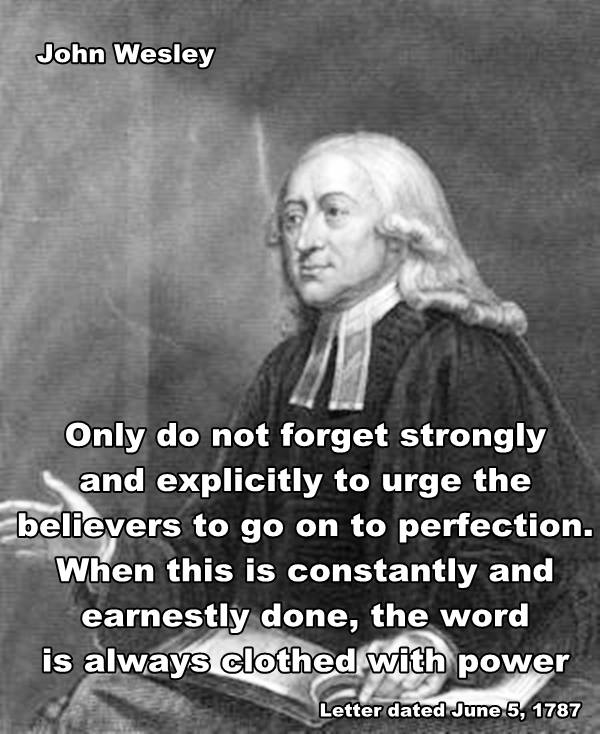
wesley-quote1787

A UMNS Commentary by the Rev. Robert J. Williams

As John Wesley, the founder of the Methodist movement, grew older, he frequently commented on his birthday how he was still in good health and this was largely due to the way God had blessed him.Wesley was born on June 17, 1703, while England was still using the Julian calendar. England adopted the Gregorian calendar in 1752 and thus Wesley’s birth date became June 28.His birthday reflections give us a glimpse into how he viewed his life, health and ministry. On June 28, 1770, he wrote:I can hardly believe that I am this entered into the sixty-eighth year of my age! How marvelous are the ways of God! How has he kept me, even from a child! From ten to thirteen or fourteen, I had little but bread to eat, and not great plenty of that. I believe this was so far from hurting me that it laid the foundation to lasting health. When I grew up, in consequence of reading Dr. Cheyne, I chose to eat sparingly and drink water. This was another great means of continuing my health, till I was about seven and twenty…; (He then speaks of various ailments.); Since that time, I have known neither pain nor sickness, and am now healthier than I was forty years ago! This hath God wrought!

He started to set a pattern for indicating his age and his good health. One year later, he wrote:

This day I entered the sixty-ninth year of my age. I am still a wonder to myself. My voice and strength are the same as at nine and twenty. This also hath God wrought.

In 1774, he wrote:

This being my birthday, the first day of my seventy-second year, I was considering. How is this, that I find just the same strength as I did thirty years ago? That my sight is considerably better now and my nerves firmer than there were then? That I have none of the infirmities of old age and have lost several I had in my youth? The grand cause is the good pleasure of God, who doth whatsoever pleaseth him. The chief means are: (1) My constantly rising at four, for about fifty years. (2) My generally preaching at five in the morning, one of the most healthy exercises in the world. (3) My never travelling less, by sea or land, than four thousand five hundred miles in a year.

In the intervening 10 years, he repeated these sentiments numerous times, and even in 1784, he wrote:

Today I entered on my eighty-second year and found myself just as strong to labour, and as fit for any exercise of body or mind, as I was forty years ago. I do not impute this to second causes, but to the sovereign Lord of all…; I am as strong at eighty-one, as I was at twenty-one, but abundantly more healthy, being a stranger to the head-ache, tooth-ache, and other bodily disorders which attended me in my youth. We can only say ‘The Lord reigneth’ While we live, let us live to him!

In 1788, after praising God “for a thousand spiritual blessings,” Wesley listed as questions what may be some of the “inferior means” for achieving such good health into old age.

To my constant exercise and change of air? To my never having lost a night’s sleep, sick or well at land or at sea, since I was born? To my having sleep at command, so that whenever I feel myself almost worn out, I call it and it comes, day or night? To my having constantly, for above sixty years, risen at four in the morning? To my constant preaching at five in the morning for above fifty years? To my having had so little pain in my life and so little sorrow or anxious care?

Finally, on June 28, 1790, less than a year before his death, he wrote:

This day I enter into my eighty-eighth year. For above eighty-six years, I found none of the infirmities of old age: my eyes did not wax dim, neither was my natural strength abated. But last August, I found almost a sudden change. My eyes were so dim that no glasses would help me. My strength likewise now quite forsook me and probably will not return in this world. But I feel no pain from head to foot, only it seems nature is exhausted and, humanly speaking, will sink more and more, till ‘The weary springs of life stand still at last.’

As this remarkable man aged, he reflected on God’s blessings and how his lifestyle contributed to his good health. This is but a brief glimpse into his humanity and can call on us to do likewise on our birthdays.

Editor’s Note: This story was first published on June 25, 2012.

*Williams is the top executive of the United Methodist Commission on Archives and History in Madison, N.J.

From http://www.umc.org/news-and-media/marking-john-wesleys-birthday-in-his-words


Leave a comment

Posted by on June 28, 2023 in Posts of Interest


Tags: , ,

Marking John Wesley’s Birthday in his Words

wesley-quote1787

A UMNS Commentary by the Rev. Robert J. Williams

As John Wesley, the founder of the Methodist movement, grew older, he frequently commented on his birthday how he was still in good health and this was largely due to the way God had blessed him.

Wesley was born on June 17, 1703, while England was still using the Julian calendar. England adopted the Gregorian calendar in 1752 and thus Wesley’s birth date became June 28.

His birthday reflections give us a glimpse into how he viewed his life, health and ministry. On June 28, 1770, he wrote:

I can hardly believe that I am this entered into the sixty-eighth year of my age! How marvelous are the ways of God! How has he kept me, even from a child! From ten to thirteen or fourteen, I had little but bread to eat, and not great plenty of that. I believe this was so far from hurting me that it laid the foundation to lasting health. When I grew up, in consequence of reading Dr. Cheyne, I chose to eat sparingly and drink water. This was another great means of continuing my health, till I was about seven and twenty…; (He then speaks of various ailments.); Since that time, I have known neither pain nor sickness, and am now healthier than I was forty years ago! This hath God wrought!

He started to set a pattern for indicating his age and his good health. One year later, he wrote:

This day I entered the sixty-ninth year of my age. I am still a wonder to myself. My voice and strength are the same as at nine and twenty. This also hath God wrought.

In 1774, he wrote:

This being my birthday, the first day of my seventy-second year, I was considering. How is this, that I find just the same strength as I did thirty years ago? That my sight is considerably better now and my nerves firmer than there were then? That I have none of the infirmities of old age and have lost several I had in my youth? The grand cause is the good pleasure of God, who doth whatsoever pleaseth him. The chief means are: (1) My constantly rising at four, for about fifty years. (2) My generally preaching at five in the morning, one of the most healthy exercises in the world. (3) My never travelling less, by sea or land, than four thousand five hundred miles in a year.

In the intervening 10 years, he repeated these sentiments numerous times, and even in 1784, he wrote:

Today I entered on my eighty-second year and found myself just as strong to labour, and as fit for any exercise of body or mind, as I was forty years ago. I do not impute this to second causes, but to the sovereign Lord of all…; I am as strong at eighty-one, as I was at twenty-one, but abundantly more healthy, being a stranger to the head-ache, tooth-ache, and other bodily disorders which attended me in my youth. We can only say ‘The Lord reigneth’ While we live, let us live to him!

In 1788, after praising God “for a thousand spiritual blessings,” Wesley listed as questions what may be some of the “inferior means” for achieving such good health into old age.

To my constant exercise and change of air? To my never having lost a night’s sleep, sick or well at land or at sea, since I was born? To my having sleep at command, so that whenever I feel myself almost worn out, I call it and it comes, day or night? To my having constantly, for above sixty years, risen at four in the morning? To my constant preaching at five in the morning for above fifty years? To my having had so little pain in my life and so little sorrow or anxious care?

Finally, on June 28, 1790, less than a year before his death, he wrote:

This day I enter into my eighty-eighth year. For above eighty-six years, I found none of the infirmities of old age: my eyes did not wax dim, neither was my natural strength abated. But last August, I found almost a sudden change. My eyes were so dim that no glasses would help me. My strength likewise now quite forsook me and probably will not return in this world. But I feel no pain from head to foot, only it seems nature is exhausted and, humanly speaking, will sink more and more, till ‘The weary springs of life stand still at last.’

As this remarkable man aged, he reflected on God’s blessings and how his lifestyle contributed to his good health. This is but a brief glimpse into his humanity and can call on us to do likewise on our birthdays.

Editor’s Note: This story was first published on June 25, 2012.

*Williams is the top executive of the United Methodist Commission on Archives and History in Madison, N.J.

From http://www.umc.org/news-and-media/marking-john-wesleys-birthday-in-his-words

 
Leave a comment

Posted by on June 28, 2021 in Holidays, Posts of Interest


Tags: , ,

Happy Birthday, John Wesley

wesley-quote1787

A UMNS Commentary by the Rev. Robert J. Williams

As John Wesley, the founder of the Methodist movement, grew older, he frequently commented on his birthday how he was still in good health and this was largely due to the way God had blessed him.Wesley was born on June 17, 1703, while England was still using the Julian calendar. England adopted the Gregorian calendar in 1752 and thus Wesley’s birth date became June 28.His birthday reflections give us a glimpse into how he viewed his life, health and ministry. On June 28, 1770, he wrote:

I can hardly believe that I am this entered into the sixty-eighth year of my age! How marvelous are the ways of God! How has he kept me, even from a child! From ten to thirteen or fourteen, I had little but bread to eat, and not great plenty of that. I believe this was so far from hurting me that it laid the foundation to lasting health. When I grew up, in consequence of reading Dr. Cheyne, I chose to eat sparingly and drink water. This was another great means of continuing my health, till I was about seven and twenty…; (He then speaks of various ailments.); Since that time, I have known neither pain nor sickness, and am now healthier than I was forty years ago! This hath God wrought!

He started to set a pattern for indicating his age and his good health. One year later, he wrote:

This day I entered the sixty-ninth year of my age. I am still a wonder to myself. My voice and strength are the same as at nine and twenty. This also hath God wrought.

In 1774, he wrote:

This being my birthday, the first day of my seventy-second year, I was considering. How is this, that I find just the same strength as I did thirty years ago? That my sight is considerably better now and my nerves firmer than there were then? That I have none of the infirmities of old age and have lost several I had in my youth? The grand cause is the good pleasure of God, who doth whatsoever pleaseth him. The chief means are: (1) My constantly rising at four, for about fifty years. (2) My generally preaching at five in the morning, one of the most healthy exercises in the world. (3) My never travelling less, by sea or land, than four thousand five hundred miles in a year.

In the intervening 10 years, he repeated these sentiments numerous times, and even in 1784, he wrote:

Today I entered on my eighty-second year and found myself just as strong to labour, and as fit for any exercise of body or mind, as I was forty years ago. I do not impute this to second causes, but to the sovereign Lord of all…; I am as strong at eighty-one, as I was at twenty-one, but abundantly more healthy, being a stranger to the head-ache, tooth-ache, and other bodily disorders which attended me in my youth. We can only say ‘The Lord reigneth’ While we live, let us live to him!

In 1788, after praising God “for a thousand spiritual blessings,” Wesley listed as questions what may be some of the “inferior means” for achieving such good health into old age.

To my constant exercise and change of air? To my never having lost a night’s sleep, sick or well at land or at sea, since I was born? To my having sleep at command, so that whenever I feel myself almost worn out, I call it and it comes, day or night? To my having constantly, for above sixty years, risen at four in the morning? To my constant preaching at five in the morning for above fifty years? To my having had so little pain in my life and so little sorrow or anxious care?

Finally, on June 28, 1790, less than a year before his death, he wrote:

This day I enter into my eighty-eighth year. For above eighty-six years, I found none of the infirmities of old age: my eyes did not wax dim, neither was my natural strength abated. But last August, I found almost a sudden change. My eyes were so dim that no glasses would help me. My strength likewise now quite forsook me and probably will not return in this world. But I feel no pain from head to foot, only it seems nature is exhausted and, humanly speaking, will sink more and more, till ‘The weary springs of life stand still at last.’

As this remarkable man aged, he reflected on God’s blessings and how his lifestyle contributed to his good health. This is but a brief glimpse into his humanity and can call on us to do likewise on our birthdays.

Editor’s Note: This story was first published on June 25, 2012.

*Williams is the top executive of the United Methodist Commission on Archives and History in Madison, N.J.

From http://www.umc.org/news-and-media/marking-john-wesleys-birthday-in-his-words

 
Leave a comment

Posted by on June 28, 2021 in Holidays, Posts of Interest


Tags: , ,

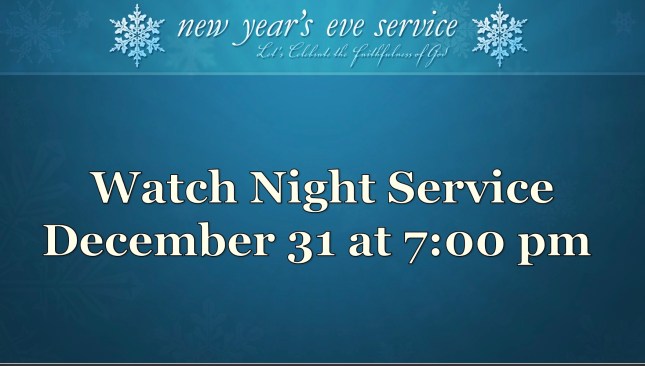
Watch Night 2020


John Wesley believed that Methodists and all Christians, should reaffirm their covenant with God annually, so he created a service in which an individual renews his/her covenant with God.


In 1755 Wesley held his first covenant service using words written earlier by Richard Alleine. Wesley published this service in a pamphlet in 1780, and this form was used without alteration for nearly a century in England. It has been modified somewhat in more recent years.


The covenant hymn, “Come, Let Us Use the Grace Divine,” was written for this service by Charles Wesley. The service is included in The Book of Worship under the title “An Order of Worship for Such as Would Enter Into or Renew Their Covenant with God–For Use in a Watch Night Service, on the First Sunday of the Year, or Other Occasion.”


This covenant service is often used in United Methodism as a Watch Night Service on New Year’s Eve. The covenant service is observed in some local churches on New Year’s Day or on the first Sunday in January. The service focuses on the Christian’s renewing the covenant of response to the grace of God in Christ.


Tags: , , , ,