RSS

Monthly Archives: February 2024

Today in History: John Wesley chartered the first Methodist Church in U.S.

On February 28, 1784, John Wesley chartered the first Methodist Church in the United States. Despite the fact that he was an Anglican, Wesley saw the need to provide church structure for his followers after the Anglican Church abandoned its American believers during the American Revolution.

Wesley first brought his evangelical brand of methodical Anglicanism to colonial Georgia from 1735 to 1737 in the company of his brother Charles, with whom he had founded the ascetic Holy Club at Oxford University. This first venture onto American soil was not a great success. Wesley became embittered from a failed love affair and was unable to win adherents to his studious practices. However, while in Georgia, he became acquainted with the German Moravians, who hoped to establish a settlement in the colony. The meeting proved momentous, as it was at a Moravian meeting upon his return to London that Wesley felt he had a true experience of God’s grace.

While closely allied to the Moravians, Wesley began taking the advice of fellow Oxford graduate George Whitfield and preaching in the open air when banned from Anglican churches for his unorthodox evangelical methods. By 1739, Wesley had separated himself from the Moravians and attracted his own group of adherents, known as Methodists, who were held in disdain by the orthodox Anglican clerical and civic hierarchy. By 1744, the Methodists had become a large enough group to require their own conference of ministers, which expanded to create an internal hierarchy, replicating some of the Anglican Church’s ecclesiastical order.

Wesley, however, remained within the Anglican fold and insisted that only ministers who had received the apostolic succession—the laying on of hands by an Anglican bishop to consecrate a new priest—could administer the sacraments. The refusal of the Anglican church to ordain Dr. Thomas Coke to preach to Americans newly independent from the British State Church, finally forced Wesley to ordain within his own Methodist conference in the absence of a proper Anglican bishop. He performed the laying on of hands and not only ordained Coke as the superintendent of the Methodist Episcopal Church in America but also commissioned him to ordain Francis Asbury as his co-superintendent.

Adapted from https://www.history.com/this-day-in-history/john-wesley-charters-first-methodist-church-in-u-s


Leave a comment

Posted by on February 28, 2024 in Posts of Interest


Tags: , , , , , ,

Hymn History: “El Shaddai”

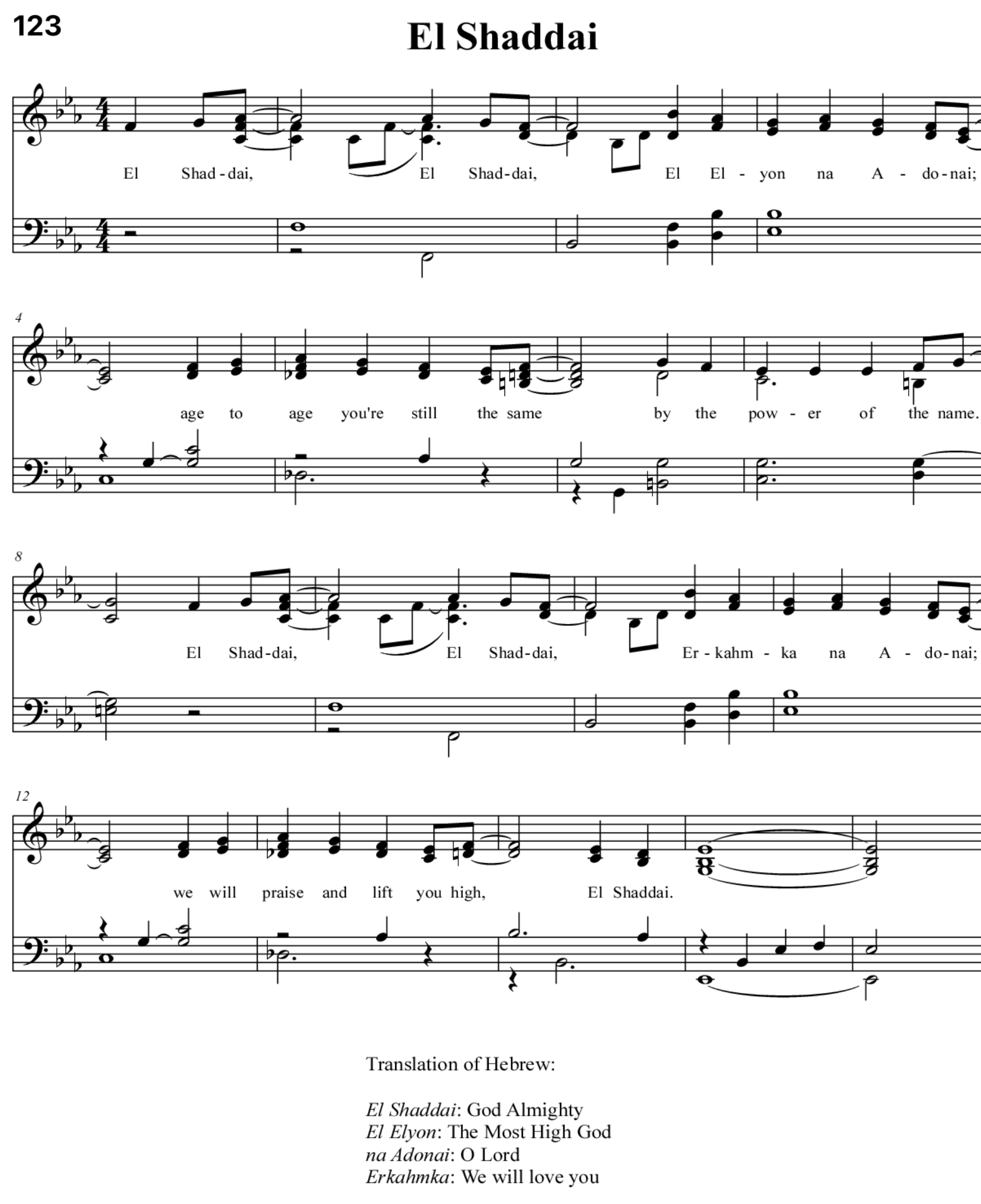
Sunday, February 4, 2024 the Pender Sanctuary Choir sang El Shaddai as arranged by Amy Grant and further arranged by Pender’s Director of Music Ministry, Patrick King.

During the Traditional Service on February 4, 2024, Pender’s sanctuary was imbued with the spiritual tapestry of song as the Sanctuary Choir, under the masterful direction of Patrick King, lifted their voices in a moving rendition of “El Shaddai.” This particular arrangement, a harmonious blend of Amy Grant’s touch and King’s unique vision, filled the sacred space with an aura of reverence and awe.

“El Shaddai,” a melody that draws its powerful lyrics from the scriptural portrayal of God, was first brought to life by Michael Card and John Thompson in the early ’80s. Michael Card, a profound scholar and artist, has woven his faith into over three decades of music, crafting hit after hit, with “El Shaddai” being one of his most renowned works. This song, in its essence, is a quest to capture the enigmatic nature of the divine through the ancient Hebrew names of God, each name a key to the unfathomable relationship between the Creator and His creation.

The Pender Sanctuary Choir’s performance was not just an offertory but a profound homage to the timeless quest of hymn writers throughout the ages—a quest to give voice to the voiceless wonder of the divine. As the choir sang, the congregation was transported through the annals of biblical history, from the covenant with Abraham and Isaac to the deliverance at the Red Sea, and finally to the Messianic prophecies fulfilled in Christ.

Michael Card, whose journey from the halls of Western Kentucky University to the honor of a doctorate from Philadelphia Biblical University, has always emphasized the importance of community and relationships in Christian growth. His storied career, marked by accolades such as the Dove Awards and millions of albums sold, is a testament to his commitment to exploring and expressing faith through music and writing.

As the last notes of “El Shaddai” resonated within the church walls, the profound and enduring impact of this piece, awarded the Dove Song of the Year in 1983, was felt by all present. It was a moment that transcended time, linking the congregation with the faithful of the past and the powerful biblical narratives that continue to inspire and guide. The day was a reminder that through music, the spirit of worship and the stories of sacred texts are ever alive, ever stirring the souls of those who seek to encounter the Almighty, the “El Shaddai.”

Biblical scholar J. Hampton Keathley III has described the context of the song:

“El Shaddai: God Almighty. The derivation is uncertain. Some think it stresses God’s loving supply and comfort; others His power as the Almighty one standing on a mountain and who corrects and chastens (Genesis 17:1; 28:3; 35:11; Exodus 6:31; Psalm 91:1, 2).

“El Elyon: The Most High God. Stresses God’s strength, sovereignty and supremacy (Genesis 14:19; Psalm. 9:2; Daniel 7:18, 22, 25).

“El Olam: The Everlasting God. Emphasizes God’s unchangeableness and is connected with His inexhaustibleness (Genesis 16:13).

“Yahweh (YHWH): Comes from a verb which means “to exist, be.” This, plus its usage, shows that this name stresses God as the independent and self-existent God of revelation and redemption (Genesis 4:3; Exodus 6:3 (cf. 3:14); 3:12).

The UM Hymnal contains only the refrain for the sake of space. The stanzas discuss God’s faithful acts as told in the biblical witness, including Abraham and Isaac, the parting of the waters during the Israelites’ deliverance from Egypt (stanza one) and the prophecies of the coming of the Messiah and the fulfillment of Christ’s mission (stanza two).

 
Leave a comment

Posted by on February 23, 2024 in Posts of Interest


Tags: , , , , , , , , , , , , , , , , , ,

Abraham Lincoln on Methodists

lincoln


In response to your address, allow me to attest the accuracy of it’s historical statements; indorse the sentiments it expresses; and thank you, in the nation’s name, for the sure promise it gives.

Nobly sustained as the government has been by all the churches, I would utter nothing which might, in the least, appear invidious against any. Yet, without this, it may fairly be said that the Methodist Episcopal Church, not less devoted than the best, is, by it’s greater numbers, the most important of all. It is no fault in others that the Methodist Church sends more soldiers to the field, more nurse to the hospital, and more prayers to Heaven than any. God bless the Methodist Church—bless all the churches—and blessed be God, Who, in this our great trial, giveth us the churches.

May 18, 1864 A. LINCOLN

From Collected Works of Abraham Lincoln. Volume 7.Lincoln, Abraham, 1809-1865.

 
Leave a comment

Posted by on February 20, 2024 in Posts of Interest


Tags: , , , , , , , ,

Transfiguration Sunday

Transfiguration Sunday. The Transfiguration of Jesus is an event reported by the Synoptic Gospels in which Jesus is transfigured upon a mountain. Why is this event lifted up and celebrated?

Transfiguration Sunday might not be a common observance in the United Methodist tradition. There are those who do attempt to pay attention to this significant moment in the life and ministry of Jesus, but many do not. Now would be a time to take a moment and consider this event.

This is the one who calls us to follow. We can always ask which is the real Jesus? Is it the one who gets his hands dirty with the mud and spit of this world, or is it the one who stands on the mountain top and glows with a radiance divine? Well, of course, the answer is yes! Yes, it is both. The human Jesus and the divine Christ. The transcendent part of the Trinity of God, and the immanent, incarnate human laid in a manger and nailed to a cross, the one who walked and taught and healed and loved on earth just like you. Yet not like you. More than you. A glimpse of what you might be. A hint of what you were created to be. An invitation and a hope.

It is not the task of the preacher or the worship team to explain transfiguration. Thanks be to God. But to stand with the congregation in open-mouthed wonder at the fullness of the Christ we worship. In this in between moment, before we launch into Lent, we catch our breath by standing on the mountaintop with Peter and John and James. And we watch Jesus do something unexplainable. The Transfiguration has always been a puzzle to the church, raising more questions than answers. At its heart, the event presents the “otherness” of Jesus, even as it celebrates his oneness with his followers. There is always more to Jesus than we can know or figure out. And that’s a good thing. We worship one who can still take our breath away in wonder and awe.

So, sing the songs about the glory and grandeur of God and of Jesus. And if you’re not singing just yet, then listen to them. Get carried away by the wonder and the beauty of the Christ who calls us to follow. This is a moment for reaching beyond yourself, beyond everyone, and simply basking in the light that is the Christ. Worship today should be about lifting us up, higher than we thought we could reach. It should be deep, more profound than we have attempted before. Speak of the mysteries and the promises of eternity beyond the grasp of our human brain to comprehend.

Our prayers should be statements of praise and awe. Our confession should be full of the realization that we have diminished the wonder of Christ, that we have reduced God to something that we could grasp, simply because it makes us feel better about ourselves.

Provide the worshipers with an experience that is all-encompassing, that gathers them up and sparks the imagination and the hope. The response might be tears or might be laughter; both are appropriate in the awesomeness of God.

At the same time, in the face of the awestruck wonder, there is also a call to follow, to stay close to the one we worship. Even the voice on the mountain told us to listen to him. Now is the time, if you haven’t before in the series, or even if you have, to come to the altar and declare your intention to follow where he leads. Now is the time to follow him down the mountain and to remember that the commandment to not tell was given to them, but not to us. We are to tell anyone and everyone. We are to live our telling, walk our proclamation.

But the key will be for us to keep the focus off ourselves and our successes and failures and instead keep our eyes on the Christ. That’s the emphasis of the title for this Transfiguration Sunday: “But Only Jesus.” We are surrounded by distractions and responsibilities aplenty. We are overwhelmed by injustice and oppression; we are almost overwhelmed by needs and brokenness, our own and that which envelops us. But in the end, it is only Jesus. The source of the strength and the focus of our attention is only Jesus. To be sure, this does not mean that we don’t care about that which surrounds us. In fact, if anything, we are even more eager to be at work in the world, bringing hope and healing, bringing justice and freedom. But it is not to our own benefit that we work in the world, but only Jesus.

Let our worship be that which lifts up the name of Jesus through our work and our service, through our passion and our commitment, through our songs and our prayers, through our compassion and our caring. Let us worship only Jesus.

Adapted from https://www.umcdiscipleship.org/worship-planning/follow-me/transfiguration-sunday-year-b-lectionary-planning-notes


Tags: , , ,

Hymn History: God of Grace and God of Glory

“God of Grace and God of Glory”
Harry Emerson Fosdick
The United Methodist Hymnal, No. 577

God of grace and God of glory,
on thy people pour thy power;
crown thine ancient church’s story;
bring her bud to glorious flower.
Grant us wisdom, grant us courage,
for the facing of this hour.

Pender Opening Hymn “God of Grace and God of Glory” May 22, 2022 accompanied by flute and cello.

“God of grace and God of glory” was written in 1930 by Harry Emerson Fosdick (1878-1969) for the dedication of the famous Riverside Church in New York City.

Fosdick was granted degrees from Colgate University and Union Theological Seminary. He was ordained in 1903 to ministry in the Baptist Church and became pastor of First Baptist Church, Montclair, N.J.

Fosdick served as a chaplain during World War I and then was pastor of First Presbyterian Church in New York City. From this congregation he was called to pastor Park Avenue Baptist Church, which was renamed Riverside Church.

As we sing this hymn, perhaps it is helpful to remind ourselves of the events that shaped the “hour” and the “days” that provide the context for this great hymn.

“God of grace and God of glory” was written while the United States was in the throes of the Great Depression between the two World Wars. Fosdick was a champion of the social gospel, a movement that recognized the plight of the poor, especially in the urban Northeast during the Industrial Revolution.

UM Hymnal editor Carlton Young has noted: “Fosdick’s stirring radio sermons, books, and public pronouncements established Riverside as a forum for the critique of the same wealth and privilege whose gifts had made possible the building of the church.

“Under his leadership Riverside Church was interdenominational, interracial, without a creed, and, astonishingly for Baptists, required no specific mode of baptism. At the center of Fosdick’s ministry was urban social ministry.”

Fosdick was perhaps the most vocal proponent of the social gospel of his time—a position that brought both wide acclaim and broad disdain.

The congregation moved to a $5 million edifice made possible by a gift from John D. Rockefeller Jr. The new building overlooked the Hudson River in what Fosdick called “a less swank district” than Park Avenue, where the congregation had been located near Harlem.

The hymn was written in the summer of 1930. It took shape as he reflected on the construction of the new building, and was first sung as the processional hymn at the opening service on Oct. 5, 1930, and again at the dedication on Feb. 8, 1931.

The language of the hymn is ultimately that of petition. “Grant us wisdom, grant us courage” concludes each stanza with the effect of a refrain. A petition begins stanza three with “Cure thy children’s warring madness,/ bend our pride to thy control.” The final stanza, equally prophetic, begins with “Save us from weak resignation/ to the evils we deplore.”

Fosdick wrote the text to be sung to the stately REGENT SQUARE (usually sung to “Angels from the realms of glory”). Methodist hymnologist and hymnal editor Robert G. McCuthan, however, first paired it with the Welsh tune CWM RHONDDA for the 1935 Methodist Hymnal. It was an immediate success and the new coupling has been almost universally adopted.

Hymnologist William Reynolds says Fosdick disapproved strongly of the new pairing. When Dr. Young asked the poet why he continued to oppose the use of CWM RHONDDA with his text, Fosdick replied, “My views are well known—you Methodists have always been a bunch of wise guys.”

That discussion notwithstanding, I object to the tempo played by many organists who take the hymn much too fast at the beginning, forcing the congregation to race through the prophetic petitions that conclude each stanza. The Welsh tune demands an appropriately stately tempo (think “processional,” not “horse race”) that gives the congregation time to absorb the challenges offered by the poet.

Adapted from https://www.umcdiscipleship.org/resources/history-of-hymns-god-of-grace-and-god-of-glory


Tags: , , , , , , , , , ,