Handbells are not just for children and teens! We have adult handbell groups for beginner to advanced ringers. The difficulty level of handbell music is rated from Level 1 (easy) to Level 6 (most difficult). Each of the groups rings monthly in worship between September and June and participates in the annual Christmas handbell concert.
The groups also like to participate in the various festivals that are held by the regional handbell guild (Handbell Musicians of America – Area 3). Our rehearsals are full of laughing and ringing (sometimes more laughing than ringing!) You do not have to know how to read music to learn how to ring handbells!
Carillon Ringers group is for ringers who ring Level 2 and Level 3 music.
Carillon Ringers rehearse at 6:45 Tuesday. The handbells will play during worship about once every month. Brian will make out the usual schedule at the beginning of rehearsals starting on September 9th.
Joy Ringers group is for advanced ringers who ring Level 4 and Level 5 music
Joy Ringers rehearse at 7:30 Tuesday. The handbells will play during worship about once every month. Brian will make out the usual schedule at the beginning of rehearsals starting on September 9th.
On Pentecost Sunday, June 8, 2025, Pender’s combined handbell groups rang out a joyful and unforgettable rendition of “Hail, Holy Queen”, arranged by Marc Shaiman and adapted for handbells by Kevin McChesney—all under the spirited direction of Brian Stevenson.
🎶 Remember the movie Sister Act with Whoopi Goldberg? Well, hold onto your wimple—this rollicking handbell version of the classic SALVE REGINA hymn is sure to lift your spirits and put a smile on your face!
🔥 Joyful
🔥 Energetic
🔥 Pure Pentecost fun!
Let this electrifying performance fill your heart with the Spirit’s joy!
Calling All Musicians: Join Pender’s Vibrant Music Ministry!
Are you passionate about music? Do you feel called to share your musical gifts in a community of faith? Pender is seeking talented musicians to join our vibrant Music Ministry team and contribute to our uplifting and spiritually enriching worship services!
What We’re Looking For:
Instrumentalists: Whether you shine on the strings, whisper with the woodwinds, or resonate with the brass, we need your skills to fill our sanctuary with harmonious sounds.
Vocalists: Sopranos, altos, tenors, and basses—lend your voices to help lead our congregation in song and praise.
Handbells: We will teach you to play during our services and special events.
Why Be a Part of the Pender Music Ministry?
Community Impact: Through your music, you can touch the hearts of our congregation and inspire joy and contemplation in our weekly gatherings.
Spiritual Growth: Participate in a ministry that not only serves others but also nurtures your own faith and connection to the divine.
Musical Development: Collaborate with experienced musicians and vocalists that will help you hone your craft and explore new musical opportunities.
Get Involved:
Rehearsals: We meet weekly to practice and prepare, ensuring every service is both spiritually and musically fulfilling.
Sunday Services: Be a part of our regular worship schedule and special holiday performances that highlight the church calendar.
Community Outreach: Occasionally, our music ministry participates in local events and services, expanding our impact beyond the church walls.
If you’re excited about making a joyful noise unto the Lord and enhancing our worship experiences, we would love to hear from you! Contact our Patrick King, our Music Director today to learn more about how you can get involved.
Let your talent soar in a place where music meets ministry, and together, we’ll create beautiful worship experiences that resonate with all who attend. Join us and be a key note in our melody of faith!
Pender UMC’s Good Friday service on March 29, 2024 was a profound experience that commenced with attendees entering a darkened sanctuary, enveloped in silence, setting the tone for a night of reflective worship.
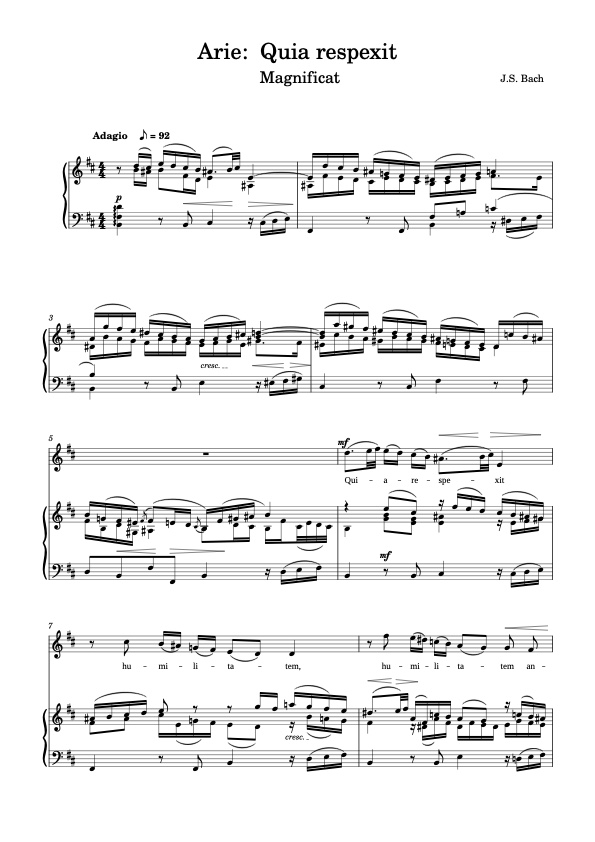
The evening included the ethereal beauty of “Quia resplicit,” a mesmerizing soprano aria from J.S. Bach’s Magnificat in D major, BWV 243. The lyrics, taken from the Bible’s Book of Luke, express Mary’s joy and thankfulness as she reflects on the honor of being chosen as the mother of Jesus Christ. This piece, expressing Mary’s joy and humility, was brought to life by the exquisite vocal talents of soprano Andrea Quinones, with Heidi Jacobs providing the instrumental accompaniment.
This performance was a highlight of the evening, showcasing a segment of Bach’s Magnificat, a pivotal work in Baroque choral tradition. The audience was invited to immerse themselves in the nuanced interplay of voice and music, reflecting Bach’s skill in melding scriptural narrative with harmonious sound.
“God of Grace and God of Glory”
Harry Emerson Fosdick The United Methodist Hymnal, No. 577
God of grace and God of glory,
on thy people pour thy power;
crown thine ancient church’s story;
bring her bud to glorious flower.
Grant us wisdom, grant us courage,
for the facing of this hour.
Pender Opening Hymn “God of Grace and God of Glory” May 22, 2022 accompanied by flute and cello.
“God of grace and God of glory” was written in 1930 by Harry Emerson Fosdick (1878-1969) for the dedication of the famous Riverside Church in New York City.
Fosdick was granted degrees from Colgate University and Union Theological Seminary. He was ordained in 1903 to ministry in the Baptist Church and became pastor of First Baptist Church, Montclair, N.J.
Fosdick served as a chaplain during World War I and then was pastor of First Presbyterian Church in New York City. From this congregation he was called to pastor Park Avenue Baptist Church, which was renamed Riverside Church.
As we sing this hymn, perhaps it is helpful to remind ourselves of the events that shaped the “hour” and the “days” that provide the context for this great hymn.
“God of grace and God of glory” was written while the United States was in the throes of the Great Depression between the two World Wars. Fosdick was a champion of the social gospel, a movement that recognized the plight of the poor, especially in the urban Northeast during the Industrial Revolution.
UM Hymnal editor Carlton Young has noted: “Fosdick’s stirring radio sermons, books, and public pronouncements established Riverside as a forum for the critique of the same wealth and privilege whose gifts had made possible the building of the church.
“Under his leadership Riverside Church was interdenominational, interracial, without a creed, and, astonishingly for Baptists, required no specific mode of baptism. At the center of Fosdick’s ministry was urban social ministry.”
Fosdick was perhaps the most vocal proponent of the social gospel of his time—a position that brought both wide acclaim and broad disdain.
The congregation moved to a $5 million edifice made possible by a gift from John D. Rockefeller Jr. The new building overlooked the Hudson River in what Fosdick called “a less swank district” than Park Avenue, where the congregation had been located near Harlem.
The hymn was written in the summer of 1930. It took shape as he reflected on the construction of the new building, and was first sung as the processional hymn at the opening service on Oct. 5, 1930, and again at the dedication on Feb. 8, 1931.
The language of the hymn is ultimately that of petition. “Grant us wisdom, grant us courage” concludes each stanza with the effect of a refrain. A petition begins stanza three with “Cure thy children’s warring madness,/ bend our pride to thy control.” The final stanza, equally prophetic, begins with “Save us from weak resignation/ to the evils we deplore.”
Fosdick wrote the text to be sung to the stately REGENT SQUARE (usually sung to “Angels from the realms of glory”). Methodist hymnologist and hymnal editor Robert G. McCuthan, however, first paired it with the Welsh tune CWM RHONDDA for the 1935 Methodist Hymnal. It was an immediate success and the new coupling has been almost universally adopted.
Hymnologist William Reynolds says Fosdick disapproved strongly of the new pairing. When Dr. Young asked the poet why he continued to oppose the use of CWM RHONDDA with his text, Fosdick replied, “My views are well known—you Methodists have always been a bunch of wise guys.”
That discussion notwithstanding, I object to the tempo played by many organists who take the hymn much too fast at the beginning, forcing the congregation to race through the prophetic petitions that conclude each stanza. The Welsh tune demands an appropriately stately tempo (think “processional,” not “horse race”) that gives the congregation time to absorb the challenges offered by the poet.