RSS

Tag Archives: Christ

Lenten Hymn and Devotion, Week 5

Lenten Hymn and Devotion 5, Beneath the Cross of Jesus

Brian Stevenson, Pender UMC Director of Music, presents a series of hymn-based devotions on Wednesdays during Lent.

The Fifth is Go Dark Gethsemane

“Go to Dark Gethsemane” is a Lenten hymn that spotlights scenes from the last 12 hours of Jesus Christ’s life.

It takes us on a journey from the Garden of Gethsemane where we are charged to stand and watch, to the judgment hall and our denial of him, to the cross where we witness his death and his grace, and finally to his glorious resurrection and our redemption. We become part of the drama of Christ’s passion and resurrection.

The poet repeats the phrase “learn of” at the end of each stanza, charging us to apply each scene to our lives. James Montgomery uses repetition to draw attention to what he considers important about each scene and each stanza.

“Learn of Jesus Christ to pray” encourages us to remember the scene of the garden and to go to God in fervent prayer. “Learn of Christ to bear the cross” is a charge to lay down our lives, take up the cross and follow Christ. “Learn of Jesus Christ to die” is a reminder of what Paul wrote in Galatians 2:20: “I have been crucified with Christ and I no longer live, but Christ lives in me.”

Montgomery, considered one of the most important hymn writers of the English language, wrote this beautiful hymn in 1820. He was born on Nov. 4, 1771, in Irvine, Ayrshire, Scotland, the son of Moravian missionary John Montgomery, and died April 30, 1854, in Sheffield, England.

When Montgomery was 5 years old, his parents moved him to a Moravian settlement at Bracehill, Ireland, near Ballymena in Antrim County. Soon after, his parents accepted a call to the mission field and left him behind in Bracehill. He never saw his parents again. They both died while in the Barbados Islands.

At age 7, Montgomery was enrolled at Fulneck Seminary in Yorkshire, where he would remain for the next nine years. Struggling to meet the expectations of his instructors, he left the school at age 16 and became an apprentice at a chandler’s shop in Mirfield.

After five years, he tired of the work and took an apprenticeship with Joseph Gales, the owner and publisher of the Sheffield Register. For two years he learned about the publishing business, and in 1794, when Gales was forced to flee the country to avoid imprisonment, Montgomery took over the Register and changed its name to the Sheffield Iris.

Montgomery published and managed the Sheffield Iris for 32 years. He used the Iris as a tool to distribute the 360 hymns written throughout his life. His most well-known hymns are “Angels, From the Realms of Glory,” “Go to Dark Gethsemane,” “Hail to the Lord’s Anointed,” “Songs of Praise the Angels Sang” and “Stand Up and Bless the Lord.”

Montgomery’s “Go to Dark Gethsemane” is still one of his most widely used hymns, most often sung during Lent or during Holy Week. The first three stanzas are most commonly available in hymnals. The fourth stanza, though often omitted today, has been preserved in The United Methodist Hymnal.

Even though the text is now over 185 years old, it has rarely been altered. Many hymns from this era use language that is no longer common in today’s hymns or speech. Hymnal editors typically remove antiquated language and replace it with modern equivalents, but this hymn has remained essentially intact.

This beautiful somber hymn has stood the test of time. We benefit from the art and poetry of Montgomery still today.

Above essay from https://www.umcdiscipleship.org/resources/history-of-hymns-go-to-dark-gethsemane-1


Tags: , , , , , , ,

Why is the Easter season 50 days long?


Easter for Christians is not just one day, but rather a 50-day period. The season of Easter, or Eastertide, begins at sunset on the eve of Easter and ends on Pentecost, the day we celebrate the gift of the Holy Spirit and the birth of the Church (see Acts 2).

Easter is also more than just an extended celebration of the resurrection of Jesus. In the early church, Lent was a season for new converts to learn about the faith and prepare for baptism on Easter Sunday. The initial purpose of the 50-day Easter season was to continue the faith formation of new Christians.

Today, this extended season gives us time to rejoice and experience what it means when we say Christ is risen. It’s the season when we remember our baptisms and how through this sacrament we are, according to the liturgy, “incorporated into Christ’s mighty acts of salvation.” As “Easter people,” we also celebrate and ponder the birth of the Church and gifts of the Spirit (Pentecost), and how we are to live as faithful disciples of Christ.

From http://www.umc.org/what-we-believe/why-is-the-easter-season-fifty-days-long


Tags: , , , , ,

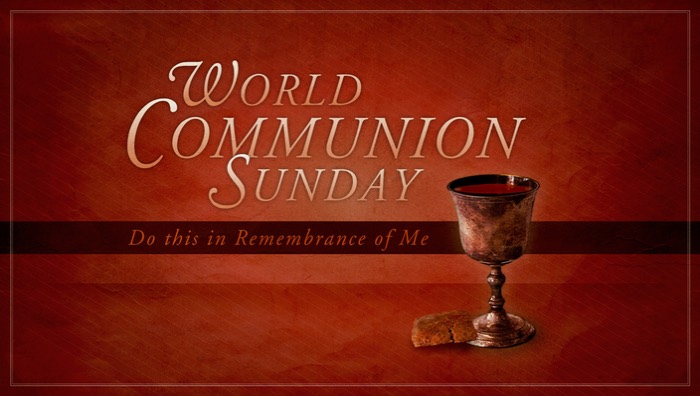
Today is World Communion Sunday ~ October 1, 2023

World Communion Sunday offers us an opportunity to experience Holy Communion in the context of the global community of faith.

The first Sunday of October has become a time when Christians in every culture break bread and pour the cup to remember and affirm Christ as the Head of the Church.

On that day, we remember that we are part of the whole body of believers.

Christians celebrate the communion liturgy in as many ways as there are congregations. World Communion Sunday can be both a profound worship experience and a time for learning more about our wider community of faith.

Because Pastor Bruce is away, we will celebrate at Pender next Sunday.


Tags: , , , , , , , , , , , , , ,

All about Liturgical Colors

  • Purple, representing both royalty and penitence, is traditionally used during Advent and Lent.
  • Blue symbolizes hope and may also be used during Advent.
  • White and gold are used at Christmas and Easter to symbolize joy and festivities.
  • Red symbolizes the color of fire to represent the Holy Spirit on the Day of Pentecost and times when the work of the Holy Spirit is emphasized. During Holy Week it represents the blood of Christ. Red is also used for ordinations, church anniversaries and civil observances such as Memorial Day and Thanksgiving.
  • Green represents growth and is used during Ordinary Time (the season after Epiphany and the season after Pentecost.)

Let’s start with a word about liturgical colors. You can see listed here that the official color of the long season of Ordinary Time is green. This makes sense for lots of reasons: Ordinary Time is about growing in our faith, about accepting the gifts that we’ve been given, and producing the fruit not just as individual Christians but as the body of Christ. Green is the color of growth and of fruitfulness. There are other reasons why the season claims the color green. Perhaps you and your team can come up with some more and use them to inform the congregation who may never have given thought to why the green paraments are used throughout this season.

We started here, however, because there are those who get bored with a single color in this long season that runs from Pentecost through Reign of Christ/Christ the King Sunday at the end of November. There are so many colors, so much beauty in worship art and God’s creation, why use only one color for this long season? Isn’t this the season after Pentecost? Why can’t we use red for at least a part of the season?

The season of Ordinary Time (or the Sundays after Pentecost—there is no “Pentecost Season”) calls for creativity and artistry. Even if you are using green as a foundational color, there is no reason why you can’t bring in a host of other colors over the season. Green represents life, and life is colorful. So, use more colors; use both/and; use a whole palette of colors to bring to life the worship in Ordinary Time. Think ahead for changing series or themes and find ways to enhance the liturgy with visual expressions of color, not just in paraments, but in banners, worship centers, projected or posted images, and colors. There are ways to move beyond the plain green altar or pulpit fall. Call on artists of all sorts to enhance the space.

Adapted from https://www.umcdiscipleship.org/worship-planning/living-the-spirit-life/second-sunday-after-pentecost-year-c-lectionary-planning-notes

Chuck Knows Church — Episode 1 – LITURGICAL COLORS. Ever walk into your Sunday morning worship service and realize the colors have changed around the sanctuary? That’s why Chuck is talking about Liturgical Colors on his FIRST SHOW!


Tags: , , , , , , , , , , , , , , , , , , , , , ,

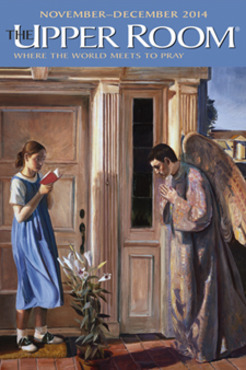
The Upper Room

5_URE_ND14_Cvr.jpg

Get your copy or The Upper Room at Pender UMC each month in regular or large print versions.

The Upper Room magazine’s mission is to provide a model of practical Christianity, accessible in varied formats, to help people feel invited and welcomed into God’s presence to:

  • listen to scripture as God’s personal message, linking their stories to God’s story;
  • commune with God in prayer;
  • see their daily choices and small acts of obedience as part of God’s work;
  • realize our connection through Christ as a universal family of believers;
  • encounter the living Christ and be transformed into Christ’s likeness.

From Chuck Knows Church.  The Upper Room. It’s the place where Jesus had his last meal with his disciples, but it’s also the world’s most widely read daily devotional guide. Chuck explains the significance of this “little book”.


Tags: , , , , , , , , ,