RSS

Tag Archives: Pender UMC

Hymn History: On Eagle’s Wings

“On Eagle’s Wings” was the prelude at Pender’s 9:00 am Traditional Service on September 17, 2023. It was played on piano by Heidi Jacobs.

“On Eagle’s Wings,” by Michael Joncas;
The United Methodist Hymnal, No. 143

And He will raise you up on eagle’s wings,
bear you on the breath of dawn,
make you to shine like the sun,
and hold you in the palm of His hand.*

“Thus you shall say to the house of Jacob, and tell the Israelites: You have seen what I did to the Egyptians, and how I bore you on eagles’ wings and brought you to myself” (Exodus 19:4, NRSV).

Many recent composers for the church draw from biblical sources, making allusions to specific images. Father Jan Michael Joncas (b. 1951) uses the providential image of “eagle’s wings” as the anchor metaphor for his widely sung refrain. This refrain is a response for Psalm 91, usually sung by a cantor.

In a presentation for the National Association of Pastoral Musicians (NPM) convention in Long Beach in 1989, Joncas stated, “Scripture grounds my life as a Christian, a preacher, and a priest” (Joncas, GIA Publications, Inc. website). “On Eagles’ Wings” is an example of the high scriptural content of Fr. Joncas’s compositions. The composition appeared first in the liturgical music collection On Eagles’ Wings in 1979.

Dr. Joncas is one of the most prominent liturgical scholars and musicians in Catholic music today. He was granted the BA (English) magna cum laude from St. Thomas College, St. Paul, Minnesota (1975), the MA (Liturgical Studies) summa cum laude from University of Notre Dame, Notre Dame, Indiana (1978), and the SLL and SLD summa cum laude from the Pontificio Istituto Liturgico at the Collegio Sant’Anselmo (Roma, Italia) in 1989 and 1991, respectively.

Fr. Joncas has published widely in liturgical journals, written books, and composed and recorded numerous collections of liturgical music. He served as co-editor of Gather, one of the most widely used collections of liturgical music in Catholic parishes. He has served in parish ministry and is currently serving as University Artist-in-Residence and Fellow, Center for Catholic Studies, in the Department of Catholic Studies, University of St. Thomas.

The United Methodist Hymnal (1989) was the first major Protestant hymnal to include the refrain, “On Eagle’s Wings.” The only changes were the substitution of “God” and “God’s” for “He” and “His” for inclusive language purposes. Many Protestant congregations might view this song as a chorus or praise song. The roots are, in fact, much different. The song was written in 1978 as Joncas was concluding his MA in liturgy from Notre Dame. He was ordained in 1980 as a priest for the archdiocese of St. Paul/Minneapolis.

While serving in Minnesota, Fr. Joncas collaborated with two of his colleagues, Marty Haugen (b. 1950) and David Haas (b. 1957), in producing some of the most effective music for the church’s worship that has appeared in the days following the Second Vatican Council (1962-1965). This music written for the Catholic liturgy should not be confused with shorter choruses composed by contemporary Christian artists whose roots are in evangelical Christianity. At the National Pastoral Musicians conference in Long Beach, Fr. Joncas noted, “We pastoral musicians do not sing to entertain bored worshipers or to seduce them into brainless ecstasy; we may sing in the Spirit, but we also sing with our minds” (Joncas, GIA Publications, Inc. website).

In the Catholic liturgy, “On Eagle’s Wings” would be used most often on Sundays when the lectionary calls for Psalm 91. Joncas’s solo setting of the psalm for cantor is not included in The United Methodist Hymnal. The refrain allows the congregation to participate more fully in the singing of the psalm.

Most Protestant congregations know only the refrain. The beautiful, soaring melodic line and the rich, providential images of the text allow it to stand on its own. “On Eagle’s Wings” is often used in United Methodist worship as a congregational response to the benediction at the conclusion of the service. It also has a broader use, being sung at many 9/11 memorial services and at the memorial service for those who died in the bombing of the Alfred P. Murrah Federal Building in Oklahoma City in 1995.

How music will be used once it is published may be much different from what the composer intended. In correspondence with this writer, Fr. Joncas noted, “I wasn’t aware that by printing only the refrain in [The UnitedMethodist Hymnal, members of that denomination treat it more as a detachable benediction than a verse/refrain setting of Psalm 91.”

Adapted from https://www.umcdiscipleship.org/resources/history-of-hymns-on-eagles-wings


Tags: , , , , , , , , , , , , , , , , , , , , , , , ,

Hymn History: His Eye Is On The Sparrow


“His Eye Is On The Sparrow” was the postlude at Pender’s 9:00 am Traditional Service on September 3, 2023. It was played on piano by Heidi Jacobs.

His Eye Is on the Sparrow
Civilla Martin
The Faith We Sing, page No. 2146

“Why should I feel discouraged?
Why should the shadows come?
Why should my heart be lonely
and long for heaven and home?
When Jesus is my portion?
My constant friend is he;
His eye is on the sparrow,
and I know he watches me.”

Civilla Durfee Martin (1866-1948) was born in Nova Scotia and died in Atlanta, Ga. In “His eye is on the sparrow” (1905), she has provided one of the most influential and often-recorded gospel hymns of the 20th century.

Notable versions include recordings by Shirley Ceasar, Marvin Gaye, Kirk Franklin & the Family, Mahalia Jackson, Sister Rosetta Tharpe, Dottie West and Barbara Mandrell.

Jessica Simpson included this song in her album Irresistible (2001). The most stirring renditions of this song are associated for many with actress-singer Ethel Waters, who loved this it so much that it became the title of her autobiography (1950).

Martin was the daughter of James N. and Irene Harding Holden, and was a schoolteacher with modest musical training. Together with her husband, Walter (1862-1935), they often wrote gospel songs for revival meetings. “Be not dismayed” (UM Hymnal, No. 130) is an example of their collaboration.

Walter Stillman Martin was a Baptist minister who received his education at Harvard. He later became a member of the Disciples of Christ, teaching at Atlantic Christian College (now Barton College) in Wilson, N.C., before moving to Atlanta in 1919, a location that became the base for revivals that he held throughout the U.S.

The song was obviously inspired by Matthew 6:26: “Look at the birds of the air; they neither sow nor reap nor gather into barns, and yet your heavenly Father feeds them. Are you not of more value than they?”

Later in Matthew (10:29-31), the Gospel writer continues on this theme: “Are not two sparrows sold for a farthing? And one of them shall not fall on the ground without your Father. But the very hairs of your head are all numbered. Fear ye not therefore, ye are of more value than many sparrows.” Similar thoughts are cited in Luke 12:6-7. Stanza two quotes part of John 14:1 directly, “Let not your heart be troubled…”

Civilla Martin describes the context out of which the hymn was born: “Early in the spring of 1905, my husband and I were sojourning in Elmira, New York. We contracted a deep friendship for a couple by the name of Mr. and Mrs. Doolittle—true saints of God. Mrs. Doolittle had been bedridden for nigh twenty years. Her husband was an incurable cripple who had to propel himself to and from his business in a wheelchair. Despite their afflictions, they lived happy Christian lives, bringing inspiration and comfort to all who knew them. One day while we were visiting with the Doolittles, my husband commented on their bright hopefulness and asked them for the secret of it. Mrs. Doolittle’s response was simple: ‘His eye is on the sparrow, and I know He watches me.’ The beauty of this simple expression of boundless faith gripped the hearts and fired the imagination of Dr. Martin and me. The hymn ‘His Eye Is on the Sparrow’ was the outcome of that experience.”

The next day she mailed the poem to Charles Gabriel, a famous composer of gospel songs, who wrote a tune for it.

The themes of solace in spite of sorrow, and a profound sense of being under the watch-care of Jesus, who is a “constant friend,” offered the African-American community comfort during the Civil Rights movement. The refrain seals the theme by offering an apology for singing—“I sing because I’m happy, I sing because I’m free”—words that would speak to everyone, but especially African Americans.

There is no doubt that African American gospel artist Kirk Franklin was influenced by Martin’s song when he composed “Why we sing” (The Faith We Sing, No. 2144).

Adapted from https://www.umcdiscipleship.org/resources/history-of-hymns-his-eye-is-on-the-sparrow


Tags: , , , , , , , , , , , , , , , , , , , , , ,

Contemporary Cantata, Does God Hear Me?

A special service of songs and stories led by Worship Leader, Uriah Moore and featuring the Pender Praise Band. This was a contemporary worship experience featuring music from Doe, Elevation Worship, Kari Jobe, Karen Clark Sheard, and more.

In addition to singers, the band consists of guitar, drums, percussion, autoharp, saxophone, trumpet and clarinet.

This group leads worship every Sunday at 11:15 am online and in person at Pender UMC, 12401 Alder Woods Drive, Fairfax, VA US 22033.

 
Leave a comment

Posted by on June 1, 2023 in Music, Pender UMC, Videos


Tags: , , , , , , , , , , , , , , , , , , , ,

Benefit Concert for Ukraine


Concert repertoire will include:
Harp arrangements by Debussy
Piano trio of Jazz/Baroque
Flute Concertino by Chaminade
Woodwind Quintet with music of Duke Ellington
The Widor Toccata Organ Symphony Movement V
and an Irish session!

 
Leave a comment

Posted by on April 18, 2023 in Ministries, Music, Music Ministry, Pender UMC


Tags: , , , , , , , , , , , , , , , ,

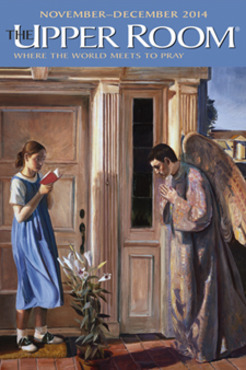
The Upper Room

5_URE_ND14_Cvr.jpg

Get your copy or The Upper Room at Pender UMC each month in regular or large print versions.

The Upper Room magazine’s mission is to provide a model of practical Christianity, accessible in varied formats, to help people feel invited and welcomed into God’s presence to:

  • listen to scripture as God’s personal message, linking their stories to God’s story;
  • commune with God in prayer;
  • see their daily choices and small acts of obedience as part of God’s work;
  • realize our connection through Christ as a universal family of believers;
  • encounter the living Christ and be transformed into Christ’s likeness.

From Chuck Knows Church.  The Upper Room. It’s the place where Jesus had his last meal with his disciples, but it’s also the world’s most widely read daily devotional guide. Chuck explains the significance of this “little book”.


Tags: , , , , , , , , ,