RSS

Tag Archives: Sanctuary Choir

Hymn History: I Want to Walk as a Child of the Light

“I Want to Walk as a Child of the Light” by Kathleen Thomerson,
The United Methodist Hymnal, No. 206

The Pender UMC Traditional Service Opening Hymn “I Want to Walk As a Child of the Light” on Sunday September 18, 2022 was played by Liz Eunji Moon on piano, accompanied on guitar by Brian Stevenson and AJ Rios and sung the Pender Sanctuary Choir and congregation.

I want to walk as a child of the light.
I want to follow Jesus.
God set the stars to give light to the world.
The star of my life is Jesus.
Refrain: In him there is no darkness at all.
The night and the day are both alike.
The Lamb is the light of the city of God.
Shine in my heart, Lord Jesus.*

From time to time, a hymn captures our imagination because of its simplicity and transparency. Such a hymn is “I want to walk as a child of the light.” In singing this hymn, we feel the spirit of Epiphany unfold.

Kathleen Armstrong Thomerson (b. 1934) is a native of Tennessee. She wrote the hymn during the summer of 1966 during a visit to the Church of the Redeemer in Houston, Texas, the location providing the origin for the tune name HOUSTON. Her musical education took place at the University of Texas and Syracuse University, with additional studies at the Flemish Royal Conservatory in Antwerp. She has studied with several of the most noted organists of the twentieth century.

Ms. Thomerson directed music at University United Methodist Church in St. Louis and was on the organ faculties of St. Louis Conservatory and Southern Illinois University in Edwardsville. From 2004 through 2013, she served Mt. Olive Lutheran Church in Austin, Texas. In addition to this hymn, she contributed tunes for hymns by Patricia B. Clark in their joint collection, A Taste of Heaven’s Joys: A Collection of Original Hymns (2005).

“I want to walk as a child of the light” comes to The United Methodist Hymnal by way of the Episcopal Hymnal 1940 supplement, Songs for Celebration (1980). A musician with such a distinguished musical pedigree does not usually compose a gospel hymn of such elegant simplicity. A folk-like melody conveys a text based upon a wide range of scriptural allusions and biblical images. United Methodist Hymnal editor, Dr. Carlton Young notes some biblical passages that support the text: Isaiah 42:6c, “I have given you as a covenant to the people, a light to the nations.”; Malachi 4:2, “But for you who revere my name the sun of righteousness shall rise, with healing in its wings”; Revelation 21:25b, “And there will be no night there,” and 22:5b, “They need no light of lamp or sun.”

“I want to walk as a child of the light” communicates deep conviction and personal sincerity, while avoiding any hint of pretence. The first person perspective invites the singer to join Christ, the Light of the World, in discipleship – a journey of faith. The second line of each stanza deepens this commitment:
Stanza 1: “I want to follow Jesus.”
Stanza 2: “I want to look at Jesus.”
Stanza 3: “I want to be with Jesus.”

From a Wesleyan perspective, the theology of this hymn outlines sanctifying grace, the perspective of the Christians as they move toward perfection in the faith, becoming transformed in the image of Christ. Each stanza adds greater luminosity to this walk. In the first stanza, “God set[s] the stars to give light to the world.” Christ in turn becomes the “star of my life.” References to stars support the hymn’s appropriateness for Epiphany. Stanza two expresses the desire to “see the brightness of God.” The “Sun of Righteousness” illumines “the way to the Father.” The final stanza extends the journey toward the “coming of Christ,” an eschatological direction toward our future hope.

As in most gospel hymns, it is the refrain that carries the essence of its meaning; and indeed it is this refrain, with its scriptural allusions that virtually quote from Revelation 21 and 22, that distinguishes this hymn from many earlier expressions of discipleship. While a deeply personal expression of piety, the poet roots her devotional expression firmly in Scripture, avoiding the maudlin and simplistic notions of some gospel songs.

The simplicity of the music and text does not imply a simplistic faith. “I want to walk as a child” reminds us of one of the paradoxes of our faith, that we need to become as a child to fully understand the realm of God (Matthew 18:2-4).

*Text © 1970, 1975 Celebration, P.O. Box 309, Aliquippa, PA 10001, USA. Used by Permission.

Adapted from https://www.umcdiscipleship.org/resources/history-of-hymns-i-want-to-walk-as-a-child-of-the-light
 

Tags: , , , , , , , ,

Pan Am Flight 103 (Lockerbie)

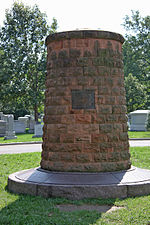
Pan Am Flight 103 Memorial Cairn

Pan Am Flight 103 Memorial Cairn

On December 21 at 1:30PM, the Pender UMC Choir traditionally sang for the Pan Am Flight 103 (Lockerbie) Memorial Service at Arlington National Cemetery.

One of the songs we traditionally sing at this service – “Under His Wings” – was composed in memory of the victims.  On June 20, 2022, a Memorial Concert was held for long-time choir member, Diane Martini. The Pender Sanctuary Choir and the former Master Chorale of Washington sang several of Diane’s favorites. One of her favorites had been “Under His Wings”.

A few years ago was the 25th anniversary of the Pan Am Flight 103 bombing. A C-Span video of the anniversary event

http://www.c-span.org/video/?316910-1/pan-flight-103-25th-anniversary-memorial-service

Another video from the anniversary year:

For full remarks about the anniversary service, including speaker’s notes, please see https://www.victimsofpanamflight103.org/events/2013/arlington

Here’s a timeline of the terrible event on December 21, 1988:

Extraordinary Response Pan Am 103


Tags: , , , , , , ,

Pender Music: A Prayer for Healing

“A Prayer for Healing” was the offertory anthem at Pender’s 9:00 am Traditional Service on October 1, 2023. It was sung by Pender’s Sanctuary choir, directed by Jane McKee and accompanied on piano by Heidi Jacobs. With words and music by Joseph M. Martin, this powerful music references John 2, Jeremiah 14:1-22, John 14:27, John 9:1-41

Written during the height of the COVID-19 pandemic, this song of spiritual and physical wellness speaks to many moments of need. Opening with the first few chords of O God, Our Help in Ages Past, the anthem is framed as a petition for God’s healing mercy. The unison melody gently rises and falls before all join in on the prayerful refrain: “In the silence help us hear words of hope and promise clear. Teach us not to live in fear. Lord of all, we pray to you.” A true anthem of hope!


Tags: , , , , , , , , , , , , , , , , , , , , , , , ,

Hymn History: Come Ye Thankful People, Come

“Come, Ye Thankful People, Come”
by Henry Alford
The United Methodist Hymnal, 694

Come, ye thankful people, come,
Raise the song of harvest home;
All is safely gathered in,
Ere the winter storms begin.
God our Maker doth provide
For our wants to be supplied;
Come to God’s own temple, come,
Raise the song of harvest home.

The Pender UMC Traditional Service Opening Hymn “Come Ye Thankful People, Come” on Thanksgiving Sunday November 20, 2022 was played by Liz Eunji Moon on piano, Teresa Rothschild on clarinet, Brian Stevenson on flute and sung the Pender Sanctuary Choir and congregation.

With the upcoming celebration of Thanksgiving, people in churches, schools, and other events will sing the traditional harvest song, “Come, Ye Thankful People, Come,” by Henry Alford (1810–1871).

Born into a long line of Anglican clergymen, Alford was raised early by his father and later by his uncle, Rev. Samuel Alford, due to his mother’s death during his birth. This instability resulted in his early education being scattered between private tutoring and a variety of schools, but in 1827 he became a scholar at Trinity College where he received all his secondary education (B.A. 1832, M.A. 1835). He was ordained a priest in the Anglican church in 1834, served in the vicarage at Wymeswold in Leicestershire (18 years), at Quebec Street Chapel in Marylebone, London (4 years), and as Dean of the Chapter of the Cathedral of Christ Church, Canterbury, England (14 years).

This hymn first appeared in Alford’s Psalms and Hymns, adapted to the Sundays and Holydays throughout the year (1844). Methodist hymnologist J. Richard Watson details several revisions of the text both by Alford and others, resulting in the author’s final revision in 1868 (Watson, Canterbury Dictionary, n.p.). In this hymn, Alford used traditional language and imagery of the rural community to lend words of thankfulness for God’s provision and to expand upon Matthew 13:24–30:

He put before them another parable: “The kingdom of heaven may be compared to someone who sowed good seed in his field; but while everybody was asleep, an enemy came and sowed weeds among the wheat, and then went away. So when the plants came up and bore grain, then the weeds appeared as well. And the slaves of the householder came and said to him, ‘Master, did you not sow good seed in your field? Where, then, did these weeds come from?’ He answered, ‘An enemy has done this.’ The slaves said to him, ‘Then do you want us to go and gather them?’ But he replied, ‘No; for in gathering the weeds you would uproot the wheat along with them. Let both of them grow together until the harvest; and at harvest time I will tell the reapers, Collect the weeds first and bind them in bundles to be burned, but gather the wheat in my barn.’” (NRSV)

Tom Stewart, in his writing, says:

[The hymn] addresses the common theme of harvest festivals, called in England the Harvest Home, which is celebrated in English churches usually during the month of September. A thanksgiving service would be held in the church, where the bounty of the harvest is collected, displayed with the fall trappings of pumpkins and autumn leaves, and then dispensed to the needy. And, of course, unlike the humanist that is essentially grateful to only himself, a true Harvest Home celebration acknowledges the provision of God, as did the Pilgrims in 1621 and the ancient Hebrews in their Feast of Firstfruits in the spring on the first day after Passover at the time of the barley harvest. (Stewart, 2016, n.p.)

The eminent minister and hymnologist, Erik Routley (1917–1982), took great offense at this hymn in his book, Hymns Today and Tomorrow. For the most part, his criticism concerns the musical setting, ST. GEORGE’S WINDSON, yet Routley feels that it is “extremely doubtful whether the [imagery of the last judgment] makes any impact on congregations at all” (Routley, 1964, p. 126). The hymn is complex, but it is by no means obscure or opaque.

The first stanza focuses directly on the physical harvest, an image used throughout scripture from early in Genesis through Revelation. We give thanks for the physical harvest as we give thanks for our daily bread in the Lord’s Prayer. Thanksgiving begins with the most concrete blessings in our lives. As well as a physical harvest, the first stanza alludes to Jesus’ remark in all three synoptic gospels—the harvest is plentiful but the laborers are few, and the thankful people who are called to come are those who have already been sent by the Lord of the harvest, Jesus Christ.

The second stanza begins Alford’s expansion upon the parable of Jesus concerning the wheat and the tares (weeds) from Matthew 13:24–30. It is a challenging parable, which Alford interprets in this hymn to describe how joy and sorrow grow together in life, and how God does not eliminate sorrow until after the final harvest when God “will wipe every tear from their eyes. Death will be no more; mourning and crying and pain will be no more, for the first things have passed away” (Revelation 21:4. (NRSV).

The third and fourth stanzas move more directly to the apocalyptic reference, “For the Lord our God shall come.” Erik Routley felt this imagery out of place. However, connecting thanksgiving with the coming of Jesus is imagery that is used at every celebration of the Lord’s Supper.

The hymn tune ST. GEORGE’S WINDSOR, composed in 1856 by George J. Elvey (1816–1893) for the hymn “Hark! The Song of Jubilee,” has been associated with “Come, Ye Thankful People, Come” since the publication of Hymns Ancient and Modern (1861). As noted above, some reviewers of the hymn have pointed to the incongruity of this sturdy and joyful tune with these words, but there is some beauty in this pairing as well, especially with text painting at some points. Among others, one such case is the use of a dotted rhythm, balanced throughout the music, as a compelling invitation to sing, notably on the opening “Come.” One might also notice the phrase “all is safely gathered in” where the pitch begins and ends on A, but feels “gathered” by the use of the neighboring tones, Bb and G. Midway through the hymn, the phrases, “first the blade and then the ear, then the full corn shall appear,” are sung in an ascending sequence that seems almost like corn growing in the field. Later, the leap upward for ‘raise the song’ and ‘raise the glorious’ helps to paint the intent of the final phrases in stanzas 1 and 4.

Regardless of Routley’s misgivings, the discerning hymn singer cannot help but appreciate the vibrant eschatological final stanza that amplifies Christ’s parable. It is offered here in the author’s original language and punctuation:

Even so, Lord, quickly come,
Bring Thy final Harvest-home!
Gather Thou Thy people in,
Free from sorrow, free from sin;
There, forever purified,
In Thy garner to abide:
Come with all Thine angels, come,
Raise the glorious Harvest-home!

SOURCES

Erik Routley, Hymns Today and Tomorrow (Nashville, TN: Abingdon Press, 1964).

Stewart, Tom. “Come, Ye Thankful People, Come”: Hymns as Poetry found on whatsaiththescripture.com. Accessed September 3, 2016 at http://www.whatsaiththescripture.com/Poetry/Come-Ye-Thankful-People.html.

J. Richard Watson, “Come, Ye Thankful People, Come.” The Canterbury Dictionary of Hymnology. Canterbury Press, http://www.hymnology.co.uk/c/come,-ye-thankful-people,-come (accessed September 4, 2020).

Adapted from https://www.umcdiscipleship.org/articles/history-of-hymns-come-ye-thankful-people-come


Tags: , , , , , , , , , , , , , , , , , , , , , , , , , , , , , , ,

Pender Music: Celtic Communion

“Celtic Communion” was the offertory anthem at Pender’s 9:00 am Traditional Service on October 10, 2023 It was sung by Pender’s Sanctuary choir, directed by Patrick King and accompanied on piano by Heidi Jacobs.

Celtic Communion, arr. Mark Hayes. A brilliant inspiration! This beautiful anthem pairs the beloved Gaelic melody Bunessan with traditional texts that are a perfect match! The remarkable keyboard accompaniment supports the Irish folk flavor, which is further enhanced by the optional orchestration for flute or penny whistle, bass, guitar and percussion. Stunning message and music!


Tags: , , , , , , , , , , , , , , , , , , , , , , , , , ,