RSS

Monthly Archives: December 2023

Christmas Music, Part 21: “Above All Sing Spiritually”

Nativity set and sheet music for "Away in a Manger" are part of a photo illustration by Kathryn Price, United Methodist Communications.
Nativity set and sheet music for “Away in a Manger” are part of a photo illustration by Kathryn Price, United Methodist Communications.

As you turn the pages of The United Methodist Hymnal during December, often you will end up singing some of the most popular Christmas carols ever composed. Two favorites, “Hark, the Herald Angels Sing” and “Come, Thou Long-Expected Jesus,” were written by Charles Wesley, one of the founders of Methodism.

United Methodist Discipleship Ministries provides an extensive History of Hymns, but here is a short compilation of some of the songs we love the most in this holy season.

“Hark! The Herald Angels Sing”
Written by Charles Wesley within a year of his conversion, this song was first published under the title “Hymn for Christmas Day” in Hymns and Sacred Poems (1739). There is no gentle warmup for this song; it jumps right into the action when the angels appear to the shepherds and herald the birth of Jesus. Much of the text in the first stanza is an adaptation of Luke 2:14. Wesley does inject his own theological interpretation of this grand event with the statement “God and sinners reconciled.” Read more.

“Come, Thou Long-Expected Jesus”
First published in 1744, Charles Wesley also wrote this popular Advent hymn. The song uses imperative verbs like “come,” “rule” and “raise” to enhance our longing for the Savior. The hymn was included in the small collection of hymns Hymns for the Nativity of the Our Lord. Like others published by the Wesley brothers, these collections produced a way to spread Methodist theology, enhance the prayer life of those in the Society, and give them a body of songs to sing when they gathered. Read more.

“O Little Town of Bethlehem”
Phillips Brooks (1835-1893), an Episcopal priest and rector of the Church of the Holy Trinity in Philadelphia, wrote this popular carol. Brooks was inspired when he visited Bethlehem and Jerusalem in 1865. Three years later Brooks wrote the poem/lyrics and Lewis Redner, the organist of the church, added the music. Most renditions of this carol uses Redner’s tune, simply titled “St. Louis.” However, there are at least three other tunes used with Brooks’ lyrics, such as the version often performed during “Nine Lessons and Carols” at Kings College, Cambridge. Read more.

“Angels We Have Heard on High”
The French roots of this carol can be found in the 1700s in “Les Anges dans nos Campagnes,” which means “the angels in the countryside.” The French verses were coupled with a refrain taken from Luke 2:14 in the Latin version of the Bible: “Gloria, in excelsis Deo,” which means “Glory to God in the highest.” The carol was translated to English by Bishop James Chadwick and first published in his 1860 Holy Family Hymns. The traditional tune is attributed to Edward Shippen Barnes, an American organist who studied Yale University from 1910-11 and then briefly at Schola Cantorum in Paris. Read more.

“O Come, O Come Emmanuel”
The roots of this carol date back to the 800s and a series of Latin hymns sung during Advent Vespers. These Great Antiphons (meaning psalm or anthem) were rediscovered by English minister John Mason Neale and published in 1710. He wove together parts of the antiphons to create this song, first published in 1851. The first draft of his song began with “Draw nigh, draw nigh, Emmanuel,” but a later revision restored the tradition of these antiphons by starting the song with “O Come, O Come Emmanuel.” Read more.

“Silent Night”
The original German lyrics “Stille Nacht! Heilige Nacht!” were written in 1816 by Josef Mohr, a Catholic priest from Austria. Tradition holds that two years later, faced with a rusty, broken organ (some say damaged by mice) on Christmas Eve, Mohr gave the lyrics to Austrian headmaster Franz Gruber and asked him to compose the melody on guitar. At first Gruber declined because the guitar was popularly used for drinking songs, but finally agreed and created a Christmas song loved throughout the world. “Silent Night” is said to be one of the songs both English and German soldiers sang together in the great Christmas truce of 1914 during World War I. Read more.

“What Child is This?”
The words to this carol were adapted from a longer poem written by William Chatterton Dix in 1865. Born into a literary family, Dix’s father was a surgeon who also wrote a book about English poet Thomas Chatterton, after whom he named his son. William did not follow his father’s footsteps to medical school; instead he sold insurance and wrote poetry. The melody of this carol comes from the 16th century British melody “Greensleeves,” originally a ballad of a man pining for his lost love. The carol was published in 1871 in Christmas Carols, New and Old. Dix wrote many other hymns, most notably “Alleluia, Sing to Jesus” and “As With Gladness, Men of Old.” Read more.

“Away in a Manger”
Also known as “Luther’s Cradle Hymn,” a popular belief in the early 1900s held that Martin Luther composed this hymn in the 16th century. One published version of the song in 1887 stated that Luther composed it for his children, though it does not appear in his works or in German church history. It is more likely that the carol was written by German Lutherans in Pennsylvania. The first two verses were published in the 1885 Little Children’s Book without an attribution to an author. The author of the third verse (“Be near me, Lord Jesus”) is also unknown. Read more.

“We Three Kings”
John H. Hopkins, Jr. wrote this hymn about the Magi in 1857 for a Christmas pageant at New York City’s General Theological Seminary. Hopkins was a graduate from the Episcopalian seminary and the school’s first instructor of church music. The seminary, located in the wooded, undeveloped northern area of Manhattan, was founded in part through a land gift from Clement Clarke Moore. The son of New York’s Episcopal bishop, Moore’s income and fame were the result of a famous poem he wrote: “Twas the night before Christmas, when all through the house…” Read more.

As you reflect on their meaning and sing these beloved carols during Advent and Christmas, remember the words of John Wesley: “Above all sing spiritually. Have an eye to God in every word you sing… so shall your singing be such as the Lord will approve here, and reward you when he cometh in the clouds of heaven.” (Select Hymns, 1761)

If you’d like to learn more about how Christmas carols can enhance your Advent preparations, take a look at Rev. James Howell’s new book “Why This Jubilee?”

This feature was first published on December 16, 2015.

*Christopher Fenoglio works for UMC.org at United Methodist Communications. Contact him by email or at (615) 312-3734.

Adapted from https://www.umc.org/en/content/christmas-carols-above-all-sing-spiritually


Tags: , , , , ,

Pan Am Flight 103 (Lockerbie)

Pan Am Flight 103 Memorial Cairn

Pan Am Flight 103 Memorial Cairn

On December 21 at 1:30PM, the Pender UMC Choir traditionally sang for the Pan Am Flight 103 (Lockerbie) Memorial Service at Arlington National Cemetery.

One of the songs we traditionally sing at this service – “Under His Wings” – was composed in memory of the victims.  On June 20, 2022, a Memorial Concert was held for long-time choir member, Diane Martini. The Pender Sanctuary Choir and the former Master Chorale of Washington sang several of Diane’s favorites. One of her favorites had been “Under His Wings”.

A few years ago was the 25th anniversary of the Pan Am Flight 103 bombing. A C-Span video of the anniversary event

http://www.c-span.org/video/?316910-1/pan-flight-103-25th-anniversary-memorial-service

Another video from the anniversary year:

For full remarks about the anniversary service, including speaker’s notes, please see https://www.victimsofpanamflight103.org/events/2013/arlington

Here’s a timeline of the terrible event on December 21, 1988:

Extraordinary Response Pan Am 103


Tags: , , , , , , ,

Under His Wings

Pan Am Flight 103 Memorial Cairn

On December 21 at 1:30PM, the Pender UMC Choir traditionally sang for the Pan Am Flight 103 (Lockerbie) Memorial Service at Arlington National Cemetery.

One of the songs we sang at this service – “Under His Wings” – was composed in memory of the victims.  It can be heard in the videos below.

On June 20, 2022, a Memorial Concert was held for long-time choir member, Diane Martini. The Pender Sanctuary Choir and the former Master Chorale of Washington sang several of Diane’s favorites, including Under His Wings.


A few years ago was the 25th anniversary of the Pan Am Flight 103 bombing. A C-Span video of the anniversary event

http://www.c-span.org/video/?316910-1/pan-flight-103-25th-anniversary-memorial-service

Another video from the anniversary year:

For full remarks about the anniversary service, including speaker’s notes, please see https://www.victimsofpanamflight103.org/events/2013/arlington

Here’s a timeline of the terrible event on December 21, 1988:

Extraordinary Response Pan Am 103

 
Leave a comment

Posted by on December 21, 2023 in Ministries, Music, Music Ministry, Pender UMC, Videos


Tags: , , , , ,

Today Is the Beginning of Advent

Advent

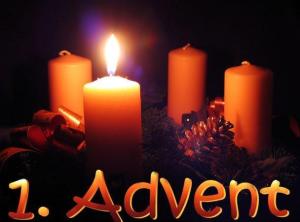
Today, December 3, 2023  is the First Sunday in Advent.

The first Candle of the Advent Wreath is lit on the first Sunday of Advent, on December 3 this year. It is called the Prophecy Candle and reminds us that Jesus’ coming was prophesied hundreds of years before He was born. The candle’s purple color represents Christ’s royalty as the King of Kings.

Suggested Bible Reading: Luke 1:26-38

Chuck Knows Church — ADVENT WREATH. Four candles in a circle with a big one in the middle? Yep, take a moment and learn the basics about the advent wreath. And why is the pink candle…pink?


Tags: , , , , , , ,

Hymn History: Rejoice, Ye Pure in Heart

“Rejoice, Ye Pure in Heart”
Edward H. Plumptre
The UM Hymnal,  Nos. 160 and 161

Rejoice, ye pure in heart;
rejoice, give thanks, and sing;
your glorious banner wave on high,
the cross of Christ your King.
Rejoice, rejoice, rejoice, give thanks, and sing.

“Rejoice Ye Pure in Heart” was the middle hymn at Pender’s 9:00 am Traditional Service on October 15, 2023 It was sung by Pender’s Sanctuary choir, congregation, directed by Patrick King and accompanied on piano by Heidi Jacobs.

The Pender UMC Traditional Service Closing Hymn “Rejoice, Ye Pure in Heart” on May 29, 2022 was directed by Brian Stevenson and accompanied by Liz Sellers on piano and sung by the Pender Sanctuary Choir and Congregation.

Anglican priest and professor Edward Hayes Plumptre (1821-1891) composed “Rejoice, ye pure in heart” as a processional hymn for a choir festival in one of England’s majestic places of worship, Peterborough Cathedral.

Writing in the mid-20th century with perhaps a hint of condescension, hymnologist Albert Bailey describes the context for this hymn by saying that the “untravelled American can hardly realize the emotional effect of a processional made up of choirs from a dozen different communities, marching with full panoply through ‘long-drawn aisle’ and under ‘fretted vault’ while we hear:

The storm their high-built organs make,
And thunder-music, rolling, shake
The prophets blazoned on the panes.

“The massiveness of the old Norman Peterborough makes a marvelous background and amplifier for such a processional.”

Plumptre was a distinguished scholar of his day. Educated at University College, Oxford, he then became a fellow at Brasenose College, Oxford, receiving his ordination in the Anglican Church in 1846. After serving as a clergyman, he became chaplain and professor of New Testament exegesis at King’s College, London, and dean of Queen’s College, Oxford. His most prominent position as a clergyman was that of dean of Wells Cathedral.

Of the original 11 stanzas, five or six stanzas appear in most hymnals. Stanza one refers (in the original text) to the “festal banner” and “Cross of Christ your King,” symbols of the faith that would be carried at the head of such a procession in the Anglican context.

Omitted stanzas refer to this processional in martial terms as warriors who “march in firm array.” This kind of imagery is not only consonant with the times, but also reflects the theology of the Anglican Communion that views its role on earth as the “Church Militant” while the church in heaven is the “Church Triumphant.”

Of course, the music used for this text must reflect the spirit of a stately processional. American hymnologist Leonard Ellinwood said that the tune MARION was written for this text by Arthur Messiter (1834-1916). Messiter added the refrain drawn from the first two lines of stanza one: “Rejoice, rejoice, rejoice give thanks and sing” echoes Philippians 4:4, “Rejoice in the Lord always; again I will say, Rejoice.”

Hymnologist William Reynolds noted that it “was not unusual for a cathedral processional to take from ten to thirty minutes, and the hymn that was sung by both the choir and the congregation needed to have enough stanzas for this.”

Mr. Bailey’s earlier comments notwithstanding, not all participants in festival worship were enamored by such lengthy processionals. Mr. Reynolds goes on to say that “A review of a hymnal… [commented] that some of the processional hymns were so long that some of the congregation would need to walk about in order to stay awake.”

The United Methodist Hymnal includes a second tune, VINEYARD HAVEN, with this text. Richard W. Dirksen composed this tune in 1974 for the installation of John M. Allin as the presiding bishop of the Episcopal Church in Washington Cathedral.

Carlton Young, editor of The UM Hymnal, found this text less than worthy, and notes: “Dirksen’s setting… [saves] a maudlin hymn from its deserved place in hymnic obscurity.”

Regardless of how one evaluates the quality of this text, we can all be grateful to be spared from 30-minute processionals in worship.

Dr. Hawn is professor of sacred music at Perkins School of Theology.

From https://www.umcdiscipleship.org/resources/history-of-hymns-rejoice-ye-pure-in-heart


Tags: , , , , , , , ,