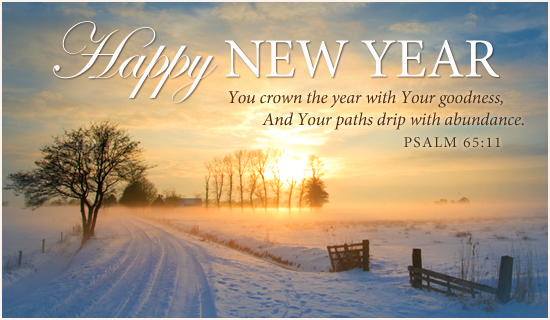
You crown the year with Your goodness,
And Your paths drip with abundance. ~ Psalm 65:11
You crown the year with Your goodness,
And Your paths drip with abundance. ~ Psalm 65:11
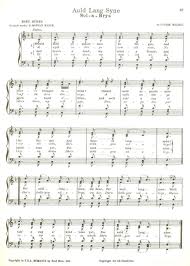
“Auld Lang Syne” is a Scots poem written by Robert Burns in 1788 and set to the tune of a traditional folk song. It is well known in many countries, especially in the English-speaking world; its traditional use being to celebrate the start of the New Year at the stroke of midnight. By extension, it is also sung at funerals, graduations and as a farewell or ending to other occasions. The international Boy Scout youth movement, in many countries, uses it as a close to jamborees and other functions.
The song’s Scots title may be translated into English literally as “old long since”, or more idiomatically, “long long ago”, “days gone by” or “old times”. Consequently “For auld lang syne”, as it appears in the first line of the chorus, might be loosely translated as “for (the sake of) old times”.
Here is an old kinescope from over 50 years ago!! For 100 years, the slow drop of a lighted glass ball on New Year’s Eve from atop One Times Square in New York City has become an American tradition. A huge crowd gathers every year to welcome in the New Year.
Beginning in 1956, Guy Lombardo & His Royal Canadians entertained the US on New Year’s Eve with a combination of music and the live “ball drop” at Midnight. Guy continued this tradition until his death in 1977. His band still played on at CBS Television on New Years for an additional 2 years. (Dick Clark’s Rockin New Years Eve began in 1972 on ABC and still broadcasts annually.) This broadcast began right after the 15-minute news and ran for an hour. Guy plays the music and newsman Robert Trout announces the beginning of the New Year.
If you look closely, you’ll see acerbic television personality Henry Morgan in the crowd. TV was very primitive 50 years ago. Harsh lighting, a cheap office clock and a World War II searchlight scans the crowd below. I hope you’ll enjoy ringing in the New Year – 1958! Recorded: December 31, 1957.

Messiah (HWV 56) is an English-language oratorio composed in 1741 by George Frideric Handel, with a scriptural text compiled by Charles Jennens from the King James Bible, and from the Psalms. It was first performed in Dublin on 13 April 1742, and received its London premiere nearly a year later. After an initially modest public reception, the oratorio gained in popularity, eventually becoming one of the best-known and most frequently performed choral works in Western music.

Part II of the Messiah covers the Passion, death, resurrection, ascension, and the later spreading of the Gospel, concluded by the “Hallelujah Chorus”.
The Mormon Tabernacle Choir sings the classical and beloved Hallelujah Chorus from Handel’s Messiah.
And also on Nov. 13 2010 unsuspecting shoppers got a big surprise while enjoying their lunch. Over 100 participants in this awesome Christmas Flash Mob.

As you turn the pages of The United Methodist Hymnal during December, often you will end up singing some of the most popular Christmas carols ever composed. Two favorites, “Hark, the Herald Angels Sing” and “Come, Thou Long-Expected Jesus,” were written by Charles Wesley, one of the founders of Methodism.
United Methodist Discipleship Ministries provides an extensive History of Hymns, but here is a short compilation of some of the songs we love the most in this holy season.
“Hark! The Herald Angels Sing”
Written by Charles Wesley within a year of his conversion, this song was first published under the title “Hymn for Christmas Day” in Hymns and Sacred Poems (1739). There is no gentle warmup for this song; it jumps right into the action when the angels appear to the shepherds and herald the birth of Jesus. Much of the text in the first stanza is an adaptation of Luke 2:14. Wesley does inject his own theological interpretation of this grand event with the statement “God and sinners reconciled.” Read more.
“Come, Thou Long-Expected Jesus”
First published in 1744, Charles Wesley also wrote this popular Advent hymn. The song uses imperative verbs like “come,” “rule” and “raise” to enhance our longing for the Savior. The hymn was included in the small collection of hymns Hymns for the Nativity of the Our Lord. Like others published by the Wesley brothers, these collections produced a way to spread Methodist theology, enhance the prayer life of those in the Society, and give them a body of songs to sing when they gathered. Read more.
“O Little Town of Bethlehem”
Phillips Brooks (1835-1893), an Episcopal priest and rector of the Church of the Holy Trinity in Philadelphia, wrote this popular carol. Brooks was inspired when he visited Bethlehem and Jerusalem in 1865. Three years later Brooks wrote the poem/lyrics and Lewis Redner, the organist of the church, added the music. Most renditions of this carol uses Redner’s tune, simply titled “St. Louis.” However, there are at least three other tunes used with Brooks’ lyrics, such as the version often performed during “Nine Lessons and Carols” at Kings College, Cambridge. Read more.
“Angels We Have Heard on High”
The French roots of this carol can be found in the 1700s in “Les Anges dans nos Campagnes,” which means “the angels in the countryside.” The French verses were coupled with a refrain taken from Luke 2:14 in the Latin version of the Bible: “Gloria, in excelsis Deo,” which means “Glory to God in the highest.” The carol was translated to English by Bishop James Chadwick and first published in his 1860 Holy Family Hymns. The traditional tune is attributed to Edward Shippen Barnes, an American organist who studied Yale University from 1910-11 and then briefly at Schola Cantorum in Paris. Read more.
“O Come, O Come Emmanuel”
The roots of this carol date back to the 800s and a series of Latin hymns sung during Advent Vespers. These Great Antiphons (meaning psalm or anthem) were rediscovered by English minister John Mason Neale and published in 1710. He wove together parts of the antiphons to create this song, first published in 1851. The first draft of his song began with “Draw nigh, draw nigh, Emmanuel,” but a later revision restored the tradition of these antiphons by starting the song with “O Come, O Come Emmanuel.” Read more.
“Silent Night”
The original German lyrics “Stille Nacht! Heilige Nacht!” were written in 1816 by Josef Mohr, a Catholic priest from Austria. Tradition holds that two years later, faced with a rusty, broken organ (some say damaged by mice) on Christmas Eve, Mohr gave the lyrics to Austrian headmaster Franz Gruber and asked him to compose the melody on guitar. At first Gruber declined because the guitar was popularly used for drinking songs, but finally agreed and created a Christmas song loved throughout the world. “Silent Night” is said to be one of the songs both English and German soldiers sang together in the great Christmas truce of 1914 during World War I. Read more.
“What Child is This?”
The words to this carol were adapted from a longer poem written by William Chatterton Dix in 1865. Born into a literary family, Dix’s father was a surgeon who also wrote a book about English poet Thomas Chatterton, after whom he named his son. William did not follow his father’s footsteps to medical school; instead he sold insurance and wrote poetry. The melody of this carol comes from the 16th century British melody “Greensleeves,” originally a ballad of a man pining for his lost love. The carol was published in 1871 in Christmas Carols, New and Old. Dix wrote many other hymns, most notably “Alleluia, Sing to Jesus” and “As With Gladness, Men of Old.” Read more.
“Away in a Manger”
Also known as “Luther’s Cradle Hymn,” a popular belief in the early 1900s held that Martin Luther composed this hymn in the 16th century. One published version of the song in 1887 stated that Luther composed it for his children, though it does not appear in his works or in German church history. It is more likely that the carol was written by German Lutherans in Pennsylvania. The first two verses were published in the 1885 Little Children’s Book without an attribution to an author. The author of the third verse (“Be near me, Lord Jesus”) is also unknown. Read more.
“We Three Kings”
John H. Hopkins, Jr. wrote this hymn about the Magi in 1857 for a Christmas pageant at New York City’s General Theological Seminary. Hopkins was a graduate from the Episcopalian seminary and the school’s first instructor of church music. The seminary, located in the wooded, undeveloped northern area of Manhattan, was founded in part through a land gift from Clement Clarke Moore. The son of New York’s Episcopal bishop, Moore’s income and fame were the result of a famous poem he wrote: “Twas the night before Christmas, when all through the house…” Read more.
As you reflect on their meaning and sing these beloved carols during Advent and Christmas, remember the words of John Wesley: “Above all sing spiritually. Have an eye to God in every word you sing… so shall your singing be such as the Lord will approve here, and reward you when he cometh in the clouds of heaven.” (Select Hymns, 1761)
If you’d like to learn more about how Christmas carols can enhance your Advent preparations, take a look at Rev. James Howell’s new book “Why This Jubilee?”
This feature was first published on December 16, 2015.
*Christopher Fenoglio works for UMC.org at United Methodist Communications. Contact him by email or at (615) 312-3734.
Adapted from https://www.umc.org/en/content/christmas-carols-above-all-sing-spiritually
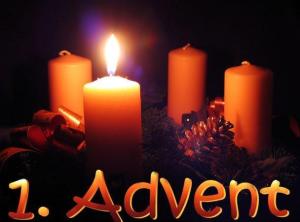
Today, December 3, 2023 is the First Sunday in Advent.
The first Candle of the Advent Wreath is lit on the first Sunday of Advent, on December 3 this year. It is called the Prophecy Candle and reminds us that Jesus’ coming was prophesied hundreds of years before He was born. The candle’s purple color represents Christ’s royalty as the King of Kings.
Suggested Bible Reading: Luke 1:26-38
Chuck Knows Church — ADVENT WREATH. Four candles in a circle with a big one in the middle? Yep, take a moment and learn the basics about the advent wreath. And why is the pink candle…pink?


 News and Views