RSS

Category Archives: Posts of Interest

Hymn History: ‘It Is Well With My Soul’

The Pender UMC Traditional Service Middle Hymn “It is Well With My Soul” on Sunday November 13, 2022 was played by Liz Eunji Moon on piano, directed by Brian Stevenson and sung the Pender Sanctuary Choir and congregation.

The hymn “It Is Well With My Soul” was written by a successful Christian lawyer called Horatio Spafford.

His only son died at age 4 in 1871. That year, the Great Chicago Fire wiped out his vast estate, made from a successful legal career.

In 1873 he sent his wife Anna and four daughters over to Europe on a summer trip on the ill-fated SS Ville du Havre. Since he had a lot of work to do, he had planned to travel to England with his family on the SS Ville du Havre, to help with D. L. Moody’s upcoming evangelistic campaigns. In a late change of plan, he sent the family ahead while he was delayed on business concerning zoning problems following the Great Chicago Fire.

On November 22 the ship was struck by an iron sailing vessel killing 226 people, including all four of Spafford’s daughters: Annie, age 12; Maggie, 7; Bessie, 4; and an 18-month old baby. His wife survived the tragedy.

Upon arriving in England, she sent a telegram to Spafford that read “Saved alone.”

Shortly afterwards, as Spafford traveled to meet his grieving wife, he was inspired to write these words as his ship passed near where his daughters had died.;Bliss called his tune Ville du Havre, from the name of the stricken vessel.

It is Well With My Soul

  1. When peace, like a river, attendeth my way,
    When sorrows like sea billows roll;
    Whatever my lot, Thou hast taught me to say,
    It is well, it is well with my soul.

    • Refrain:
      It is well with my soul,
      It is well, it is well with my soul.
  2. Though Satan should buffet, though trials should come,
    Let this blest assurance control,
    That Christ hath regarded my helpless estate,
    And hath shed His own blood for my soul.
  3. My sin—oh, the bliss of this glorious thought!—
    My sin, not in part but the whole,
    Is nailed to the cross, and I bear it no more,
    Praise the Lord, praise the Lord, O my soul!
  4. For me, be it Christ, be it Christ hence to live:
    If Jordan above me shall roll,
    No pang shall be mine, for in death as in life
    Thou wilt whisper Thy peace to my soul.
  5. But, Lord, ’tis for Thee, for Thy coming we wait,
    The sky, not the grave, is our goal;
    Oh, trump of the angel! Oh, voice of the Lord!
    Blessed hope, blessed rest of my soul!
  6. And Lord, haste the day when the faith shall be sight,
    The clouds be rolled back as a scroll;
    The trump shall resound, and the Lord shall descend,
    Even so, it is well with my soul.
 

Tags: , , , , , , , , , , , , , , ,

Shrove Tuesday Pancake Dinner

Shrove Tuesday Pancake Dinner

Get ready for a good time at the Shrove Tuesday Pancake Dinner extravaganza! Hosted by Pender’s spirited United Methodist Men, this isn’t just any dinner—it’s an evening packed with laughter, games, and, of course, stacks of delicious pancakes!

Imagine the sweet aroma of freshly made pancakes wafting through the air as you step into a space buzzing with excitement and joy. The United Methodist Men have outdone themselves, preparing a feast of fluffy, golden pancakes that are just begging to be drenched in syrup and enjoyed.

But wait, there’s more! After you’ve had your fill of these delightful pancakes, the real fun begins. Test your aim and agility in a thrilling game of Cornhole, or line up for the pancake races, where the challenge is to flip your way to victory without letting your pancake hit the floor. Feel the rush of competition and the laughter of friends and family cheering you on.

For those who fancy a bit of unconventional soccer, Balloon Soccer promises a hilarious twist on the traditional game, where balloons serve as the “soccer balls” in a match filled with unexpected turns and bursts of laughter. And let’s not forget the Marshmallow Toss, where your aim and catching skills will be put to the test in the sweetest way possible.

This Shrove Tuesday, the Pancake Dinner is more than just a meal; it’s a celebration of community, joy, and the simple pleasures that bring us together. The United Methodist Men are ready to welcome you to an evening where every pancake flipped and every game played adds to the recipe for an unforgettable night.

Don’t miss out on the fun—come hungry for pancakes and leave with a heart full of happy memories!

Please let us know you’re coming so we have an idea how many pancakes to put on the griddle.


Tags: , , , , , , , ,

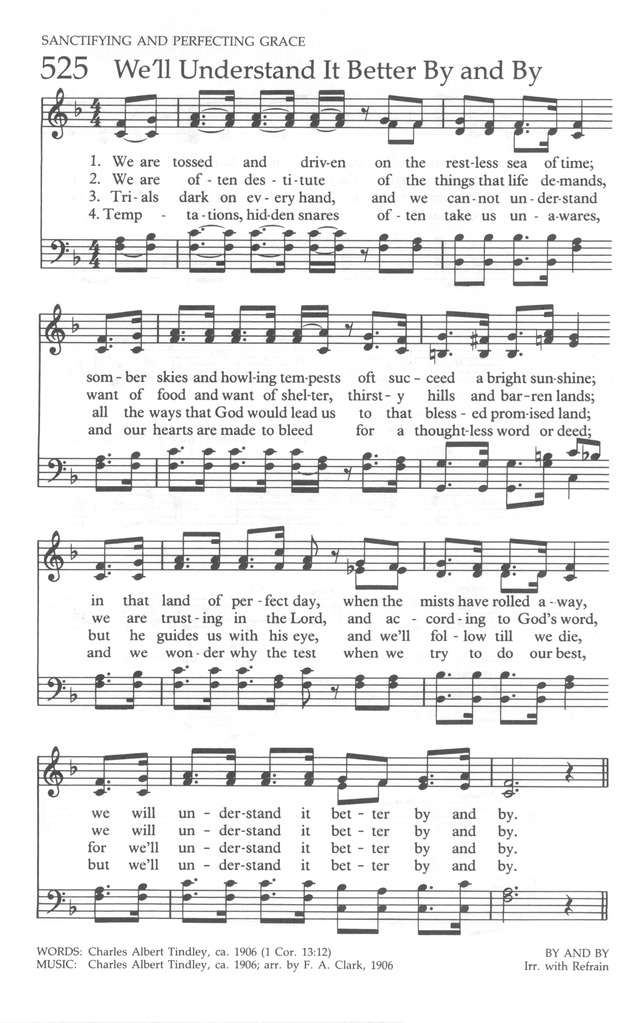
Hymn History: We’ll Understand It Better By and By

bye1 bye2

We are tossed and driven
on the restless sea of time;
somber skies and howling tempests
oft succeed a bright sunshine;
in that land of perfect day,
when the mists have rolled away,
we will understand it better by and by.

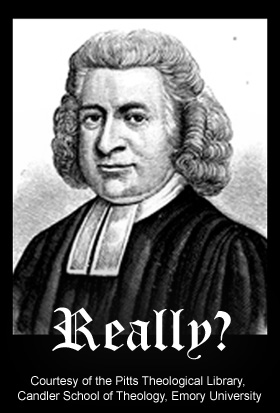
Charles Albert Tindley (July 7, 1851 – July 26, 1933) was an American Methodist minister and gospel music composer.

Often referred to as “The Prince of Preachers”, he educated himself, became a minister and founded one of the largest Methodist congregations serving the African-American community on the East Coast of the United States.

He was one of the eminent preachers of Methodism at the turn of the twentieth century. Hymnologist James Abbington has called Tindley a “pastor, orator, poet, writer, theologian, social activist, ‘father of African American Hymnody,’ ‘progenitor of African American gospel music’ and ‘prince of preachers.'”

The Rev. Carlton Young notes “We’ll Understand It Better By and By” was “one of eight hymns . . . written during a difficult period in Tindley’s life.”

One can imagine Tindley using this song to punctuate his sermons, offering hope to those assembled not only through exegesis of the biblical text, but also through a lyrical sung theology.

~~

From “The Lawrence Welk Show,” Gail, Rod, and Michael are featured in this great Gospel song found in the United Methodist Hymnal (page 525). Join with them in song as they encourage every Christian: “WE’LL UNDERSTAND IT BETTER BY AND BY”


Leave a comment

Posted by on January 26, 2024 in Hymn History, hymns, Posts of Interest, Videos


Tags: , , , , , , , ,

Hymn History: I Want to Walk as a Child of the Light

“I Want to Walk as a Child of the Light” by Kathleen Thomerson,
The United Methodist Hymnal, No. 206

The Pender UMC Traditional Service Opening Hymn “I Want to Walk As a Child of the Light” on Sunday September 18, 2022 was played by Liz Eunji Moon on piano, accompanied on guitar by Brian Stevenson and AJ Rios and sung the Pender Sanctuary Choir and congregation.

I want to walk as a child of the light.
I want to follow Jesus.
God set the stars to give light to the world.
The star of my life is Jesus.
Refrain: In him there is no darkness at all.
The night and the day are both alike.
The Lamb is the light of the city of God.
Shine in my heart, Lord Jesus.*

From time to time, a hymn captures our imagination because of its simplicity and transparency. Such a hymn is “I want to walk as a child of the light.” In singing this hymn, we feel the spirit of Epiphany unfold.

Kathleen Armstrong Thomerson (b. 1934) is a native of Tennessee. She wrote the hymn during the summer of 1966 during a visit to the Church of the Redeemer in Houston, Texas, the location providing the origin for the tune name HOUSTON. Her musical education took place at the University of Texas and Syracuse University, with additional studies at the Flemish Royal Conservatory in Antwerp. She has studied with several of the most noted organists of the twentieth century.

Ms. Thomerson directed music at University United Methodist Church in St. Louis and was on the organ faculties of St. Louis Conservatory and Southern Illinois University in Edwardsville. From 2004 through 2013, she served Mt. Olive Lutheran Church in Austin, Texas. In addition to this hymn, she contributed tunes for hymns by Patricia B. Clark in their joint collection, A Taste of Heaven’s Joys: A Collection of Original Hymns (2005).

“I want to walk as a child of the light” comes to The United Methodist Hymnal by way of the Episcopal Hymnal 1940 supplement, Songs for Celebration (1980). A musician with such a distinguished musical pedigree does not usually compose a gospel hymn of such elegant simplicity. A folk-like melody conveys a text based upon a wide range of scriptural allusions and biblical images. United Methodist Hymnal editor, Dr. Carlton Young notes some biblical passages that support the text: Isaiah 42:6c, “I have given you as a covenant to the people, a light to the nations.”; Malachi 4:2, “But for you who revere my name the sun of righteousness shall rise, with healing in its wings”; Revelation 21:25b, “And there will be no night there,” and 22:5b, “They need no light of lamp or sun.”

“I want to walk as a child of the light” communicates deep conviction and personal sincerity, while avoiding any hint of pretence. The first person perspective invites the singer to join Christ, the Light of the World, in discipleship – a journey of faith. The second line of each stanza deepens this commitment:
Stanza 1: “I want to follow Jesus.”
Stanza 2: “I want to look at Jesus.”
Stanza 3: “I want to be with Jesus.”

From a Wesleyan perspective, the theology of this hymn outlines sanctifying grace, the perspective of the Christians as they move toward perfection in the faith, becoming transformed in the image of Christ. Each stanza adds greater luminosity to this walk. In the first stanza, “God set[s] the stars to give light to the world.” Christ in turn becomes the “star of my life.” References to stars support the hymn’s appropriateness for Epiphany. Stanza two expresses the desire to “see the brightness of God.” The “Sun of Righteousness” illumines “the way to the Father.” The final stanza extends the journey toward the “coming of Christ,” an eschatological direction toward our future hope.

As in most gospel hymns, it is the refrain that carries the essence of its meaning; and indeed it is this refrain, with its scriptural allusions that virtually quote from Revelation 21 and 22, that distinguishes this hymn from many earlier expressions of discipleship. While a deeply personal expression of piety, the poet roots her devotional expression firmly in Scripture, avoiding the maudlin and simplistic notions of some gospel songs.

The simplicity of the music and text does not imply a simplistic faith. “I want to walk as a child” reminds us of one of the paradoxes of our faith, that we need to become as a child to fully understand the realm of God (Matthew 18:2-4).

*Text © 1970, 1975 Celebration, P.O. Box 309, Aliquippa, PA 10001, USA. Used by Permission.

Adapted from https://www.umcdiscipleship.org/resources/history-of-hymns-i-want-to-walk-as-a-child-of-the-light


Tags: , , , , , , , ,

Hymn History: Lift Every Voice and Sing

“Lift Every Voice and Sing”
James Weldon Johnson
The United Methodist Hymnal, No. 519

Pender pianist, Liz Eunji Moon played Lift Every Voice and Sing for the postlude on Martin Luther King Holiday weekend. “Lift Every Voice” began as a hastily-written composition for an unassuming school assembly in 1900, but has become the African-American national anthem.

Lift every voice and sing,
Till earth and heaven ring,
Ring with the harmonies of liberty;
Let our rejoicing rise
High as the listening skies,
Let it resound loud as the rolling sea.

Few hymns have the capacity to define the identity of an entire group. “Lift Every Voice” began as a hastily-written composition for an unassuming school assembly in 1900, but has become the African-American national anthem.

James Weldon Johnson (1871-1938) received degrees in literature from Atlanta University in 1894, with a master of arts in 1904. He had a versatile career as a writer, teacher, diplomat and lawyer, becoming the first African-American to pass the bar in the state of Florida. His diplomatic posts took him in 1906 to Puerto Cabello, Venezuela, and in 1909, to Corinto, Nicaragua, where he served as the American consul.

His most prominent leadership role was as the executive secretary of the National Association for the Advancement of Colored People (NAACP), a position that he assumed in 1920.

His most important published works include The Autobiography of an Ex-Colored Man (1920), The Book of American Negro Poetry (1922), God’s Trombones (1927), and Along This Way (1933).

Johnson had been asked to speak by the principal of a school in Jacksonville, Fla., his hometown, for an observance celebrating the birth of Abraham Lincoln. Rather than make a speech, he decided to write a poem. As the time drew near, his plans changed from a poem to a song. James turned to his brother J. Rosamund Johnson (1873-1954) to compose music for his text.

Even though the Johnsons’ New York publisher did not actively promote the song, children throughout the South kept it alive. The song gathered momentum, as it became known around the country.

Though the brothers wrote over 200 songs together, mostly for the stage, “Lift every voice” had an exceptional place in their musical collaborations. James noted in 1935, “The lines of this song repay me in elation, almost of exquisite anguish, whenever I hear them sung by Negro children.”

Gene Logan, a member of Ebenezer UMC in Jacksonville, Florida, connects the Johnson brothers with the Methodist Church: “James and his brother Rosamond became members of Zion Episcopal Methodist Church where their mother served as choir director and the young men served as musicians. The church was renamed Ebenezer United Methodist Church, which is now located at 9114 Norfolk Blvd in Jacksonville, Florida.” According to columnist Sharon Coon in Florida, their mother, Helen, “was the first Black female public school teacher in Florida. She taught at Old Stanton School on Ashley Street in Jacksonville, FL. His mother taught both James and J. Rosamond music and reading.” After receiving his degree from Atlanta University, James returned to the school where his mother taught as Principal in 1894. The brothers’ connections to the Methodist Church and their rearing by a nurturing and courageous mother surely contributed to their accomplishments.

The NAACP adopted “Lift every voice” as its theme song. Julian Bond, former NAACP chairman, stated that the song holds deep meaning for the Civil Rights Movement: “When people stand and sing it, you just feel a connectedness with the song, with all the people who’ve sung it on numerous occasions, happy and sad, over the 100 years before.”

This hymn, often called the “Negro National Anthem” or “Black National Anthem,” gave hope to many during the Civil Rights Era. Its centrality in African-American life may be illustrated by a childhood memory of Vernellia Randall, a law professor at the University of Dayton, who grew up in Texas. She recalls starting each day in her school in the 1950s and 1960s with The Lord’s Prayer, The National Anthem, and the Negro National Anthem.

Wendell Whalum, the late choral director at Atlanta’s Morehouse College, often spoke of the progression of the three stanzas as that of praise, lament, and prayer. The opening stanza is a resounding hymn of praise full of rich metaphors such as the “harmonies of liberty” and rejoicing “loud as the rolling sea.” The second stanza is a lament that recounts the price of liberty:

Stony the road we trod,
bitter the chastening rod,
felt in the day when hope unborn had died.

The sting of these words echoes Psalm 130, “Out of the depths have I cried unto thee.” Yet the poet does not leave us here long. By the end of the stanza, we are singing with hope,

Out of the gloomy past,
till now we stand at last
where the white gleam of our bright star is cast.

The final stanza is often referred to as a prayer in the African-American community. This prayer culminates with the petitions, “keep us forever in the path, we pray” and “may we forever stand true to our God, true to our native land.”

Is this a hymn just for African-Americans or is it for all people? Dr. James Abbington, Associate Professor of Music and Worship at Emory University’s Candler School of Theology, Atlanta, Georgia, and a scholar in African American hymnody, provides an answer to this question: “Several years ago, I was invited to organize and conduct a 1,000-voice choir for the annual Detroit Branch NAACP Freedom Fund Dinner at Cobo Hall. It was during the time of the Persian Gulf War and tensions were very high between the Jewish and Arab communities in the city.?rel=0″The 1,000 voice choir, accompanied by the Detroit Symphony Orchestra, was made up of Anglo-Americans, Canadians, Native Americans, Koreans, Italians, Jews, Arabs, African-Americans and others, and ‘Lift Every Voice and Sing’ was one of the selections for that occasion. After the first rehearsal Jewish, Korean, and Native American members of the chorus approached me and said, ‘This song isn’t just for African-Americans and people from Africa, it belongs to all of us who are ‘true to our God and true to our Native land.'”?

On May 20, 2018, the National Association for the Advancement of Colored People (NAACP) attended The Tabernacle Choir’s weekly Music and the Spoken Word broadcast. Members of the National Board of Directors of the NAACP and the NAACP Foundation were in Salt Lake City for their board meetings, which were held in Salt Lake City for the first time. They also met with the First Presidency of The Church of Jesus Christ of Latter-day Saints and made a joint statement to the media calling for “greater civility and racial harmony.”

Adapted from https://www.umcdiscipleship.org/resources/history-of-hymns-lift-every-voice-and-sing


Tags: , , , , , , ,