RSS

Tag Archives: hymns

Holy Week at Pender UMC

holyweek-header2

Palm Sunday marks the beginning of Holy Week, the most important week of the church year. At the other end of Holy Week is Easter, the most important day of the church year.

For Christians, this is the big event! And it’s all about the mystery that somehow Jesus Christ makes us one with God.

Palm/Passion Sunday. April 13. 10am. Pender Sanctuary

Join us as we begin the Holy Week journey to Easter with our Palm Sunday celebration. Come together to reflect on the significance of this day and honor the triumphal entry of Jesus into Jerusalem!

Holy Thursday Seder Meal. Thursday. April 17. 7pm. PUMC Gathering Place

Chag Sameach! (Happy Holiday!) We are excited to invite you for a warm and meaningful Passover Seder as we gather to experience the symbolism of this meal celebrating the Israelites’ exodus from Egypt, a pivotal event in Jewish and Christian history!

Please note that the Seder Meal will not include a full meal. We have timed it for after the dinner hour.

Sign up to attend the Holy Thursday Seder Meal

Good Friday Stations of the Cross.  April 19, 10 am, Pender UMC Sanctuary

A contemporary expression of the traditional Stations of the Cross Prayer Walk to enhance your experience of the meaning of Jesus’ sacrifice on Good Friday.

Please enter in silence, walk and pray in silence, and depart in silence. Our prayer walk recalls Jesus’ passion. Visit each of the four “Stations of the Cross” in order (left to right). You may pause to pray at anytime using the kneeling rail or seats in our sanctuary. Stations of the Cross is a devotional practice which originated in the early centuries of Christianity.

Good Friday Service. Friday. April 18. 7:30pm. Pender UMC Sanctuary

We invite you to join us for a meaningful service as we come together to remember and reflect on the ultimate sacrifice made for us. The Service will feature a moving combination of drama, scripture, and music, all designed to guide our hearts through the profound story of Christ’s love, suffering, and redemption.

Holy Saturday Prayer Vigil. April 19. 7pm. Pender UMC Parking Area.

We warmly invite you to join us for a special service of prayer, song, and scripture to prepare our hearts for the Easter celebration ahead.

Easter Sunday Celebrations! April 20. Pender UMC

Celebrate the resurrection of Jesus Christ and the new life we have in Him. Whether you’re a long-time member or a first-time guest, we would love to welcome you!

Sunrise Service with Korean UMC – Koinonia! 6am. Pender Parking area

Sunrise Breakfast! 7am. Pender UMC Gathering Place Please let us know you’ll be having breakfast.

Easter Worship! 10am. Pender UMC Sanctuary with bells, scripture, and special music!

All of our worship is Christ-centered, Biblically-minded and relevant to life today. Pender UMC desires that you feel God’s Spirit nurturing you and that in worship you experience the very real presence of Christ with us. May you be blessed by God as you gather with us.

Where do I enter the building?

First, we want you to know that our church has worked hard to create a building with access for all. Whether you find yourself in a wheelchair or carting babies in a buggy, you’ll find automatically opening doors and large entrances.

As you enter the parking lot, you will notice two doors, both under porticos so that you may get out of the rain if it is wet. To enter through the main sanctuary entrance doors, simply look for the semi-circular driveway.

If instead you enter the sliding glass doors entrance, make a left into the hallway to the end where you will notice the welcome area on your left.

What do my children do?
We invite older children (3rd grade and up) to become fully involved in worship. At the back of the sanctuary are “children’s bulletins” and supplies like crayons.

Our younger children have the option of remaining with their family or being cared for by our wonderful nursery and childcare staff. Childcare is available for children ages birth through 2nd grade in the lower level of our building. Ask an Usher to help you find where to take your children!

Where do I park?
We attempt to have plenty of parking on Easter morning for our guests. However, we suggest you plan to arrive early, and if parking is full on our lot, there is parking on the street.

What if I need further information?
Our friendly volunteers and staff will welcome your questions! Please call our church office at 703-278-8023 between 9 am and 3 pm, Monday through Friday. Once at Pender, ask any friendly face for help! We are here to assist you.
 

Tags: , , , , , , , , , , , , , , , , , , , ,

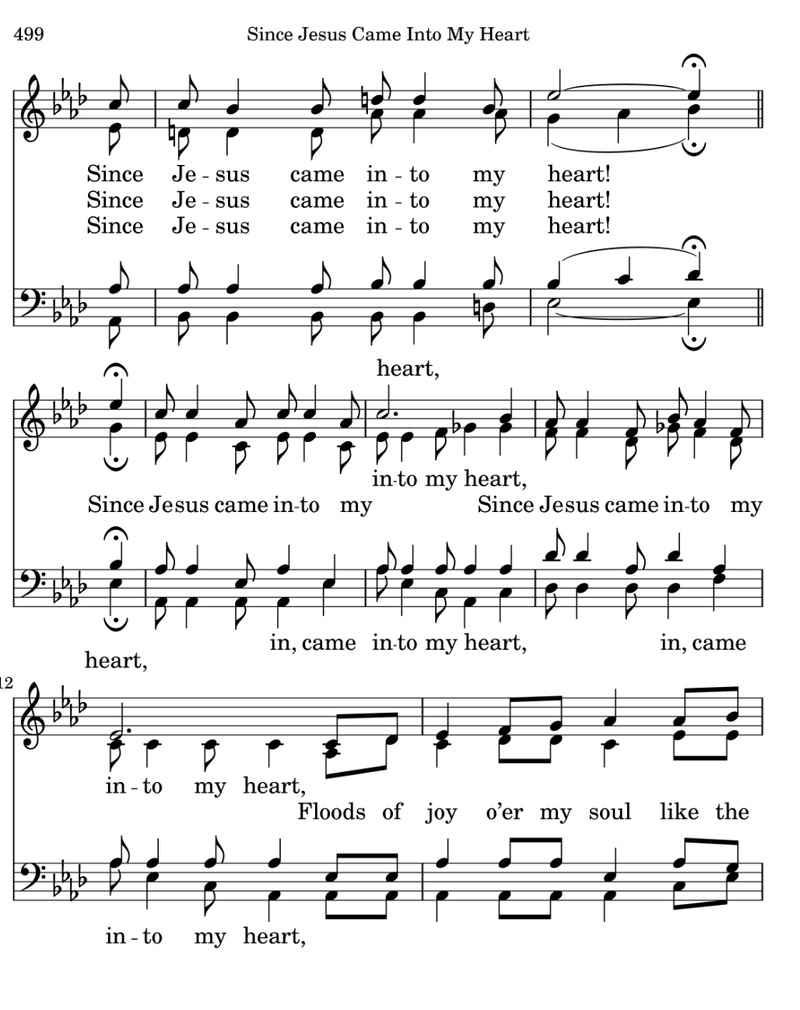
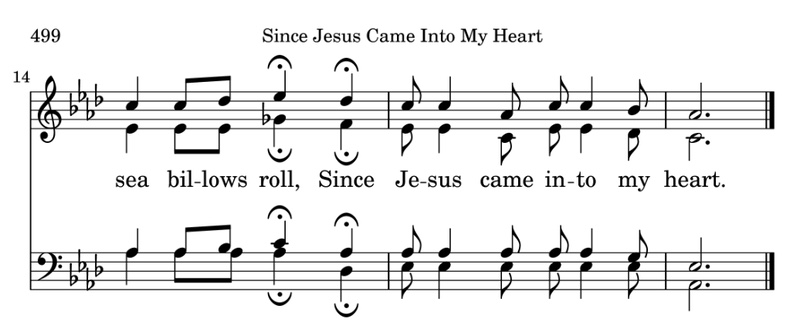
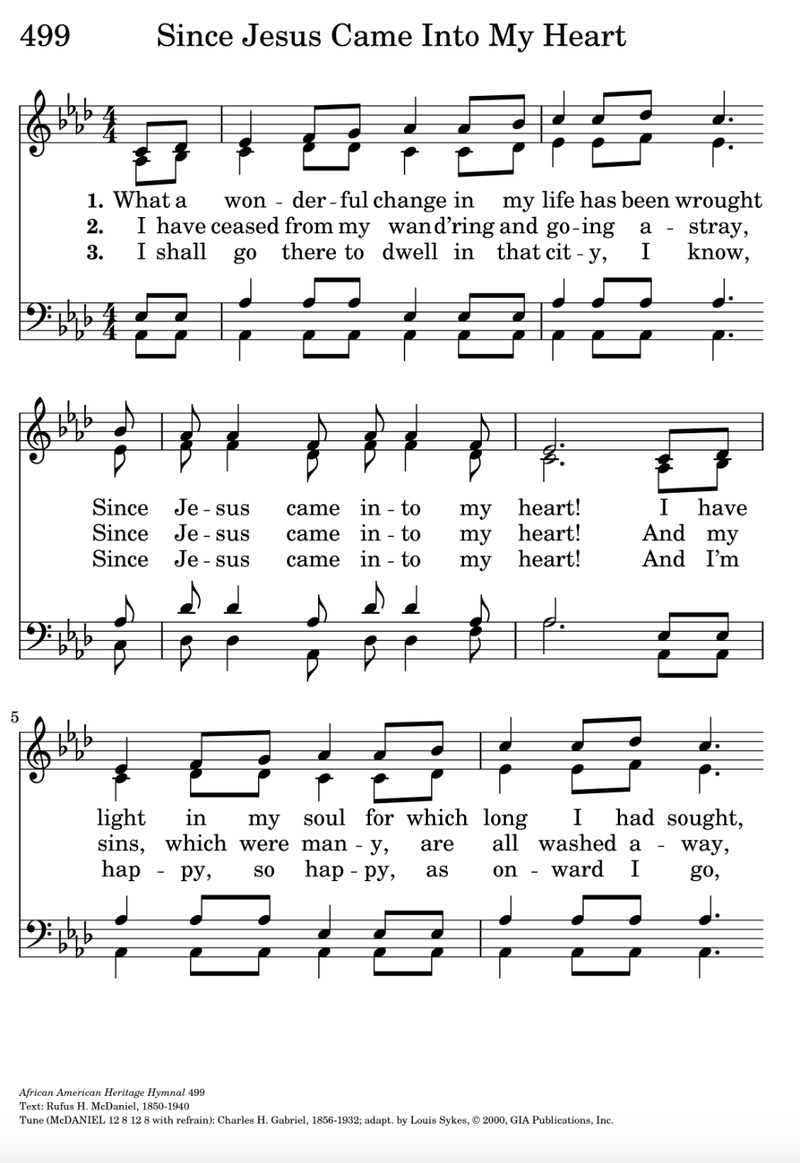
Hymn History: Since Jesus Came into My Heart


The Pender UMC Traditional Service Final Hymn “Since Jesus Came into My Heart”, Sunday March 17, 2024 was played by Hetty Jacobs on piano and sung by the Sanctuary Choir and congregation. This was the fifth Sunday in Lent.

Rufus Henry McDaniel, ordained in 1873, turned his profound grief into a timeless hymn after losing his son Herschel in 1913. In 1914, he crafted “Since Jesus Came into My Heart,” a gospel hymn that beautifully encapsulates the transformative journey of faith, resonating with personal salvation experiences. McDaniel’s choice of repeating the impactful phrase “since Jesus came into my heart” throughout the hymn emphasizes the deep-seated change brought by faith.

Scriptural Foundation:

The hymn’s message is deeply rooted in scripture, particularly in 2 Corinthians 5:17, which declares, “Therefore, if anyone is in Christ, the new creation has come: The old has gone, the new is here!” This verse perfectly encapsulates the transformative journey that McDaniel illustrates through his hymn.

Experiencing Transformation:

Each verse of the hymn narrates the significant shift from a life of wandering to one of purpose and direction, akin to the lost son’s return in Luke 15:24. This parable and the hymn alike celebrate the restoration and new life found in coming home to the Father through Jesus Christ.

Joy in Salvation:

The hymn exudes a joy that resonates with 1 Peter 1:8-9, which speaks of “an inexpressible and glorious joy, for you are receiving the end result of your faith, the salvation of your souls.” McDaniel’s lyrics mirror this joy, reflecting the profound inner peace and satisfaction that accompany salvation.

Navigating Life’s Journey:

In “Since Jesus Came into My Heart,” there’s a clear narrative of moving from life’s aimless wandering to walking a path illuminated by Christ’s love, reminiscent of Psalm 119:105: “Your word is a lamp for my feet, a light on my path.” The hymn emphasizes the guidance and clarity Jesus brings to our lives.

Eternal Perspective:

The hymn concludes with a forward-looking view, expressing hope and assurance in the eternal life promised in John 14:2-3, where Jesus assures, “In my Father’s house are many rooms… I am going there to prepare a place for you.” McDaniel’s lyrics affirm the believer’s hope of dwelling with Christ forever.

“Since Jesus Came into My Heart” is not just a hymn but a profound testament to the enduring power of faith and the unifying journey of believers. It continues to inspire and resonate within the global Christian community, proving the timeless nature of McDaniel’s heartfelt composition.

In sum, “Since Jesus Came into My Heart” is a vibrant declaration of the radical change and boundless joy that come with a life surrendered to Christ, offering a blueprint for the Christian walk that is guided by faith, illuminated by divine love, and anchored in eternal hope.

Closing Prayer:

Dear Lord, we thank You for the profound changes You instigate in our lives. Like the joyful declarations in “Since Jesus Came into My Heart,” we too celebrate the new life, direction, and hope You have gifted us. May our lives continue to reflect the transformative power of Your love and grace. Amen.

 
Leave a comment

Posted by on May 18, 2024 in Posts of Interest


Tags: , , , ,

Hymn History: Come Ye Thankful People, Come

“Come, Ye Thankful People, Come”
by Henry Alford
The United Methodist Hymnal, 694

Come, ye thankful people, come,
Raise the song of harvest home;
All is safely gathered in,
Ere the winter storms begin.
God our Maker doth provide
For our wants to be supplied;
Come to God’s own temple, come,
Raise the song of harvest home.

The Pender UMC Traditional Service Opening Hymn “Come Ye Thankful People, Come” on Thanksgiving Sunday November 20, 2022 was played by Liz Eunji Moon on piano, Teresa Rothschild on clarinet, Brian Stevenson on flute and sung the Pender Sanctuary Choir and congregation.

With the upcoming celebration of Thanksgiving, people in churches, schools, and other events will sing the traditional harvest song, “Come, Ye Thankful People, Come,” by Henry Alford (1810–1871).

Born into a long line of Anglican clergymen, Alford was raised early by his father and later by his uncle, Rev. Samuel Alford, due to his mother’s death during his birth. This instability resulted in his early education being scattered between private tutoring and a variety of schools, but in 1827 he became a scholar at Trinity College where he received all his secondary education (B.A. 1832, M.A. 1835). He was ordained a priest in the Anglican church in 1834, served in the vicarage at Wymeswold in Leicestershire (18 years), at Quebec Street Chapel in Marylebone, London (4 years), and as Dean of the Chapter of the Cathedral of Christ Church, Canterbury, England (14 years).

This hymn first appeared in Alford’s Psalms and Hymns, adapted to the Sundays and Holydays throughout the year (1844). Methodist hymnologist J. Richard Watson details several revisions of the text both by Alford and others, resulting in the author’s final revision in 1868 (Watson, Canterbury Dictionary, n.p.). In this hymn, Alford used traditional language and imagery of the rural community to lend words of thankfulness for God’s provision and to expand upon Matthew 13:24–30:

He put before them another parable: “The kingdom of heaven may be compared to someone who sowed good seed in his field; but while everybody was asleep, an enemy came and sowed weeds among the wheat, and then went away. So when the plants came up and bore grain, then the weeds appeared as well. And the slaves of the householder came and said to him, ‘Master, did you not sow good seed in your field? Where, then, did these weeds come from?’ He answered, ‘An enemy has done this.’ The slaves said to him, ‘Then do you want us to go and gather them?’ But he replied, ‘No; for in gathering the weeds you would uproot the wheat along with them. Let both of them grow together until the harvest; and at harvest time I will tell the reapers, Collect the weeds first and bind them in bundles to be burned, but gather the wheat in my barn.’” (NRSV)

Tom Stewart, in his writing, says:

[The hymn] addresses the common theme of harvest festivals, called in England the Harvest Home, which is celebrated in English churches usually during the month of September. A thanksgiving service would be held in the church, where the bounty of the harvest is collected, displayed with the fall trappings of pumpkins and autumn leaves, and then dispensed to the needy. And, of course, unlike the humanist that is essentially grateful to only himself, a true Harvest Home celebration acknowledges the provision of God, as did the Pilgrims in 1621 and the ancient Hebrews in their Feast of Firstfruits in the spring on the first day after Passover at the time of the barley harvest. (Stewart, 2016, n.p.)

The eminent minister and hymnologist, Erik Routley (1917–1982), took great offense at this hymn in his book, Hymns Today and Tomorrow. For the most part, his criticism concerns the musical setting, ST. GEORGE’S WINDSON, yet Routley feels that it is “extremely doubtful whether the [imagery of the last judgment] makes any impact on congregations at all” (Routley, 1964, p. 126). The hymn is complex, but it is by no means obscure or opaque.

The first stanza focuses directly on the physical harvest, an image used throughout scripture from early in Genesis through Revelation. We give thanks for the physical harvest as we give thanks for our daily bread in the Lord’s Prayer. Thanksgiving begins with the most concrete blessings in our lives. As well as a physical harvest, the first stanza alludes to Jesus’ remark in all three synoptic gospels—the harvest is plentiful but the laborers are few, and the thankful people who are called to come are those who have already been sent by the Lord of the harvest, Jesus Christ.

The second stanza begins Alford’s expansion upon the parable of Jesus concerning the wheat and the tares (weeds) from Matthew 13:24–30. It is a challenging parable, which Alford interprets in this hymn to describe how joy and sorrow grow together in life, and how God does not eliminate sorrow until after the final harvest when God “will wipe every tear from their eyes. Death will be no more; mourning and crying and pain will be no more, for the first things have passed away” (Revelation 21:4. (NRSV).

The third and fourth stanzas move more directly to the apocalyptic reference, “For the Lord our God shall come.” Erik Routley felt this imagery out of place. However, connecting thanksgiving with the coming of Jesus is imagery that is used at every celebration of the Lord’s Supper.

The hymn tune ST. GEORGE’S WINDSOR, composed in 1856 by George J. Elvey (1816–1893) for the hymn “Hark! The Song of Jubilee,” has been associated with “Come, Ye Thankful People, Come” since the publication of Hymns Ancient and Modern (1861). As noted above, some reviewers of the hymn have pointed to the incongruity of this sturdy and joyful tune with these words, but there is some beauty in this pairing as well, especially with text painting at some points. Among others, one such case is the use of a dotted rhythm, balanced throughout the music, as a compelling invitation to sing, notably on the opening “Come.” One might also notice the phrase “all is safely gathered in” where the pitch begins and ends on A, but feels “gathered” by the use of the neighboring tones, Bb and G. Midway through the hymn, the phrases, “first the blade and then the ear, then the full corn shall appear,” are sung in an ascending sequence that seems almost like corn growing in the field. Later, the leap upward for ‘raise the song’ and ‘raise the glorious’ helps to paint the intent of the final phrases in stanzas 1 and 4.

Regardless of Routley’s misgivings, the discerning hymn singer cannot help but appreciate the vibrant eschatological final stanza that amplifies Christ’s parable. It is offered here in the author’s original language and punctuation:

Even so, Lord, quickly come,
Bring Thy final Harvest-home!
Gather Thou Thy people in,
Free from sorrow, free from sin;
There, forever purified,
In Thy garner to abide:
Come with all Thine angels, come,
Raise the glorious Harvest-home!

SOURCES

Erik Routley, Hymns Today and Tomorrow (Nashville, TN: Abingdon Press, 1964).

Stewart, Tom. “Come, Ye Thankful People, Come”: Hymns as Poetry found on whatsaiththescripture.com. Accessed September 3, 2016 at http://www.whatsaiththescripture.com/Poetry/Come-Ye-Thankful-People.html.

J. Richard Watson, “Come, Ye Thankful People, Come.” The Canterbury Dictionary of Hymnology. Canterbury Press, http://www.hymnology.co.uk/c/come,-ye-thankful-people,-come (accessed September 4, 2020).

Adapted from https://www.umcdiscipleship.org/articles/history-of-hymns-come-ye-thankful-people-come


Tags: , , , , , , , , , , , , , , , , , , , , , , , , , , , , , , ,

Hymn History: We Gather Together

We gather together to ask the Lord’s blessing;
He chastens and hastens his will to make known.
The wicked oppressing now cease from distressing.
Sing praises to his name; he forgets not his own.

The Pender UMC Traditional Service Middle Hymn “We Gather Together” on Thanksgiving Sunday November 20, 2022 was played by Liz Eunji Moon on piano, Teresa Rothschild on clarinet, Brian Stevenson on flute and sung the Pender Sanctuary Choir and congregation.

In many American hymnals, “We gather together” appears as a Thanksgiving hymn. Perhaps this is because of the opening line and the general idea that God is with us regardless of our circumstances. However, the hymn speaks more about God’s providence throughout the trials of life. The story behind this hymn clarifies its text.

This hymn is a late sixteenth-century expression of celebration of freedom by The Netherlands from Spanish oppression. Like many older hymns, it finds its way to us through a circuitous route. Although listed as an anonymous hymn, some sources indicate that Adrianus Valerious (c. 1575-1625), known for his poems on the Dutch War of Independence from the perspective of a peasant, authored the original text in Dutch. Since making a living as a poet was not possible, Valerious had a prosperous career as the Toll and Customs Controller for Veere, eventually being promoted to Tax Collections and finally appointed to the City Council.

The hymn was first published in Nederlandtsch Gedenckclanck (1626), a collection by Valerius in Haarlem, focusing on folk poems and melodies on the Dutch Wars (1555-1625). Valerius collected and arranged the songs for this publication for 30 years until his death in 1625. This collection is not as important for its poetry as it was for understanding the Protestant attitudes of the day. The work’s significance was exemplified by its adoption in Zeeland as part of the religious education curriculum in homes and the church.

Austrian Edward Kremser (1838-1914) included the hymn in Sechs Altniederländische Volkslieder (Six Old Netherlands Folksongs) in 1877 for his men’s chorus, all six anonymous songs taken from the Valerius collection 250 years earlier. According to UM Hymnal editor te Rev. Carlton Young, the performance of these tunes led to their popularity and inclusion in many hymnals.

The story extends to the United States through Theodore Baker (1851-1934), a New York-born musicologist who studied in Leipzig and authored the famous Biographical Dictionary of Music and Musicians. Baker translated the hymn from German for an anthem entitled “Prayer for Thanksgiving” published in 1894. Baker is the source of the hymn’s traditional Thanksgiving connection in the United States.

The Dutch, long a stronghold for the Reformed theology of John Calvin, were in a struggle against Spain for their political independence and against the Catholic Church for religious freedom. A twelve-year truce was established in 1609, giving young Prince Frederick Henry a chance to mature into an able politician and soldier.

During this time, the Dutch East India Company extended its trade beyond that of the English. The high period of Dutch art flourished with Hals, Vermeer, and Rembrandt. Under the guidance of the Prince Frederick Henry’s leadership, Spain’s efforts to regain supremacy on land and sea were finally overcome in 1648. There was indeed much for which to be thankful.

Some of the political overtones in this hymn faithfully translated by Baker are apparent. Hymnologist Albert Bailey suggests that the phrase, “The wicked oppressing now cease from distressing,” is an allusion to the persecution of the Catholic Church under the policies of Spain. Thousands had been massacred and hundreds of homes burned by the Spanish in 1576 during the Siege of Antwerp.

In stanza two, the writer states, “so from the beginning the fight we were winning,” stressing that Protestants had always been assured of winning the cause. The truce of 1609 proved that the Lord “wast at our side.”

The final stanza is a series of petitions . . .

” …pray that thou still our defender will be.
Let thy congregation escape tribulation;
thy name be ever praised! O Lord, make us free!”

This is an eschatological stanza. The ultimate battle has not been won and will not be won until all battles cease.

The hymn gained recognition in the United States when it found its way into the hymnal of the Methodist-Episcopal Church in 1935. The popularity increased during World War II when singers connected “the wicked oppressing” to Nazi Germany and Imperial Japan. More recently, the “We Gather Together” was featured at the Funeral Mass for Jacqueline Kennedy Onassis in 1994.

An interesting sidebar was that Baker’s anthem inspired another hymn. A young Julia Cady Cory (1882-1963) heard this text in 1902 at her church, Brick Presbyterian in New York City. Cory’s “We praise thee, O God, our Redeemer, Creator” is a more general hymn of praise and thanksgiving that also uses the Dutch tune KREMSER. Cory’s hymn did not include any reference to nationalism, making it a more general ecumenical hymn of thanksgiving.

The United Methodist Hymnal has placed this hymn in the “Providence” section rather with other traditional American Thanksgiving hymns, broadening its use from this national holiday to use during any difficult circumstances.

Dr. Hawn is distinguished professor of church music at Perkins School of Theology. He is also director of the seminary’s sacred music program.

From https://www.umcdiscipleship.org/resources/history-of-hymns-we-gather-together1


Tags: , , , , , ,

Hymn History: Jesus United by Thy Grace


“Jesus, United by Thy Grace”
by Charles Wesley
The United Methodist Hymnal, 561

Jesus [Jesu], united by thy grace
and each to each endeared,
with confidence we seek thy face
and know our prayer is heard.

“Jesus, United by Thy Grace” was the closing hymn at Pender’s 9:00 am Traditional Service on September 3, 2023 It was sung by Pender’s congregation and accompanied on piano by Heidi Jacobs.

The Pender UMC Traditional Service Closing Hymn “Jesus United by Thy Grace” on Sunday July 24, 2022 was played by Liz Sellers on piano and sung by Brian Stevenson and the Pender Congregation.


This hymn appeared first in the collection titled Hymns and Sacred Poems (1742), one of a series of collections published by the Wesley brothers bearing this title. This hymn must have been prominent in the Wesley canon, since all nine of the original stanzas were included nearly forty years later in the monumental A Collection of Hymns for the Use of the People called Methodists (1780) in the section “For the Society, Praying.” Published initially as a long four-part hymn with twenty-nine stanzas titled “A Prayer for Persons Joined in Fellowship,” most of six stanzas in The United Methodist Hymnal come from Part IV. Though appearing as a unified theological whole in the hymnal, this is an excellent example of careful editing. Stanza 1 comes from Part IV (stanza 1). Stanza 2 is taken from Part 1 (stanza 3). Stanza 3 was first cited in Part I (stanza 5). The remaining stanzas (4, 5, and 6) are from Part IV (stanzas 4-6) (Young, 1993, p. 449).

The preface to the collection (most likely by John Wesley) focuses on the Christian perfection doctrine. A misunderstanding at that time was that Christians could achieve perfection in this life. This misinterpretation of Christian perfection was causing disunity in the Methodist fellowship (See J. Wesley, “Christian Perfection,” 1741). John Wesley states his position in the Preface of this collection in unequivocal terms:

First, we not only allow, but earnestly contend. . . that there is no Perfection in this life which implies any dispensation from attending all the ordinances of God; or from doing good unto all men, while we have time, though especially unto the household of faith. And whosoever they are who have taught otherwise, we are convinced are not taught of God. We dare not receive them, neither bid them Godspeed, lest we be partakers of their evil deeds (Wesleys, 1742, pp. i-ii).

Nourishing Christian unity was a part of the process of Christian perfection. The preface to the earlier 1739 collection offers an expansion of the strong message of Christian unity conveyed by the hymn text. Citing Ephesians 4:15-16, the Wesleys emphasize that “we are knit together [my emphasis], that we have nourishment from him, and increase with the increase of God” (J. Wesley, 1739, p. vii).

Each of the stanzas chosen for The United Methodist Hymnal emphasizes unity in some way:

Stanza 1: “united by thy grace”
Stanza 2: “Help us to help each other, Lord, / each other’s cross to bear”
Stanza 3: “Up unto thee, our living Head, / let us in all things grow”
Stanza 4: “let all our hearts agree, / and ever toward each other move”
Stanza 5: “To thee, inseparably joined, / let all our spirit’s cleave”
Stanza 6: “This is the bond of perfectness, / thy spotless charity”

Charles Wesley employs a particularly original metaphor in stanza 4—“Touched by the loadstone of thy love, / let all our hearts agree. . .”. British Wesley scholar, J.R. Watson, notes that this stanza “has proved very attractive to hymnbook editors” (Watson, Canterbury Dictionary, n.p.). A loadstone has strong magnetic qualities. Thus, the sonorous alliterative pairing—loadstone/love—is also a theological truth that stresses the magnetic (attractive) quality of God’s love—a love that draws us to God. This magnetic quality underscores the reality that God takes the initiative in God’s relationship with humanity.

The final two of the three omitted stanzas employ soaring language that moves us toward eschatological truth, a common destination in Charles Wesley’s hymns, and beyond the present-day text’s focus on Christian living while on earth:

With ease our souls through death shall glide
Into their paradise,
And thence on wings of angels ride
Triumphant through the skies.

Yet when the fullest joy is given,
The same delight we prove,
In earth, in paradise, in heaven
Our all in all is love.

The published text remains grounded in Christian unity only possible through the grace of Jesus, rather than on the commonality of opinion or politics. Given these times in which we live and the state of disunity in the church, these words serve as a reminder that we are joined with one another through our determination to be one in mind with Jesus. According to the hymn, the commitment to be one in Christ results in “the bond of perfectness,” while acknowledging continuing need to pray that we “possess the mind that was in thee” (stanza 6).

S T Kimbrough Jr. refers to Charles Wesley as a lyrical theologian, defining Charles’ theology as one “couched in poetry, song, and liturgy, characterized by rhythm and expressive of emotion and sentiment” (Kimbrough, 2014, p. 3). Kimbrough points out that some Wesley hymns (such as this one) demonstrate Wesley’s “way of working through theological issues, thought and concepts, and of shaping theological ideas,” through the use of poetry (Kimbrough, 2014, p. 54). This compelling text provides a thorough “working through” of this theme for a service focused on unity. As lyrical theology, the hymn might be sung in a variety of worship contexts. The Common Meter (C.M.) text allows for a variety of tune options in addition to ST. AGNES printed in The United Methodist Hymnal. In the more than 150 hymnals in which this hymn appears in Hymnary.org, hymnal editors pair eleven tunes with this text. Common Meter presents an opportunity to consider which tune would be the most appropriate contextually. In a lament-focused worship service, the slower, more somber ST. AGNES may be a reflective choice. If the focus on unity intends a more firm and declamatory statement of faith and unity, AZMON could be a compelling expression of the words in the opening stanza, “with confidence we seek thy face and know our prayer is heard.”

This hymn, with its focus on unity through Christ, articulates a lyrical theology that may prove helpful when considering the complex and divisive issues present today in church and society.

Adapted from https://www.umcdiscipleship.org/articles/history-of-hymns-jesus-united-by-thy-grace


Tags: , , , , , , , , , , , , , , , , , , , , , , , , , , ,