RSS

Tag Archives: video

Hymn History: Amazing Grace


The Pender UMC Traditional Service Closing Hymn “Amazing Grace” on Sunday October 23, 2022 was played by Liz Eunji Moon on piano, Brian Stevenson on organ and sung the Pender Sanctuary Choir and congregation. 

On 10/9/2022/postlude not yet uploaded

December 1772 in Olney England John Newton began the writing a hymn that would grow increasingly more popular over the years.

In his hymn, “Amazing Grace,” Newton writes about a grace that is immense and one that saved himself out of his wretchedness. By looking within the hymn “Amazing Grace,” one is able to understand a little bit about Newton’s personal conversion

Newton grew up with both his parents, however, his mother died while his father was away at sea. Newton’s father remarried and the couple had another child. Following in his father’s footsteps, Newton began his life’s career by searching throughout the African coast for slaves to capture and eventually to sell for profit.

On one journey, Newton and his crew encountered a storm that swept some of his men overboard and left others with the likelihood of drowning. With both hands fastened onto the wheel of the boat, Newton cried out to God saying, “Lord, have mercy on us.” After eleven hours of steering, the remainder of the crew found safety with the calming of the storm. From then on, Newton dated March 21 as a day set aside for a time of humiliation, prayer, and praise.

Upon arriving safely home, Newton did not venture out to seek more slaves, instead he began to learn Hebrew and Greek. He occasionally accepted requests to speak about his conversion in front of various congregations. Newton was eventually ordained and began to lead his own church. God changed him from a man who was an advocate for the slave trade to a man actively working towards abolishing it. Newton’s literary work against the slave trade encouraged abolitionist William Wilberforce to continue his legal fight against slavery in England.

In later years, Newton began to lose his memory. Although his thoughts were limited, Newton said he could remember two things, “That I am a great sinner, and that Christ is a great Savior.” With this conviction of newly found life that he found only in Christ, Newton passed from his earthly life in 1807, at the age of 82. Newton did live long enough to see the signing of The Act for the Abolition of the Slave Trade.

The hymn appeared in the colonies later accompanied with a different tune, more commonly known as “New British.” It grew in popularity, but not because it was catchy tune, but because the words that Newton wrote related to every human being who encountered the saving grace of Jesus Christ and touched many people at various stages of their spiritual walks.

Since the day that Newton penned the lyrics to “Amazing Grace,” it has grown in popularity and has been present at numerous key moments in our country’s history. Newton experienced the darkness and hopelessness of his sin and the consequence of following his own corrupt ways. He focused on fulfilling what he wanted to do in his life instead of looking to the direction of God.

“Amazing Grace” speaks of the sweetness found in Christ’s grace for his children. As humans we are lost, blind in sin, and need saving. Jesus’s saving grace is amazing!

In his later years, Newton became the pastor of a larger church in London, where he helped lead many people to the God he had once mocked. He was also active in the movement to abolish the British slave trade. When the prime minister appointed a committee to investigate the slave trade, Newton was a key witness. He explained the horrors of the “industry” from the inside out. His compelling testimony helped make the slave trade—and eventually slavery—illegal.

 
Leave a comment

Posted by on January 6, 2024 in Hymn History, hymns, Music Ministry, Videos


Tags: , , , , , , , , , , , ,

Happy New Year, 2024!

happy-new-year-farm

You crown the year with Your goodness,
And Your paths drip with abundance. ~ Psalm 65:11


Tags: , , ,

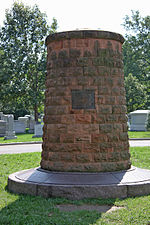
Pan Am Flight 103 (Lockerbie)

Pan Am Flight 103 Memorial Cairn

Pan Am Flight 103 Memorial Cairn

On December 21 at 1:30PM, the Pender UMC Choir traditionally sang for the Pan Am Flight 103 (Lockerbie) Memorial Service at Arlington National Cemetery.

One of the songs we traditionally sing at this service – “Under His Wings” – was composed in memory of the victims.  On June 20, 2022, a Memorial Concert was held for long-time choir member, Diane Martini. The Pender Sanctuary Choir and the former Master Chorale of Washington sang several of Diane’s favorites. One of her favorites had been “Under His Wings”.

A few years ago was the 25th anniversary of the Pan Am Flight 103 bombing. A C-Span video of the anniversary event

http://www.c-span.org/video/?316910-1/pan-flight-103-25th-anniversary-memorial-service

Another video from the anniversary year:

For full remarks about the anniversary service, including speaker’s notes, please see https://www.victimsofpanamflight103.org/events/2013/arlington

Here’s a timeline of the terrible event on December 21, 1988:

Extraordinary Response Pan Am 103


Tags: , , , , , , ,

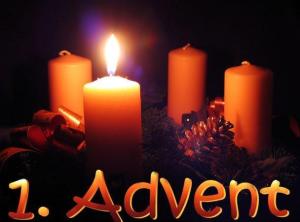
Today Is the Beginning of Advent

Advent

Today, December 3, 2023  is the First Sunday in Advent.

The first Candle of the Advent Wreath is lit on the first Sunday of Advent, on December 3 this year. It is called the Prophecy Candle and reminds us that Jesus’ coming was prophesied hundreds of years before He was born. The candle’s purple color represents Christ’s royalty as the King of Kings.

Suggested Bible Reading: Luke 1:26-38

Chuck Knows Church — ADVENT WREATH. Four candles in a circle with a big one in the middle? Yep, take a moment and learn the basics about the advent wreath. And why is the pink candle…pink?


Tags: , , , , , , ,

Hymn History: Rejoice, Ye Pure in Heart

“Rejoice, Ye Pure in Heart”
Edward H. Plumptre
The UM Hymnal,  Nos. 160 and 161

Rejoice, ye pure in heart;
rejoice, give thanks, and sing;
your glorious banner wave on high,
the cross of Christ your King.
Rejoice, rejoice, rejoice, give thanks, and sing.

“Rejoice Ye Pure in Heart” was the middle hymn at Pender’s 9:00 am Traditional Service on October 15, 2023 It was sung by Pender’s Sanctuary choir, congregation, directed by Patrick King and accompanied on piano by Heidi Jacobs.

The Pender UMC Traditional Service Closing Hymn “Rejoice, Ye Pure in Heart” on May 29, 2022 was directed by Brian Stevenson and accompanied by Liz Sellers on piano and sung by the Pender Sanctuary Choir and Congregation.

Anglican priest and professor Edward Hayes Plumptre (1821-1891) composed “Rejoice, ye pure in heart” as a processional hymn for a choir festival in one of England’s majestic places of worship, Peterborough Cathedral.

Writing in the mid-20th century with perhaps a hint of condescension, hymnologist Albert Bailey describes the context for this hymn by saying that the “untravelled American can hardly realize the emotional effect of a processional made up of choirs from a dozen different communities, marching with full panoply through ‘long-drawn aisle’ and under ‘fretted vault’ while we hear:

The storm their high-built organs make,
And thunder-music, rolling, shake
The prophets blazoned on the panes.

“The massiveness of the old Norman Peterborough makes a marvelous background and amplifier for such a processional.”

Plumptre was a distinguished scholar of his day. Educated at University College, Oxford, he then became a fellow at Brasenose College, Oxford, receiving his ordination in the Anglican Church in 1846. After serving as a clergyman, he became chaplain and professor of New Testament exegesis at King’s College, London, and dean of Queen’s College, Oxford. His most prominent position as a clergyman was that of dean of Wells Cathedral.

Of the original 11 stanzas, five or six stanzas appear in most hymnals. Stanza one refers (in the original text) to the “festal banner” and “Cross of Christ your King,” symbols of the faith that would be carried at the head of such a procession in the Anglican context.

Omitted stanzas refer to this processional in martial terms as warriors who “march in firm array.” This kind of imagery is not only consonant with the times, but also reflects the theology of the Anglican Communion that views its role on earth as the “Church Militant” while the church in heaven is the “Church Triumphant.”

Of course, the music used for this text must reflect the spirit of a stately processional. American hymnologist Leonard Ellinwood said that the tune MARION was written for this text by Arthur Messiter (1834-1916). Messiter added the refrain drawn from the first two lines of stanza one: “Rejoice, rejoice, rejoice give thanks and sing” echoes Philippians 4:4, “Rejoice in the Lord always; again I will say, Rejoice.”

Hymnologist William Reynolds noted that it “was not unusual for a cathedral processional to take from ten to thirty minutes, and the hymn that was sung by both the choir and the congregation needed to have enough stanzas for this.”

Mr. Bailey’s earlier comments notwithstanding, not all participants in festival worship were enamored by such lengthy processionals. Mr. Reynolds goes on to say that “A review of a hymnal… [commented] that some of the processional hymns were so long that some of the congregation would need to walk about in order to stay awake.”

The United Methodist Hymnal includes a second tune, VINEYARD HAVEN, with this text. Richard W. Dirksen composed this tune in 1974 for the installation of John M. Allin as the presiding bishop of the Episcopal Church in Washington Cathedral.

Carlton Young, editor of The UM Hymnal, found this text less than worthy, and notes: “Dirksen’s setting… [saves] a maudlin hymn from its deserved place in hymnic obscurity.”

Regardless of how one evaluates the quality of this text, we can all be grateful to be spared from 30-minute processionals in worship.

Dr. Hawn is professor of sacred music at Perkins School of Theology.

From https://www.umcdiscipleship.org/resources/history-of-hymns-rejoice-ye-pure-in-heart


Tags: , , , , , , , ,